


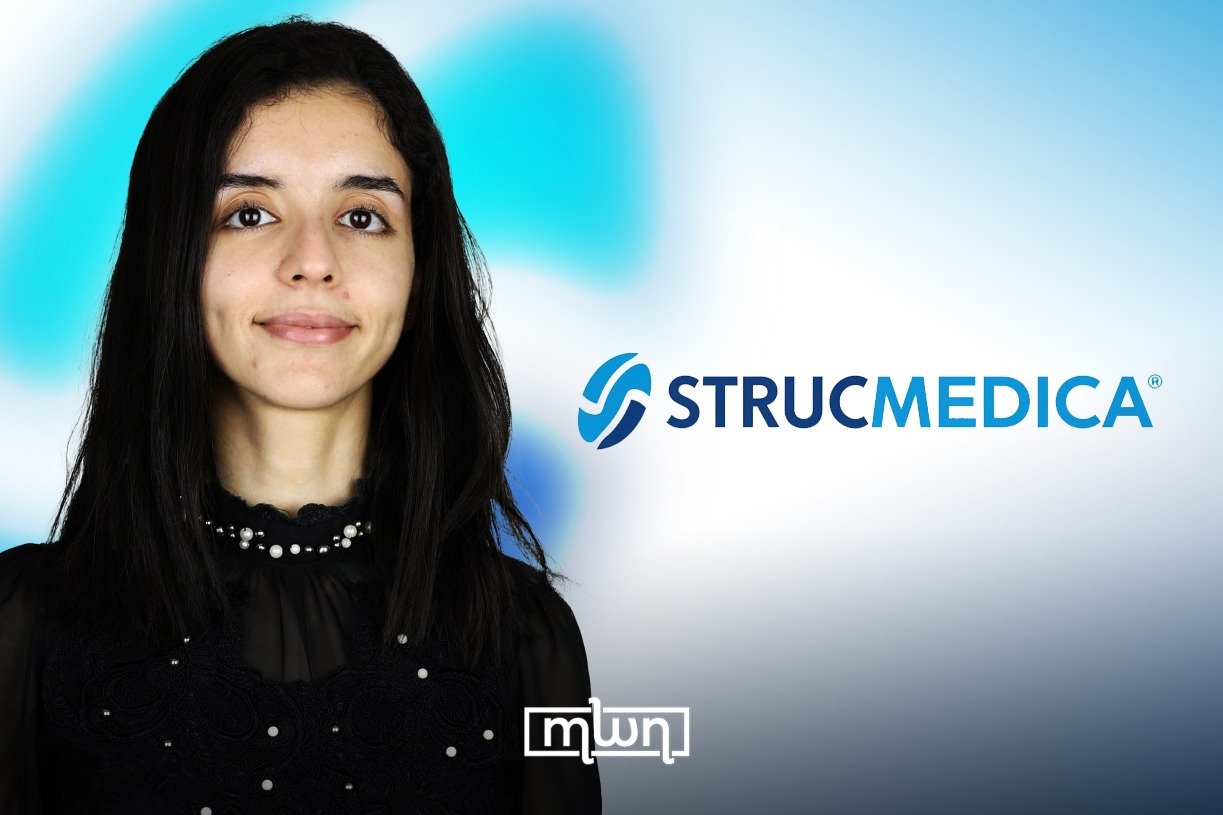
Mohammedia – When Ouijdane Qacami walks through a city today, she does not see buildings the way most people do. She looks at joints, cracks, and the traces left by years of stress and deferred maintenance.
“Where most people see façades or functions, I see structural behaviour and the history of stress, repairs, and maintenance,” she told Morocco World News (MWN) in an interview.
That way of seeing recently earned the Moroccan civil engineer France’s national Prix Pépite, one of the country’s most competitive awards for student entrepreneurship.
In late 2025, Qacami received the prize for Strucmedica, a startup she founded to develop non-invasive diagnostic tools for concrete structures.
The award, backed by the French Ministry of Higher Education and Research, placed her among 30 national laureates selected that year.
Qacami was educated in Morocco before pursuing advanced studies in structural engineering in France. She later completed a doctorate focused on the durability of concrete, alongside executive training at HEC Paris.
Her career, she explained during the interview, has alternated between applied research and industry, from field assignments to technical leadership and research projects. Those experiences, she said, exposed her to “the real limits of current inspection practices.”
Her approach to infrastructure is rooted partly in personal experience. Growing up in northern Morocco, earthquakes and floods were a reality.
Recalling the 2004 Al Hoceima earthquake, Qacami said she remembered “sleeping in a car with my family during the 2004 earthquake, worried to return to our fragile apartment.” Experiencing loss firsthand, she added, “instilled in me a deep sense of pragmatism, resourcefulness, and collective responsibility.”
She also pointed to her early education in preparatory classes and at Mohammedi’s engineering school, which reinforced “rigour, discipline, and execution.”
Her involvement in associations and projects such as Enactus, the Solar Decathlon, and a sustainable civil engineering association she founded helped shape what she described as “a mindset of pragmatism, innovation, and leadership.”
Strucmedica emerged from years of observing how small, detectable degradations are often left unaddressed.
Qacami said she had repeatedly witnessed “structures where small, detectable degradations were left unaddressed until they became costly or dangerous,” including industrial halls, school buildings, and aging bridges. European bridges built after World War II, she noted, are a clear example, with many now at risk due to deferred inspections.
The company’s technology is often described as a “stethoscope for buildings,” a metaphor Qacami herself uses.
“We call it a ‘stethoscope’ because our technology listens to concrete without being invasive, no drilling, no cutting, no disruption,” she said. The approach, she explained, is designed for structures where operations cannot easily be halted, delivering “actionable insights without risk,” and allowing repairs to be planned proactively rather than reactively.
Qacami is critical of demolition as a default solution. “Demolition is expensive, environmentally, economically, and socially,” she said, noting that it generates waste, emits carbon, displaces communities, and erases heritage.
Strucmedica’s alternative is predictive maintenance, providing current structural condition, predicted evolution of degradation, and tailored repair solutions, enabling more sustainable decisions.
Her argument resonates strongly in Morocco, where fears around structural safety have resurfaced since the deadly Al Haouz earthquake in 2023, reinvigorating public attention on how buildings are assessed and maintained.
The transition from research to company became clear when prototypes were tested in real conditions and later patented.
That moment, she said, marked the shift from academic work to a scalable business. Winning the Prix Pépite did not change her conviction, but renewed it. “It confirmed what we had observed in the field: there is a clear market need,” she said.
Strucmedica is now running an early-adopter program for building owners, asset managers, technical directors, and public authorities.
Qacami also said she wanted to invite readers to engage with the company’s work, emphasizing that “awareness is often the first step toward changing outdated industry practices.”
Read also: 2-Year-Old Dies in Wall Collapse in Al Haouz Province
