


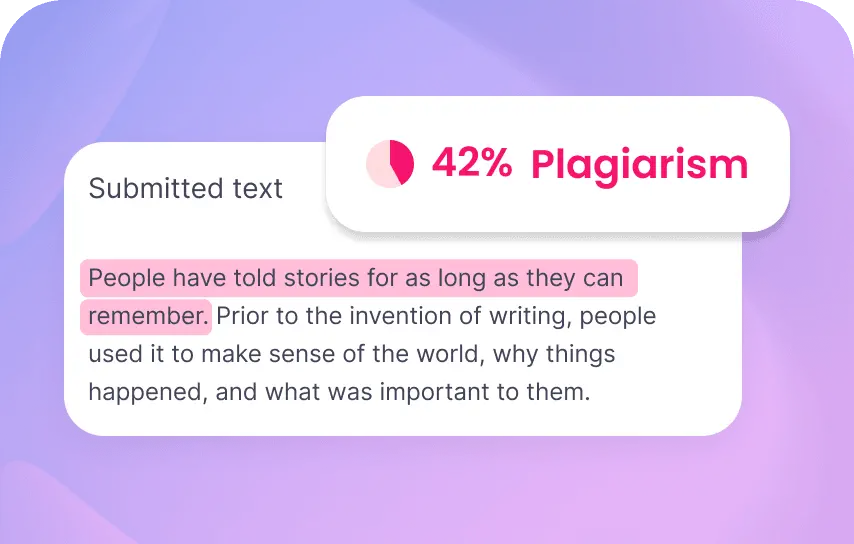
A few years ago, students worried mostly about plagiarism. Copying a paragraph from a website could trigger a similarity alert and cause trouble during submission.
Today, the conversation is different. Essays, reports, and reflection papers now exist in a world where AI writes with impressive speed. That shift explains why students are looking for an AI detector free of charge to add to their academic routines.
If you spend time drafting assignments online, you probably already sense this change. Many students experiment with AI for brainstorming or outlining. At the same time, universities expect clear authorship and transparent writing practices. When you use detector.io free access, you gain a way to examine your own text before turning it in. Instead of guessing how your work might appear to a professor, you can look at the patterns inside the writing itself.
Detection tools have become part of the editing process, much like grammar checkers or plagiarism scanners. They give you another layer of awareness while you refine a paper.
Why the Internet Suddenly Needs an AI Detector
Online writing changed quickly once generative systems entered classrooms, workplaces, and creative spaces. A student drafting a literature review can generate paragraphs in seconds. A discussion post can appear fully formed after a quick prompt. That speed altered how people think about authorship.
Because of this shift, many institutions now rely on some form of AI detector to review text patterns. The goal is rarely punishment alone. Teachers and administrators want a clearer view of how writing emerges. When language shows a highly predictable structure or statistical signals linked with automated generation, it raises questions about the drafting process.
As a student, you sit right at the center of this transition. Your essays represent your ideas, your interpretation of sources, and your ability to communicate clearly. When detection tools enter the picture, they create a checkpoint where you can examine how your text reads from the outside, especially if you’ve used AI for brainstorming or outlining.
What an AI Text Detector Looks For
Behind the interface of a detector, a statistical process studies how language behaves. Human writing tends to move unevenly. Sentence length varies. Word choice shifts as ideas develop. Personal voice enters through phrasing that feels slightly unpredictable.
Automated systems often produce language that flows smoothly but remains statistically consistent. The pattern becomes visible when an algorithm measures elements such as predictability or distribution of phrases.
A detection system may analyze factors like:
- sentence probability patterns
- repetitive phrasing structures
- stylistic uniformity across paragraphs
- unusually even sentence length
- predictable transitions between ideas
- limited variation in syntax
- overused generic academic wording
- low levels of personal or situational detail
When you submit your text for analysis, the system compares these signals with patterns observed in machine-generated writing. The result appears as a probability score rather than a simple label.
Inside the Tool
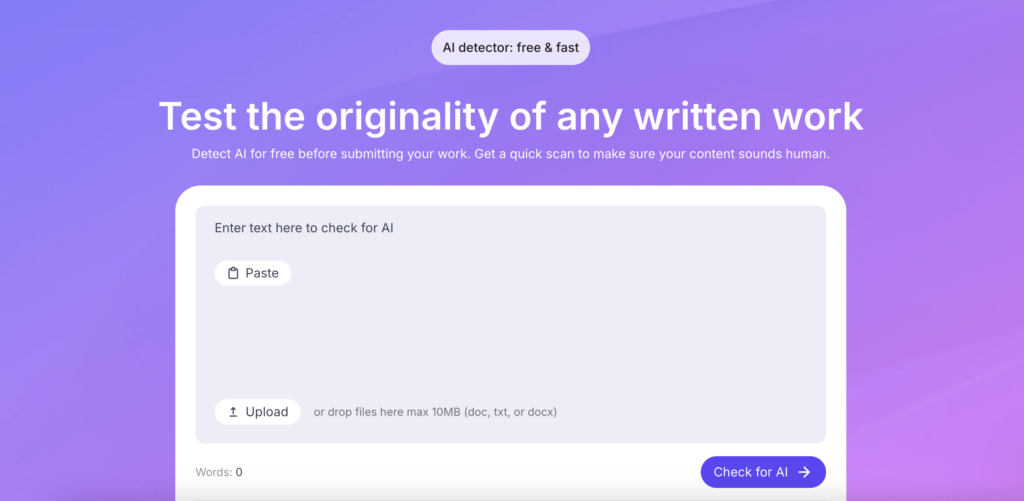
Detector.io approaches this task with a straightforward interface. The design keeps the process simple, allowing students to review text quickly while working on assignments. You can use this AI detector free of charge, which makes it accessible even during late-night editing sessions before a deadline.
The workflow usually looks like this:
- Paste or upload the text you want to examine
- Start the scan
- Review the probability signals and highlighted segments
Within seconds, the system produces an analysis that indicates how closely the writing resembles machine-generated language. You may see sections where phrasing appears statistically predictable or unusually consistent.
Detector.io lets you scan up to 3,000 words per check for free, which is enough for many essays, response papers, and personal statements. The results are presented as probability-based signals, and the tool highlights passages that may read as AI-generated, so you are not left with a vague yes-or-no label.
Where AI Checks Matter in Student Writing
Student writing moves through many stages. Brainstorming leads to outlining. Drafts evolve through revisions before the final submission. Detection tools can appear at several points during that journey.
A quick scan may help you evaluate whether a paragraph sounds too mechanical after using digital writing assistance. In research assignments, it can help confirm that your interpretation of sources carries your own voice rather than a template-like tone.
Some professors also rely on an AI detector for teachers when reviewing coursework. Their goal usually centers on fairness. If the same tool becomes available to you before submission, the playing field feels clearer. You gain insight into how automated patterns might appear in your work.
Why Pattern Recognition Matters More Than Perfect Certainty
Detection tools rely on probability rather than certainty. Language remains complex, and human expression shifts across styles, disciplines, and personal habits. A statistical signal highlights tendencies in the text rather than issuing final judgments.
For students, this perspective helps frame detection as a guide rather than a verdict. When a system flags a section as highly predictable, it invites you to look closer at that paragraph. Perhaps the wording came from a draft generated quickly during brainstorming. Perhaps the structure repeats the same phrasing several times.
Revision becomes the key step. You read the passage aloud, adjust the rhythm, and add details that reflect your understanding of the topic. With each change, the writing becomes more personal.
Reading Your Writing With New Awareness
Artificial intelligence changed how text appears across the internet, classrooms included. Essays now exist in a landscape where algorithms generate language at astonishing speed. That reality created a new layer of attention around authorship.
For students, tools like Detector.io introduce a practical habit. Before submitting your work, you pause and examine how the writing behaves under analysis. The result encourages a moment of reflection: Does this paragraph sound like me? Does the language express the idea in my own voice?
That pause often leads to stronger writing. You revise a sentence, add a clearer example, or reshape a paragraph so it carries your reasoning. The paper becomes more personal and more convincing.
