


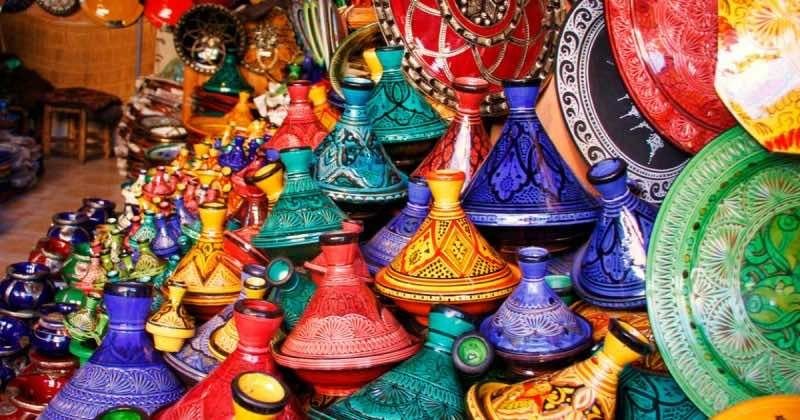
Morocco’s labyrinthine souks — from Fez to Marrakech — are world-renowned for their sensory overload: vibrant colors, intricate textures, and the tangible craftsmanship of centuries-old traditions. However, in an increasingly digital global economy, the physical allure of the souq faces a significant barrier: the screen.
For Moroccan artisans and Small and Medium Enterprises (SMEs) aiming to export handmade rugs, pottery, and leather goods, the challenge has shifted from production to presentation. How do you capture the texture of a Beni Ourain rug on a smartphone?
This is where artificial intelligence (AI) comes in – solving a “visual deficit” and acting as a bridge between the traditional Medina and the global e-commerce marketplace.
The Visual Barrier to Export
The distinct advantage of Moroccan craftsmanship is its detail. However, for a small cooperative in the Atlas Mountains, hiring a professional photographer and renting a studio to photograph inventory is often financially impossible. As a result, many artisans rely on raw smartphone photos taken in dimly lit workshops or cluttered stalls.
On international platforms like Etsy or Amazon Handmade, poor visual quality equates to low trust. A blurry photo of a high-quality leather bag makes the product look cheap, regardless of the actual craftsmanship. This creates a “trust gap” that has historically hindered the growth of digital exports in the region.
AI-driven image processing is leveling this playing field. It is essentially giving every artisan a professional studio inside their pocket.
Standardizing the Chaos
The charm of a souq—the cluttered background, the hanging lamps, the passing tourists—is a nightmare for product photography. E-commerce requires focus.
Modern AI-powered background removal tools allow sellers to photograph a ceramic tagine sitting on a crowded workshop table and instantly isolate it against a pure white or neutral background.
This capability reduces the time-to-market for new designs from weeks to minutes, allowing local cooperatives to list products globally without logistical friction.
Enhancing Texture and Detail
Lighting in traditional workshops is often insufficient for photography. Generative AI can now virtually “relight” a scene, enhancing the visibility of intricate stitching or wood carving patterns without distorting the reality of the product. This ensures that the online viewer perceives the quality of the material, increasing conversion rates.
Boosting Tourism Through ‘Perfect’ Moments
Beyond exports, AI is reshaping Morocco’s other economic pillar: Tourism.
In the age of Instagram and TikTok, visual storytelling drives destination choices. However, tourists often struggle to capture the “perfect” shot of landmarks like the Hassan II Mosque or the Blue City of Chefchaouen due to crowds.
AI tools that offer “object removal” allow photographers to clean up their images—removing stray trash, construction signs, or passing crowds—to focus on the architecture and landscape. While purists may debate the authenticity, from a marketing perspective, these enhanced images generated by visitors act as powerful, polished advertisements for the country’s beauty.
Empowering the Digital Youth
Morocco has a growing population of digitally native youth. The adoption of these AI tools is creating a new sector of employment: “Digital Artisans.” These are young professionals who may not weave rugs themselves but possess the technological skills to manage the digital storefronts of their family businesses.
By mastering automated visual editing software, this generation is transforming traditional family trades into modern Direct-to-Consumer (DTC) brands. They are using AI not to replace the craft, but to tell its story more effectively to a global audience.
The intersection of tradition and technology is where Morocco’s economic future lies. As AI visual tools become more accessible and mobile-friendly, the barriers to entry for global trade are crumbling. The “Digital Souq” is no longer a futuristic concept; it is being built today, pixel by pixel, allowing the world to see the true beauty of North African craftsmanship with unprecedented clarity.