


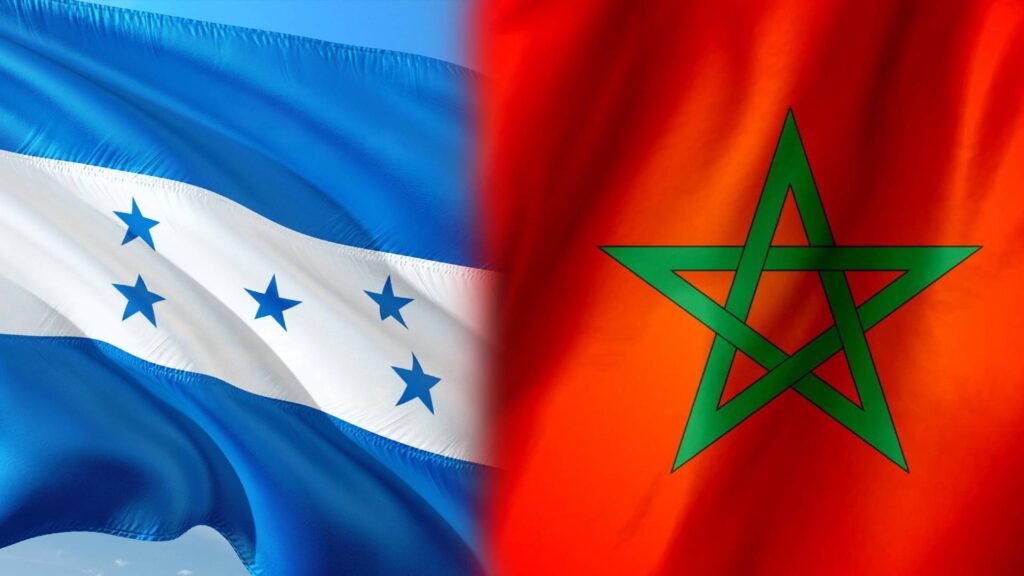
Marrakech – Honduras has decided to suspend its recognition of the self-proclaimed “Sahrawi Arab Democratic Republic (SADR),” the phantom entity run by the separatist Polisario Front from Algerian refugee camps.
The decision was communicated to Moroccan Foreign Minister Nasser Bourita by his Honduran counterpart, Mireya Agüero de Corrales, through an official letter received on Wednesday. Honduras also notified UN Secretary-General Antonio Guterres of the move.
In her letter, Agüero de Corrales said the suspension stems from Honduras’s “sovereign decision, founded on its traditional attachment to the principles of non-interference and respect for the internal affairs of other states.”
Honduras also reaffirmed its full support for the UN Secretary-General’s efforts and those of his Personal Envoy to reach a political, just, and lasting solution. It further expressed adherence to UN Security Council resolutions, including Resolution 2797.
The Central American country had first recognized the self-styled entity in 1989 and reconfirmed that recognition as recently as 2022. The suspension marks the sixth withdrawal of recognition in the past two years alone.
The timing could not be worse for the Polisario. Honduras joins a fast-growing list of nations abandoning the separatist front’s already fragmented diplomatic network. Just two weeks ago, Mali – which had recognized the phantom republic since 1980 – formally withdrew its recognition. Bamako declared Morocco’s Autonomy Plan the only serious and credible basis for resolving the dispute.
In February, Bolivia suspended all diplomatic ties with the entity and ended all official contact with it, noting that it is not recognized as a UN member state. The move came after the defeat of Polisario-aligned forces in Bolivia’s 2025 presidential elections.
Latin America was once a stronghold for the separatist cause. It is no longer. Ecuador withdrew its recognition in October 2024. Panama – the very first country to recognize the self-styled republic in 1978 – suspended relations shortly after. Brazil’s President Lula announced his support for Morocco’s Autonomy Plan around the same time.
The exodus speaks for itself, and the stampede for the exit has no brakes. The Cold War-era ideological alignments that once sustained the Polisario across South America have disintegrated.
Left-leaning governments in the region once embraced the separatist cause as an extension of anti-colonial solidarity. That era is over. One by one, Latin American capitals are conducting sovereign reviews of foreign policies built on outdated premises and Algerian lobbying.
In the late 1970s and early 1980s, more than 80 countries recognized the self-proclaimed republic. Today, that number has plummeted, gutted, fragmented, and whittled down to a rump coalition of ideological stragglers and Algerian client states.
In Latin America, only Mexico, Belize, Uruguay, Venezuela, Cuba, Nicaragua, and Trinidad and Tobago still maintain ties with the front. No country has extended new recognition to the entity since 2011.
Across Africa, the separatists are faring no better. The African Union Executive Council voted in July 2024 to ban the Polisario from participating in international summits. Major global powers – the United States, France, Russia, China, Japan, South Korea – have all refused to seat the Polisario at joint summits with Africa.
The Honduras decision is not an isolated event. It is the latest data point in an irreversible trajectory. The self-styled republic – a paper state with no territory, no functioning institutions, and no UN membership – is watching its diplomatic scaffolding collapse, continent by continent, capital by capital. The Polisario’s dwindling coalition is running out of friends, out of arguments, and out of time.