


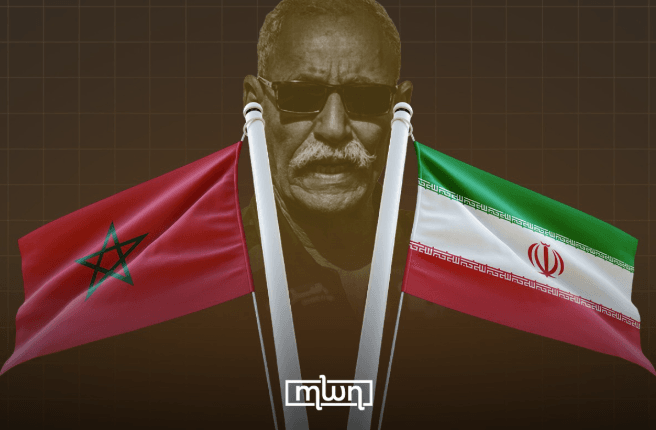
Rabat – Converging reports have shed light on a visit by a delegation linked to Hezbollah to Polisario’s run Tindouf camps in southern Algeria.
The visit comes amid Iran’s repeated attempts to dismiss Morocco’s accusations regarding Polisario’s ties with the Iranian proxy.
Algerian journalist and analyst Oualid Kebir said the visit is among the threads that reveal Polisario’s ties to the Iranian proxy and Algeria’s role in providing cover.
This visit carries a “deep” political message despite Polisario’s attempts to present the visit as being of a “religious and academic” nature, Kebir explained.
“The identities of the participants reveal that it is part of a religious-political network operating within the orbit of Lebanon’s Hezbollah and Iran.”
The analyst accuses Iran of finding Polisario a ready-made tool to exert its agenda in the region.
“Just as it has used the Houthis in Yemen, Hezbollah in Lebanon, and loyal groups in Iraq and Syria,” he argued.
Morocco cut ties with Iran in 2018, accusing Tehran of arming the Polisario Front, the separatist group that Algeria’s regime has hosted, financed, and armed for the past five decades to challenge Morocco’s sovereignty over its southern provinces in Western Sahara.
Morocco emphasized that it presented well-evidenced data and an intelligence report that reveals details on the collusion between Algeria, Iran, and the Polisario Front.
Rabat also sounded the alarm about Algiers’ financing of the Polisario’s acquisition of Iranian military equipment
Polisario and Iran “have gone from training to equipping the Polisario with drones,” he continued, Morocco’s permanent ambassador to the UN, Omar Hilale, said in 2022, noting that they “are destabilizing our region after having done the same” in Yemen and Syria.
Algeria and Iran have both denied Morocco’s accusations, yet Rabat has insisted that it has provided ample evidence to back its stance.
Read also: Iran Responds to Reports on Potential Talks to Mend Ties with Morocco
In recent years, Iranian officials have publicly emphasized their willingness to restore ties with Morocco.
Beyond the meeting in Tindouf, Kebir also highlighted a “striking paradox” that Algeria adopts in the case.
“The striking paradox is that Algeria, which hosts the Polisario and backs it financially, politically, and diplomatically, voted weeks ago in the UN Security Council in favor of a resolution condemning the Houthis and calling for extending sanctions against its leaders,” Kebir wrote.
The analyst saw this move as an Algerian attempt to present itself as a “responsible” state before the international community.
But the move, for Kebir, tells a different story, as the Algerian regime continues to allow repeated visits by political figures who openly support Hezbollah and Iran. This comes amid its attempts to also suggest that it opposes Tehran’s influence in other regional files.
“This contradiction exposes the duality of Algeria ‘s stance and confirms that the military regime does not object to opening the region’s doors to networks linked to Iran, as long as they serve its strategy of supporting the Polisario and undermining regional stability,” he argued.
In April this year, a report from the Washington Post shed light on the deeper collaboration between Algiers and Iran-backed Hezbollah.
The report suggests that Iran is using the Polisario Front to undermine not only Morocco’s territorial integrity and sovereignty over its southern provinces but also to meddle in Syria’s domestic affairs.
The report quoted sources who confirmed that Hezbollah, an Iranian proxy, has trained Polisario Front separatists to advance its interests.
“Over the years, Iran has fostered a wide array of proxy groups to advance its interests,” the report said, quoting a regional official and a third European official who said Iran trained fighters from the “Algeria-based Polisario Front” that are now detained by Syria’s new security forces.
