


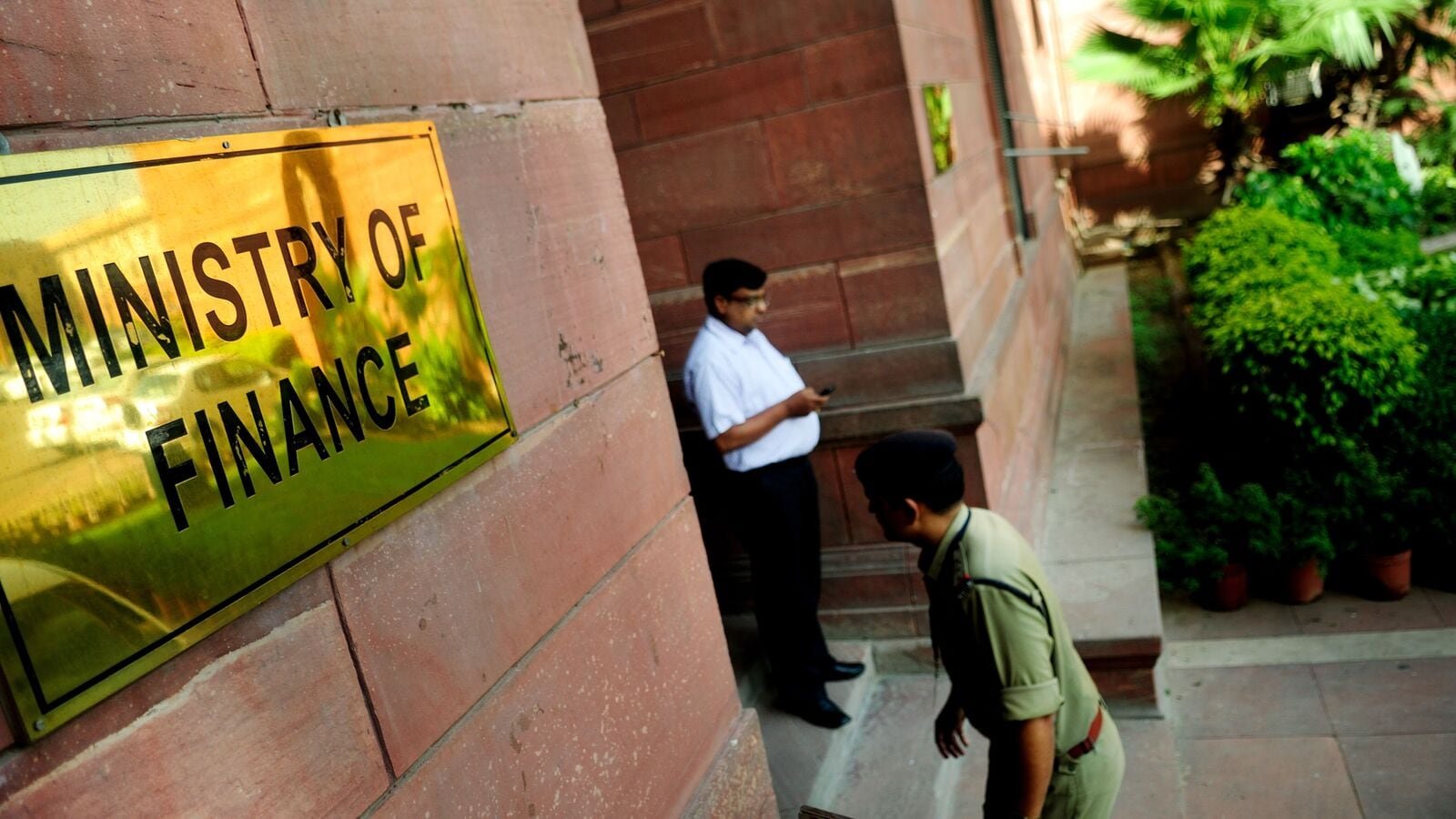
The exercise, led by the ministry of finance and slated to begin next month, is expected to redirect resources toward employment initiatives and potentially increase allocations for entrepreneurship and skills-based programmes, the people said, asking not to be named as the discussions are private.
“The mid-year review of various schemes and proposals is intended to build on earlier steps like GST rate cuts and income tax relief announced in the Union budget, with the aim of amplifying their impact and stimulating consumption,” one of the two people cited above said. “Budget allocations for key schemes will be reviewed and could be scaled up where necessary,” the person added.
A finance ministry spokesperson didn’t respond to emailed queries.
Flagship schemes
Several flagship schemes will undergo review, including the rural jobs initiative Mahatma Gandhi National Rural Employment Guarantee Scheme, artisans scheme PM Vishwakarma, street vendors’ scheme PM SVANidhi and micro-loans scheme PM Mudra Yojana. Others such as the Annadata Aay Sanrakshan Abhiyaan to support farmers’ income, Deen Dayal Upadhyaya Antyodaya Yojana for skill development and the Pradhan Mantri Kisan Maandhan Yojana for farmer’s pension also may be reviewed, the people mentioned above said, besides Make in India 2.0 and the newly approved Employment Linked Incentive (ELI) Scheme.
The review comes as policymakers contend with uneven consumer spending, sluggish private investment and persistent global economic challenges.
“Initiatives focused on SMEs and MSMEs are also likely to be assessed, reflecting the government’s emphasis on small businesses as engines of job creation,” said the second person. “Their role becomes even more critical in the wake of US reciprocal tariffs, which are expected to weigh heavily on these sectors.”
Budget allocations
The government is also looking at whether budget allocations are sufficient to meet its growth and employment targets, the first person said.
“The mid-year review of various schemes and proposals is intended to build on earlier steps like GST rate cuts and income tax relief announced in the Union Budget, with the aim of amplifying their impact and stimulating consumption,” said the first person mentioned above, who didn’t want to be named.
MGNREGA, one of India’s largest social safety nets, has retained its allocation at ₹86,000 crore for 2025-26, unchanged from the previous year. The scheme, which provides 100 days of guaranteed wage employment to rural households seeking unskilled work, has long been central to livelihood security in the countryside, though economists say stagnant funding may constrain its effectiveness amid rising demand.
Vishwakarma, PM-Aasha
The PM Vishwakarma scheme, launched in 2023 to support artisans and craftspeople, received ₹5,100 crore for 2025-26, as part of a broader five-year outlay of ₹13,000 crore. Similarly, the restructured PM SVANidhi programme, which provides loans to street vendors, has a total allocation of ₹7,332 crore with lending extended to March 2030.
For farmers, the PM-Aasha programme, which offers price support for crops, carries an outlay of ₹35,000 crore spread across the entire 15th Finance Commission cycle, running through 2025-26. Meanwhile, the ELI Scheme, approved in July this year, is backed by nearly ₹1 trillion to create over 35 million jobs, with benefits accruing over a two-year window from August 2025.
“The mid-term review is expected to examine whether current allocations are sufficient or whether fresh resources are needed to align spending with the government’s broader growth and employment goals,” the first person mentioned above said.
“The efforts are likely to be aimed at striking a balance between immediate consumption support and the pursuit of longer-term productivity gains,” the first person added.
Counter-cyclical
Experts said the government’s mid-term policy recalibration represents sophisticated counter-cyclical management amid a volatile global economy.
“With geopolitical tensions, supply chain disruptions, and shifting monetary policies creating unprecedented uncertainty, India’s recalibration toward employment-focused schemes demonstrates adaptive governance. This policy manoeuvring, from broad-based stimulus to targeted employment generation, aligns well with the needs of the hour as tariffs are likely to bite in the short term,” said Rishi Shah, partner and economic advisory services Leader, Grant Thornton Bharat.
“The multiplier effects could be substantial: skilled workers enhance productivity, while entrepreneur-driven ventures create sustainable employment chains. This dual focus positions India to harness demographic dividends while building resilience against future global volatilities,” he added.
Sharper focus
Some experts say the Centre should focus on a few employment generation schemes rather than diffuse government efforts, especially since revenues may come under pressure in 2025-26 due to forgone revenues in changes in the personal income tax and GST reforms.
“The government’s first focus should be on increasing India’s potential growth rate, which depends on savings and investment. Stimulating consumption is called for when the economy operates at below the potential growth rate. A suitable balance in supporting investment and consumption is needed because they play different roles,” said D.K. Srivastava, chief policy advisor, EY India.
“Promotion of investment by the government, including capital expenditure, would support uplifting potential growth, and consumption should be supported so that the actual growth remains close to the potential growth which may be in the range of 6.5% to 7%,” he said.
Srivastava argues that while cash transfers and employment schemes offer limited, short-term support, focusing on skill-building and entrepreneurship will yield stronger, long-term outcomes. He believes this approach will lead to increased productivity, better capacity utilization and more private investment.
