


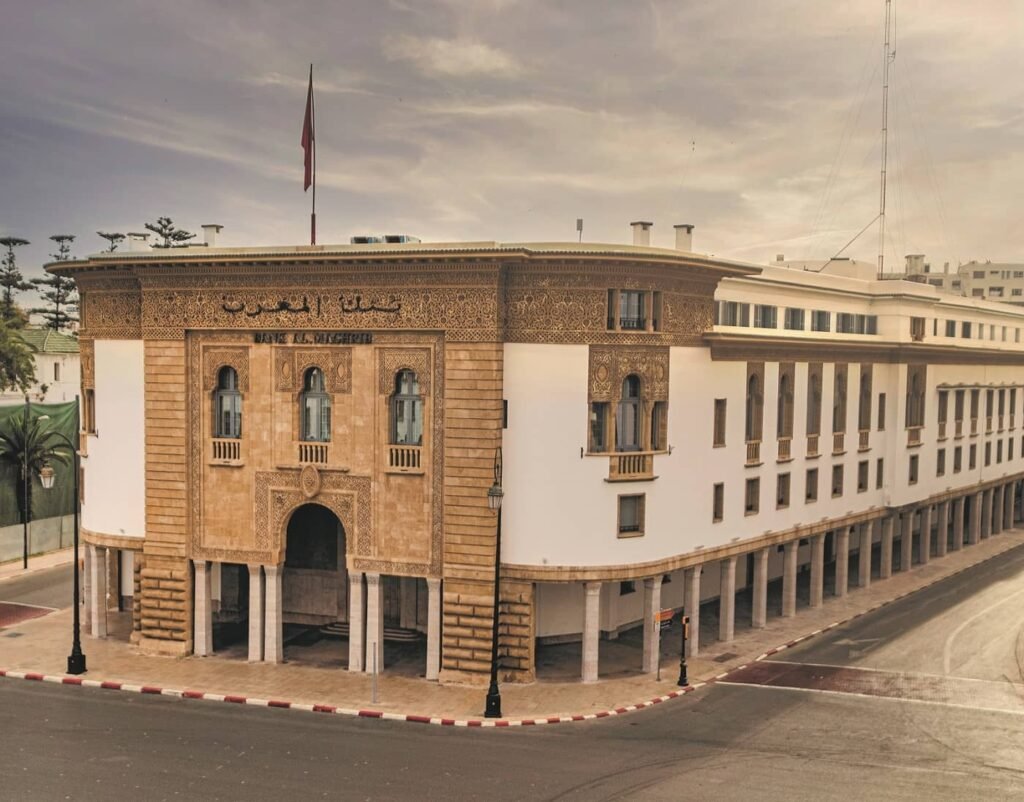
Agadir – The Board of Bank Al-Maghrib, Morocco’s central bank, underlined this week the increasing global uncertainty in its first quarterly meeting for the year 2026. The bank cited the rising geopolitical tensions and the fluctuations in the commodity markets as major global challenges facing the world economy.
The bank’s latest assessment highlighted war in the Middle East as a major global uncertainty factor, stressing that the ensuing pressure adds to the existing global uncertainty factors such as the Russia-Ukraine War and the US trade policies.
According to BAM, these interrelated risks are putting the global economy’s resilience to the test after the war are already affecting the financial markets and commodity prices, especially in the energy sector.
But the full impact of the US-Israel-Iran war is still uncertain, BAM assessed, noting that this “will depend to a large extent on its length, scope, and intensity.”
BAM expects the commodity markets to face pressure, projecting that Brent crude oil prices will increase from an average of $68.1 per barrel in 2025 to $78.9 per barrel in 2026 and then fall back to $64.5 per barrel in 2027.
Prices for food are likely to fall by 2.3% in 2026 after rising by 4.3% in 2025, according to the Food and Agricultural Organization’s food price index. This is before rising by 3.4% in 2027.
Read also: Strait of Hormuz Closure Threatens Morocco’s Fertilizer Production, Exports
Global economic growth is expected to decelerate from 3.3% in 2025 to 2.9% in 2026, before rebounding slightly in 2027 to 3.1%.
Turning to the challenges facing advanced economies, BAM said it expects the United States to sustain a solid growth performance. The bank projects the US economy to grow by 2.3% in 2026, before slowing down to 1.9% in 2027 due to geopolitical tensions, fiscal policy, and uncertainty over midterm elections.
The euro area’s growth is to slow down from 1.5% in 2025 to 1.1% in 2026, before rebounding again in 2027 to 1.5%, BAM assessed, noting this would be “notably due to the anticipated fiscal easing in Germany.”
In the emerging markets, the Chinese economy is expected to grow at a moderate rate of 4.5% in the medium term after reaching 5% in 2025.
Meanwhile the Indian economy is expected to decelerate from 7.7% in 2025 to 6.4% in 2026, “as a result of the expected weakening of external demand, before rebounding to 6.7 percent in 2027.”
Overall, BAM analysis indicates that global inflation is to increase in the near term, reaching 3.3% in 2026. This upward trend is set to be followed by a decrease to 2.9% in 2027. In the advanced economies, inflation is expected to be slightly above the level of the central banks’ targets in the near term.
Morocco World News is also on X — check out our latest posts now! Get MWN on iOS and Android for instant access to breaking news.