


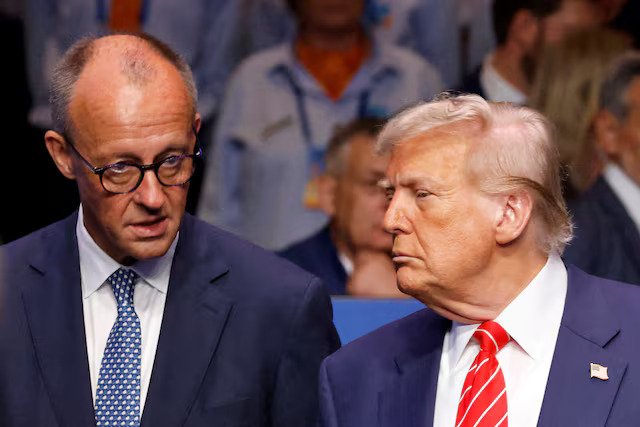
Rabat – Merz’s will be the first European leader to meet Trump since the launch of the operation against Iran, which has blocked one of the world’s key oil shipping lanes and thrown global air transport into turmoil, intensifying fears of prolonged regional war with worldwide economic consequences.
The visit had originally been expected to focus on repairing strained transatlantic relations after months of sharp criticism from Washington over European defense spending, trade practices, and immigration policy.
Instead, the sudden escalation in the Middle East has pushed security and crisis management to the top of the agenda.
On Sunday, Merz avoided direct criticism of the strikes but stopped short of endorsing them, amid claims by Trump’s critics that the operation lacked sufficient explanation and a clear legal basis under international law.
“We recognize the dilemma,” Merz said, arguing the decades of diplomatic efforts had failed to deter Iran from pursuing nuclear ambitions or repressing its population.
“So we’re not going to be lecturing our partners on their military strikes against Iran. Despite all the doubts, we share many of their aims.”
Alongside French President Emmanuel Macron and British Prime Minister Keir Starmer, Merz said Europe was ready to work with the United States “to defend our interests and those of our allies in the region.”
Yet the conflict has once again highlighted how Europe has been sidelined in US-led strategic decisions that directly affect its own security and prosperity.
Read also: Explainer: What We Know So Far About the US-Israel Attack on Iran
A lifelong Atlanticist, Merz had warned that Europe must adapt to what he describes as a new era of global rivalry, even as he seeks to preserve the U.S. alliance.
“On Tuesday morning, I will tell Trump once again that our hand remains outstretched,” he told an electoral rally last week.
“I want NATO to remain a Western alliance between America and Europe.”
Germany’s reliance on the U.S. security umbrella has been laid bare by Russia’s invasion of Ukraine, prompting Merz to pledge an unprecedented wave of borrowing to rebuild Germany’s armed forces after decades of underinvestment.
Speaking last month at the Munich Security Conference, he said the U.S. criticism of Europe’s past defense spending was justified.
Trade tensions are also likely to surface during the talks. Trump’s on-again, off-again tariff policies have rattled Germany’s export-driven economy, while uncertainty has deepened following a recent Supreme Court decision striking down tariffs imposed by the administration.
As Merz meets Trump, Berlin seeks to balance solidarity with its most important ally against growing unease in Europe over being excluded from decisions that carry profound security, economic, and humanitarian consequences.
