


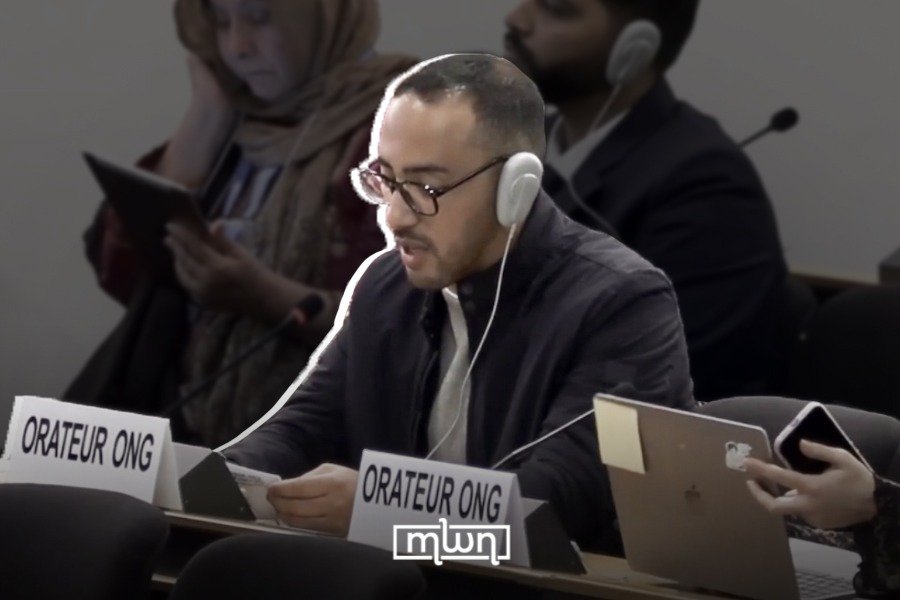
Rabat – Mahmoud Zaidan, a Polisario critic and a former detainee held by the separatist group in Tindouf has shared disturbing accounts regarding his enforced disappearance, torture and abduction he endured in Tindouf camps.
“I appear before you as a Sahrawi refugee who has been subjected to various forms of human rights violations in the Tindouf camps, including abduction, enforced disappearance for a period exceeding four months, psychological and physical torture, and death threats, before being forced to leave the camps,” Zaidan said.
He made his remarks at the 61st Session of Human Rights Council on Monday, stating that his decision to become a blogger is to document the systematic violations committed against Sahrawis by Polisario’s leadership in Tindouf.
Zaidan described the camps as home to slavery, systematic theft of humanitarian aid, and child exploitation in criminal gangs including in drug trafficking.
“These actions are carried out to silence bloggers and spread fear among the population,” he said, urging the council to intervene through its mechanisms to protect the residents of the camps from the abuses they face by Polisario’s leadership.
He also recalled Algeria’s reluctance in rejecting a census of the camp population.
The Tindouf camps are experiencing an exceptional legal situation that has been further worsened by the Polisario leadership and the host country’s refusal to conduct a census of the camp population.
Sahrawis in the deserted camps, controlled by Polisario and run by Algeria’s regime, face many challenges, including malnutrition, diseases like anemia among children and pregnant women among others.
The situation is further complicated by Algeria’s refusal to allow a census to accurately assess the number of refugees in the camps, which is currently estimated at around 90,000.
The dire situation has long been confirmed by the UN Secretary General, who again warned against the conditions under which Sahrawis live in his report on Western Sahara in 2025, citing malnutrition that expands anemia and other diseases among children and women.
Another evidence is the latest appeal by the UNHCR, which called for increased support to Sahrawis.
Many UNSC Resolutions acknowledge the challenges Sahrawis endure; including Resolution 2797, which pointed out the insufficient funding for refugees and strongly encouraged donors to provide additional funds.
It also emphasized the request for refugee registration through a census. Algeria’s regime, however, continues to reject this international appeal. Critics suggest that this consistent refusal for a census is because only 20% of the camp’s population is actually of Sahrawi origin.
Among others, former Polisario leaders turned critics have revealed this excuse, indicating that 80% of the population in the camps consists of Tuareg people originating from countries across the Sahara desert, including Niger, Chad, Mali, Algeria, and Libya.
Zaidan on Monday recalled the situation under which Sahrawis live in the camps, stating that Algeria’s regime bears responsibility for these acts.
Sahrawis in the camps are strictly denied to leave Tindouf, preventing them from freedom of movement even inside Algeria.
