


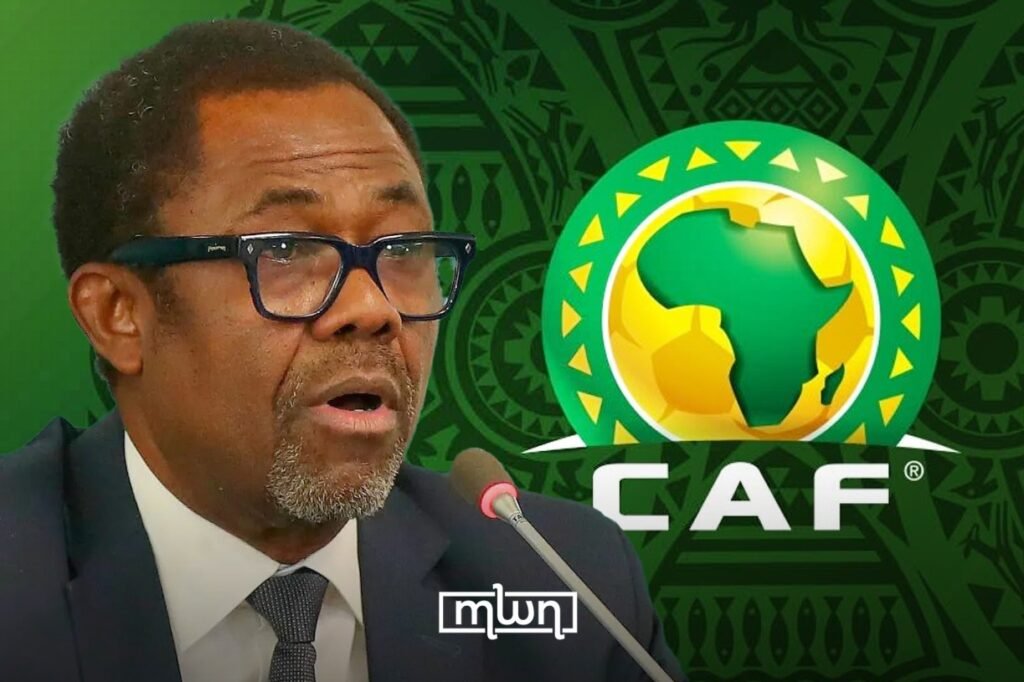
Rabat – Former Confederation of African Football (CAF) Secretary General Veron Mosengo‑Omba spoke out yesterday about the controversy surrounding the 2025 Africa Cup of Nations (AFCON) final, after CAF officially awarded Morocco a 3‑0 win and declared Senegal’s forfeit.
In an interview with France 24, Mosengo‑Omba began by thanking King Mohammed VI and the Royal Moroccan Football Federation (FRMF), led by Fouzi Lekjaa, for providing CAF with strong organizational support during the tournament.
He explained that neither CAF President Patrice Motsepe nor himself had any role in the disciplinary procedures after the final.
On January 18, Morocco filed an appeal based on Article 82 of the AFCON regulations. That rule states that if a team withdraws from a match or refuses to play without the referee’s approval, it is considered a loss and the team is eliminated.
Morocco argued that this article should apply to the situation in the final. However, CAF’s disciplinary committee ruled that the case did not meet the conditions of Article 82.
Morocco then exercised its right to appeal, seeking to enforce the clause. The existence of two different rulings, Mosengo‑Omba said, drew criticism but also demonstrated the independence of CAF’s judicial bodies.
Senegal also used its right to challenge the decision, taking the case to the Court of Arbitration for Sport (CAS) in Lausanne. Mosengo‑Omba stressed that CAS is independent and not under CAF’s authority.
Addressing accusations that CAF is manipulated or controlled, he responded: “Anyone who claims CAF is under outside control must bring evidence. These claims are simply not true.”
He admitted that the controversy placed CAF under heavy scrutiny, but insisted that the organization followed its statutes and respected due process.
He also revealed that he had considered resigning earlier but chose to remain in his role to oversee the AFCON, which he described as record‑breaking in terms of revenue and global attention.
A contested tenure
Mosengo-Omba joined CAF in 2021 after a long career at FIFA, where he built close ties with senior leadership.
From the start, he took control of day-to-day operations and became one of the most powerful figures inside the organization.
However, his time in office drew criticism from within CAF. Reports raised concerns about governance practices, decision-making processes, and the concentration of power. Some staff and observers described an environment marked by tension and limited oversight.
Allegations also emerged around favoritism in appointments and the weakening of internal control systems.
People close to him said key committees lost independence, while important decisions moved into a smaller circle around the Secretary General.
Despite these claims, CAF leadership continued to back him, and he remained in position during a period of growing internal pressure before announcing his resignation on March 29.
Read also: Veron Mosengo-Omba Resigns as CAF Secretary General After Turbulent Tenure