


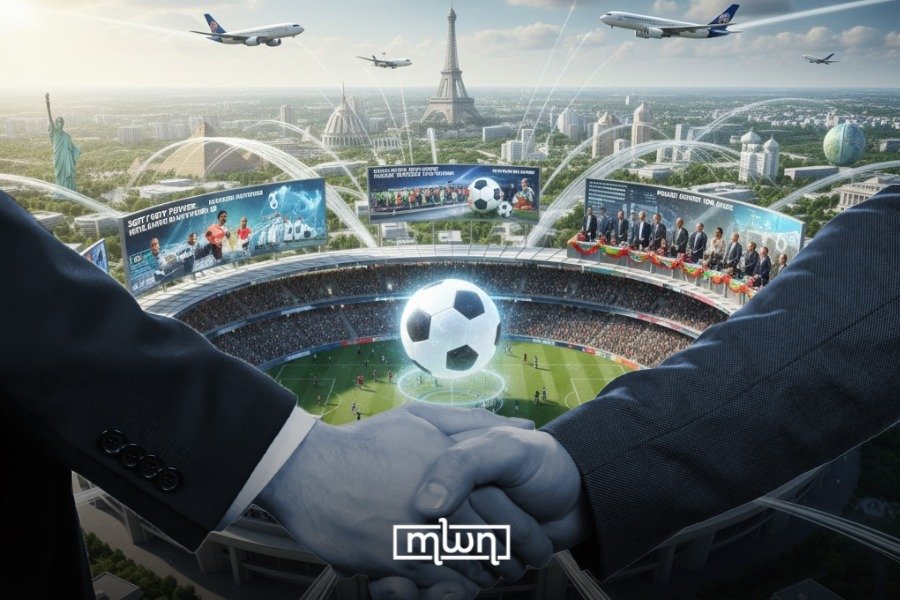
The African Cup of Nations (AFCON 2025), December 21st, 2025 to January 18th, 2026, and the FIFA World Cup in 2030 constitute two landmark events in the governance of global sport and especially for the Kingdom of Morocco. The country has not hosted the African tournament since 1988. And co-hosting the World Cup with Spain and Portugal, which will symbolically link to South America, will represent the first genuinely transcontinental World Cup.
Through the organization of these mega-events, Morocco shows an engagement that should be understood as a strategic convergence signal of sport diplomacy, regional cooperation, and economic policy, embedded within its diplomacy and broader national interests.
Rather than presenting the two tournaments as stand-alone sporting events, Morocco approaches them as a long-term political, economic, and diplomatic investment.
The analysis of Morocco’s strategy actually draws on three complementary theoretical perspectives. First, the soft power theory helps explain how states use culture and symbolic capital to enhance international influence. In this case, football, which is a globally shared cultural language, offers Morocco a powerful platform for attraction, visibility, and legitimacy.
Second, regionalism and new regional cooperation theories emphasize flexible, functional, and issue-based partnerships among neighboring countries. The Morocco–Spain–Portugal hosting model reflects a form of pragmatic regionalism that transcends formal institutional boundaries between Africa and Europe.
Third, the political economy of sport highlights how mega-events are embedded in global capitalism, involving state intervention, private actors, global media markets, and uneven economic and social impact. Through the AFCON 2025 and the World Cup 2030, football is therefore both a diplomatic instrument and a market-driven industry.
Global impact of football
Unlike hard power (military or economic power), soft power is based on attractiveness, through the use of music that seduces, of a film that fascinates, some political values that inspire, or a diplomacy that reassures. It is such attractiveness that shapes the global perception of a country.
History is replete with examples where states used soft influence as a tool of diplomacy for the crucial role it can play in promoting development, strengthening foreign relations, or projecting their image and power. One of the most notable examples remains the “ping-pong diplomacy” episode between the United States and China in 1971. A simple encounter between table tennis players, an American and a Chinese, paved the way for a historic diplomatic rapprochement between their two countries after so many years, marking a possible return of China on the international stage.
More than ever, football has evolved in our time far beyond a sporting activity, to become a major economic sector, a diplomatic instrument, and a source of soft power for states. Its global influence is such that football governing bodies, clubs, and even individuals can rival governments in wealth and political weight, as symbolized by the FIFA President, M. Gianni Infantino, who is actually treated at the level of a head of state. Moreover, players are sold and bought in a market, while superstars are evaluated at hundreds of million euros.

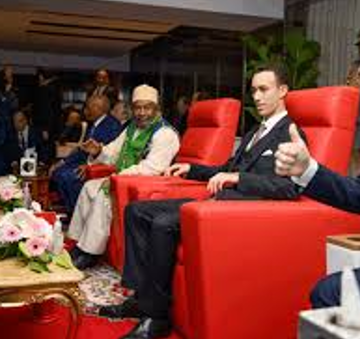
Moreover, to be convinced of the capitalistic aspect of football as a global industry, one has just to see how some European clubs are followed and watched in large parts of the world and how huge are the revenues generated by the broadcasting rights and sponsoring.
Some countries have tried and managed to impose their respective image and culture on the world through cinema production, media, universities, and so on. But other countries, such as Qatar, appear to have wisely exploited their resources too by means of influential news channels, global sporting events (such as hosting the FIFA World Cup 2022), and strategic investments abroad, including European football clubs and stadiums.
However, soft power is not without its critics. Its effectiveness depends on consistency between words and actions. A nation that promotes human rights internationally but violates them at home loses credibility in the end. It is also vulnerable to disinformation, manipulation, or competition from other powers.
In a multipolar and changing world order, the new so-called “smart power” has emerged as a strategy that balances hard power, economic strength, and influence diplomacy. It is seen as a response to contemporary challenges.
Football as a tool of strategy
For a few decades now, hosting major football tournaments has generated significant economic activity, particularly in fields like tourism, construction, transport, media, and services, as illustrated by recent events in Morocco, especially the organization of the African Cup of Nations AFCON 2025, and earlier tournaments such as the 1982 World Cup in Spain. However, the true social and economic impacts of these events still require long-term evaluation and careful study.
Sport mega-events, including the FIFA World Cup and the Olympic Games, have increasingly been used as strategic tools for urban development and national branding. Since the 1990s, such events have often accelerated planned infrastructure projects and urban regeneration, as seen in the city of Barcelona Olympic Games 1992. While they can enhance the international image, modernity, and technological capacity, as demonstrated by the World Cups in Spain 1982 and Italy 1990, they have also generated controversy due to rising costs, social displacement, environmental impact, and even public opposition.
Recent research suggests that the presumed transformative power of mega-events has diminished in established economies of developed countries, leading many cities to withdraw from bidding processes. Nevertheless, for emerging countries, hosting such events remains a major opportunity to drive infrastructure development, institutional reform, and international visibility. Overall, football mega-events function as powerful but complex catalysts of economic, urban, and symbolic change, whose outcomes depend heavily on governance models, historical context, and local capacity.
Football as an industry
The interest that sponsors are showing in events, which are now dominating in the media, marks a turning point. Media coverage is growing, and audiences are following suit. For different businesses and global brands, there is an opportunity to invest in a competitive territory that guarantees significant profits for economies, states, and international non-governmental organizations, such as FIFA, as well as continental football organizations, like the Union of European Football Associations (UEFA) and Confederation of African Football (CAF). The media love to tell great stories while focusing on sporting performance.
There’s no reason why investors, sponsors, and the media shouldn’t increasingly target the entire globe. It’s also a matter of profits, responsibility, and power. And there’s one thing we’re certain of: in this field, “supply creates its own demand,” as professionals say.
In fact, sport is not just a source of inspiration. It’s also a cultural accelerator. For brands that genuinely engage, it works on mindsets, cultures, and societies. Therefore, states cannot miss the opportunity to try, according to their means, to position themselves, showcase their respective power, and impose image projections on the world. And this is a facet of soft power and diplomacy.
Organizers and public authorities also work on a path to reduce the environmental impact of big events, through concrete actions on travel, energy, waste, and digital footprint, … etc. This represents a cultural revolution. Advertisers are already trying to integrate ecological transition criteria into their choice of sporting events, but without making their investments conditional or engaging in a long-term monitoring process. In this regard, we recall that despite the media campaign waged against the organizers of the FIFA World Cup 2022, in Qatar, because of the stadium air conditioning systems, sponsors did not step back from supporting the event. Hence, the issue of the environment will be more and more crucial for sponsors, who want to secure their positions at future World Cups and Olympic Games.
Another challenge is related to the use of technology, and how it can contribute to secure et events and to enrich the audience experience? So far, the most significant initiatives have involved augmented reality, allowing the public to watch games on television in 4K quality and access to real-time data, while offering spectators the possibility to view matches and event data on their smartphone screens. Such experiences have also taken place in fan zones, with tens of thousands of fans, in addition to the stadiums.
This type of innovation is still far from being widespread and is reserved for major competitions like the FIFA World Cup and continental championships. The organizers are focusing as much on real-world entertainment and a festive atmosphere in and out of the stadiums as on digital entertainment and broadcasting of match coverage and analysis programs, from state-of-the-art, ultra-connected television studios, equipped with sophisticated technology.
Sport in general, and football in particular, is thus a laboratory for immersive experiences, in which fans are no longer just passive spectators, but also active participants, contributors, even co-producers of emotions. And above all, spectators are consumers. Around the world, they are consumed by experiencing football and nourish the surrounding ecosystem.
Morocco’s sporting power strategy
The example of modern Morocco’s strategy through football is very much an edifying case study, for the sake of its value, which exerts a salutary moral influence on the African continent and beyond. It is particularly instructive, as it provides perfect information about the evolution and development of the country as well as its nation branding. It combines and builds on promoting football, as a lead sport, to consolidate its diplomatic positioning through a sustained soft power.
Morocco has established itself as a major football power on an African and global scale. This progress, brought to the world’s attention by the national team’s impressive results at the World Cup 2022 in Qatar, is based on a multidimensional and proactive strategy, combining the organization of mega-events, profound institutional reform in football practice and institutions, massive investments in infrastructure, and a proactive sport diplomacy.
This football strategy is an integrated model combining sporting governance and performance, organizational excellence, structural investments, and diplomatic influence. It positions Morocco as the leading African and Arab football power, a major geopolitical player through the lens of sport. The success of hosting events, particularly the 2025 Africa Cup of Nations (AFCON), from December 25, 2025, to January 18, 2026, is crucial to validating this trajectory and consolidating the Kingdom’s credibility in the lead-up to the 2030 World Cup. This ambition is presented as inseparable from a broader commitment to the shared development of both the Kingdom and the African continent.
The mega-events strategy is an ambitious, multifaceted undertaking. While it promises substantial economic benefits and strengthens the Kingdom’s diplomatic influence, it must also address domestic social expectations and navigate a complex, sometimes hostile, African and Arab geopolitical environment. Ultimate success hinges on the ability to transform sporting growth into tangible and shared socio-economic progress, while simultaneously managing regional and continental rivalries.
A Structuring event-based ambition
Two major football events marked Morocco’s calendar for the last three years and will continue to do so in view of the year 2030:
- The organization of the Africa Cup of Nations, AFCON 2025 (21 December 2025-January 18, 2026)
- The co-hosting by Morocco, Portugal, and Spain of FIFA World Cup in 2030
AFCON 2025 logo
These two events aim to consolidate Morocco’s image as a key hub for hosting international competitions, thereby strengthening its soft power and image as a stable, secure and trusted host for meetings and gatherings of large fan crowds, while being under worldwide media attention.
Under the leadership of King Mohammed VI, football is thus an instrument of the Moroccan proactive sport diplomacy, that is serving a continental ambition, a part of a structural transformation strategy in different fields. This sports strategy is partly based on:
- Technical cooperation, by regularly hosting training courses for African managers, coaches, and referees,
- Strengthening bilateral alliances with African football federations.
- Defending national interests within continental bodies, countering attempts at political manipulation,
- Proving to Africa and the world the country’s capabilities and strength through the hosting of numerous other football events, such as youth and women’s national teams’ tournaments.
AFCON 2025 economic impact
Revenues and development drivers confirm that the organization of the 2025 Africa Cup of Nations was a success and a major economic catalyst through its economic impact by sectors, highlighting management, technology, transport, tourism, and serving as a showcase of investment acceleration and regional development.
Total investments engaged, for sustainable construction or renovation of infrastructure, reached 2,3 billion Euros (especially football stadiums, roads, airports, services, etc.). It benefited to some 3.000 companies that contributed to all projects.
According to Mr. Ryad Mezzour, the country’s Minister of Industry & Trade, Morocco’s hosting of the Africa Cup of Nations 2025 delivered major economic returns. Speaking to France 24 Tv, Mr. Mezzour confirmed that the direct revenues exceeded 1 billion Euros, surpassing the total costs of organizing the continental tournament.
The Minister explained that profits came mainly from tourism inflows (approx. 600.000 visiting supporters from abroad, in a total of approx. 20 million tourists in 2025) and a sharp rise in domestic consumption during the competition period.
These figures confirm that AFCON 2025 was not only a sporting success but also a financially sustained event for the host nation. He said that the positive effects extended beyond short term revenues. The preparation for AFCON 2025 created +100.000 job opportunities, providing a direct boost to the national economy and supporting local businesses across multiple sectors.
For the Minister, Morocco gained 10 years of infrastructure development in two years (2024-2025). It should be recalled that the AFCON organization was a full-scale rehearsal and a real preparation on the way to co-hosting the 2030 World Cup, which represents an estimated investment of approx. 4.2 billion Euros for Morocco, described by the government as a “strategic transformation accelerator.” The government also explained that, due to this AFCON, 80% of the infrastructure necessary for the 2030 World Cup is available in 2026.
On its side, the African Confederation announced that the AFCON 2025 in Morocco is undoubtedly the most successful commercial story in the history of African football, as the commercial success of the Competition has led to over 90% increase in the CAF revenues, which is primarily sponsored and named the “TotalEnergies CAF Africa Cup of Nations Morocco 2025”. This rise in revenue was influenced significantly by the increase in the number of commercial partners of CAF, an increase in media rights distribution, and interest generated in new markets like the Far East, as well as China and Japan, alongside the usual markets.
Talking about sponsors, CAF had 9 in the AFCON in Cameroon, 17 in the AFCON in Ivory Coast, and a record 23 in the AFCON in Morocco.
In addition, other aspects of the broader success of the AFCON will not be measured solely by its logistical organization or infrastructure, but also by its ability to unite the Moroccan youth, strengthen the society, and promote the nation’s brand.
Lessons learnt from AFCON 2025
Morocco’s widely recognized, excellent organization of AFCON 2025 offers a set of concrete lessons, that directly reinforce the Kingdom’s diplomatic strategy, as a football country, and informs of its preparation for the 2030 World Cup. The regional mega-event functioned as a strategic rehearsal for the global one. Also, beyond the operational success, AFCON 2025 functioned as a laboratory, producing measurable economic, diplomatic, symbolic, and institutional gains.
In fact, in contemporary sport diplomacy, a hosting state’s credibility comes through delivery, that is built less on ambition than on execution. In this way, AFCON 2025 demonstrated Morocco’s ability to deliver a complex, multi-city, mega-event on time, securely, and at high organizational standards. This transformed Morocco’s narrative from that of a “candidate” country, long familiar with bids for hosting the World Cup (1994, 1998, 2006, 2010, 2026), to that of a proven and widely hailed host. This success reinforced trust in Morocco among international sports bodies (CAF, FIFA), strengthened its bargaining power in international negotiations related to World Cup 2030, and reduced reputational risk perceptions among global partners and investors.
Hence, hosting success can translate into continental leadership when framed as a shared African achievement. Morocco positioned AFCON 2025, not as a national showcase, but as a continental success, emphasizing inclusivity, hospitality, and African excellence. The event reinforced Morocco’s image as a service provider to Africa, rather than a hegemonic actor. It consolidated its influence within CAF decision-making, bilateral ties with African states, and alignment of Morocco’s sport diplomacy with its broader African economic and religious diplomacy. This is all a contribution to the Moroccan soft power.
Competitive sport diplomacy and geopolitical risks
Morocco is not operating in a strategic vacuum, and African competition for hosting the AFCON and other continental competitions is not always favorable. Other nations like Rwanda, Senegal, Ivory Coast, etc., also use sport as a tool for diplomacy, media exposure, and justification for major infrastructure projects. There exists even a risk of backlash. Moroccan success and influence, particularly through figures like Fouzi Lekjaa, President of the Moroccan Royal Football Federation (FRMF), member of FIFA Executive Council and 1st Vice-President of CAF, arouse jealousy and a lot of competition, especially from influential African countries, and expose the Kingdom to destabilization attempts in such events as AFCON or the 2030 World Cup.
The sad and dramatic events that shaded the AFCON 2025 Final match, on January 18th, 2026, and attempted to destroy the globally witnessed image of success, are a proof of the strong attempts targeting Moroccan institutions and values in all aspects, especially through fake news campaigns on the social media and even direct declarations to the media from African teams’ officials, coaches, players, and public Tv reporters.
As a matter of fact, the hard wake-up of the Moroccan public, after the missed opportunity to win the African title, was a bitter experience, due to the sad feelings left by the reactions of some parts of the public and officials in so many Arab and African countries, who were happy for the loss by the Moroccan national team. However, it was without counting the resilience and great pride of the Moroccan people, who showed an unwavering support to the team players and to the State as a whole, while taking notice of the harsh reality embedded in the geopolitics of football and international relations.
The Moroccan public remains confident and proud of the proven preparedness and hosting achievements of such a big continental event, which cannot come without raising envy due to this success and visibility, and even hatred from so many countries. Excellence can usually disturb weak minds and unsuccessful (if not failing) political regimes, as success in hosting such an event is not easy or guaranteed, knowing that many countries avoid and can simply not organize according to international standards. Yet, Morocco took the responsibility and raised the organizational level on all aspects to a height never reached before, which most certainly will not be in years to come. This was an edition of the tournament that beat all records.
Institutional coordination as a diplomatic asset
As the host country, effective inter-institutional governance within the Kingdom, during preparation and organization, is itself a form of soft power. It gave the image of the country as a coherent body of multiple institutions and a capable state apparatus, in full control of all aspects of events. In fact, AFCON 2025 required optimal coordination between ministries, including diplomacy, regional and local authorities, security forces, public and private operators, and international partners. The success of this synchronized coordination:
- projected an image of power and influence of a stable, determined, and prosperous state,
- enhanced Morocco’s reputation as a reliable partner for multilateral projects as well as its standing in the diplomatic field,
- Strengthened confidence among European and international co-hosts for 2030,
- Supported Morocco’s positioning as a host for other global political, cultural, and economic events and conferences, requiring a high degree of good governance and logistic capacity, as it was the case when hosting global conferences like COP22, World Bank/IMF, Interpol, etc.
Security and stability signaling
In the global south, security management is a strategic sector and a decisive component of the soft power of any country. So, Morocco’s ability to ensure safe, smooth, and festive conditions for more than one month throughout the AFCON 2025, sent a strong signal of peace and stability to the whole world, in a regional context often associated with instability.
The security preparedness and execution helped in making Morocco a model for managing large numbers of crowds and activities in the multiple cities’ stadiums and fan zones. For instance, security mobilized some 3,387 new police officers, specially prepared and trained for the task of managing large gatherings, assisted by the newest technologies of video surveillance through the use of installed and drone cameras.
During and after the event, the country’s image came out as that of a stable gateway between Africa, the Middle East, and Europe, enhancing trust among foreign governments and international media from all over the world. This excellent security management proved its continental leadership through inclusivity, good governance and international cooperation.
As part of the event, Morocco welcomed volunteer police from Gabon, Tunisia, Tanzania, and other African countries to help manage their national fans and thus boost stadium security. This was part of Africa’s security cooperation, led by Morocco, helping countries share experience and ensure safe, well-organized matches in this major continental tournament.
The country also received different foreign expert delegations that focused on security arrangements and reflected interest in learning from Morocco’s security model for future major sporting events, as some countries prepare to host events which require the establishment of an international security cooperation center under FIFA regulations.
As an example, among others, American and European governments were screening Morocco’s security strategy and execution during the AFCON 2025, to mitigate risks and threats related to mass fan visiting the country during the event. In this context, a Spanish and German joint delegation visited Morocco on January 7-9, 2026. An FBI delegation visited AFCON facilities on January 4-6, 2026, as the USA prepares to co-host World Cup 2030 with Canada and Mexico, and a British sports security delegation also visited the Rabat Moulay Abdellah stadium, on January 14th, 2026, in view of the preparation of Euro Cup 2028, in UK & Ireland.
Narrative control, domestic legitimacy as external Strength
Success of events hosting must be actively and securely narrated, at home and abroad, to produce diplomatic returns. Otherwise, it cannot have the expected impact on the long term.
In terms of fan attendance and media coverage, this AFCON edition registered all-time records, especially in marketing and audience:
- More than 1 million 300 000 spectators
- 500+ million Tv spectators in 180 countries
- Broadcasting in 30 European countries
- 800 accredited reporters, representing official media
- Unlimited number of influencers on all social media platforms
It is remarkable how Morocco effectively managed, to a large extent, and in spite of the absence of a strong national media on the world stage. It ensured to have international media positive narratives, highlighting hospitality, efficiency, identity, and cultural depth, while minimizing operational controversies. This official narrative discipline helped translate the AFCON 2025 success into symbolic capital, far beyond logistical capability and execution. It strengthened the national branding, as it aligned with post-2022 World Cup perceptions of Moroccan cultural values and football practice. It also increased Morocco’s visibility on the world stage as a modern African power with global standards. It finally generated positive spillovers into tourism, investment, and cultural diplomacy.
Another learnt lesson can be seen in the fact that the value of soft power abroad is not possible for any country without being sustained and strengthened by legitimacy at home.
As recently seen, the broad domestic approval of AFCON 2025 in Morocco, by the society, political institutions and the media, reinforced the social contract around mega-event hosting, countering the global and domestic trend of public resistance to such events, as well as mitigating the impact of fake news and negative reporting.
The ultimate effect of Morocco’s success increased the state’s autonomy and confidence in its international commitments in the same way as it enhanced its global credibility as a partner capable of sustaining long-term projects without internal instability.
That is how Morocco managed to use football as a strategic instrument of soft power through a coordinated interaction between the state, diplomacy, institutions, and symbolic politics. This use is neither incidental nor purely sporting; it is embedded in a long-term vision of international positioning, regional leadership, and national transformation.
International Image and Nation Branding
Football allows Morocco to project an image of stability, modernity, and reliability in a region often perceived as volatile. The successful organization of continental and international competitions—such as the Africa Cup of Nations and Morocco’s role as co-host of the 2030 FIFA World Cup—signals administrative competence, security capacity, and logistical sophistication.
The national team’s historic performance at the 2022 World Cup amplified this effect dramatically. Morocco was portrayed globally as a disciplined, competitive, and culturally rooted nation, reshaping external perceptions and reinforcing a positive national brand associated with excellence, resilience, and ambition.
Yet it was not until the AFCON 2025 that the world spot lights were fixed on Morocco.
Sport Diplomacy and Geopolitical Positioning
Morocco actively leverages football within its multilateral and bilateral diplomacy, in Europe, Africa, and the Arab world, partly through the presence of Moroccan international players, as well as by acting as a hub for African football development (investment in football infrastructure, training centers, cooperation agreements). In addition, the Kingdom avails itself of a strengthened presence and influence within CAF and FIFA structures. This sporting diplomacy complements Morocco’s broader strategy, especially in Africa, forging political alliances and win-win cooperation for shared development.
Moreover, the presence in international football governance organizations enhances diplomatic reach. Thus, Morocco undertakes a serious and effective institutional influence and global networking in this field. Civil society representatives from the football federation and clubs actually occupy influential positions within CAF and FIFA structures, enabling the country to have a say in agenda-setting, coalition-building, and norm-shaping at the global level.
Football thus becomes a channel through which Morocco exercises institutional soft power, through a structured and well-entertained networking policy, that allows gaining visibility and legitimacy in international decision-making arenas beyond traditional diplomacy.
Image projection and cultural identity
Football acts as a powerful vehicle for cultural diplomacy. The national team embodies a plural Moroccan identity -African, Arab, Amazigh, Mediterranean, and global- resonating strongly with the Moroccan diaspora in Europe and beyond.
By mobilizing our communities of Moroccans Living Abroad, through football, Morocco strengthens transnational, trans-generational, emotional ties and reinforces loyalty, visibility, and informal advocacy all over the world. A majority of the national team players are children of Moroccan families living abroad, who received their education and professional training mostly in Europe, but in fine answered the call of the heart in joining Morocco. They celebrate their Moroccan identity and pride, while choosing to help promote their parents’ homeland image and advance its football project development.
At home and abroad, football contributes to symbolic legitimacy. Success on the field fosters national unity and pride, reinforcing the state’s narrative of progress and collective achievement. Internationally, ceremonies, media coverage, and sporting rituals allow Morocco to communicate its values—tradition, openness, and ambition—without confrontation or coercion.
Through presence and influence within FIFA & CAF structures, Football thus becomes a diplomatic channel for Morocco to exercise institutional soft power, gaining visibility and legitimacy in international decision-making arenas beyond traditional diplomacy.
Morocco’s use of football as a tool of assumed soft power is state-led, strategic, and multidimensional. It combines image-building, sport diplomacy, institutional influence, infrastructure development, and cultural projection. Far from being merely a sport, football functions as an industry, a field for investments, and a global diplomatic language, through which Morocco enhances its international standing, consolidates regional leadership, and advances long-term strategic partnerships and geopolitical objectives, through attraction.