


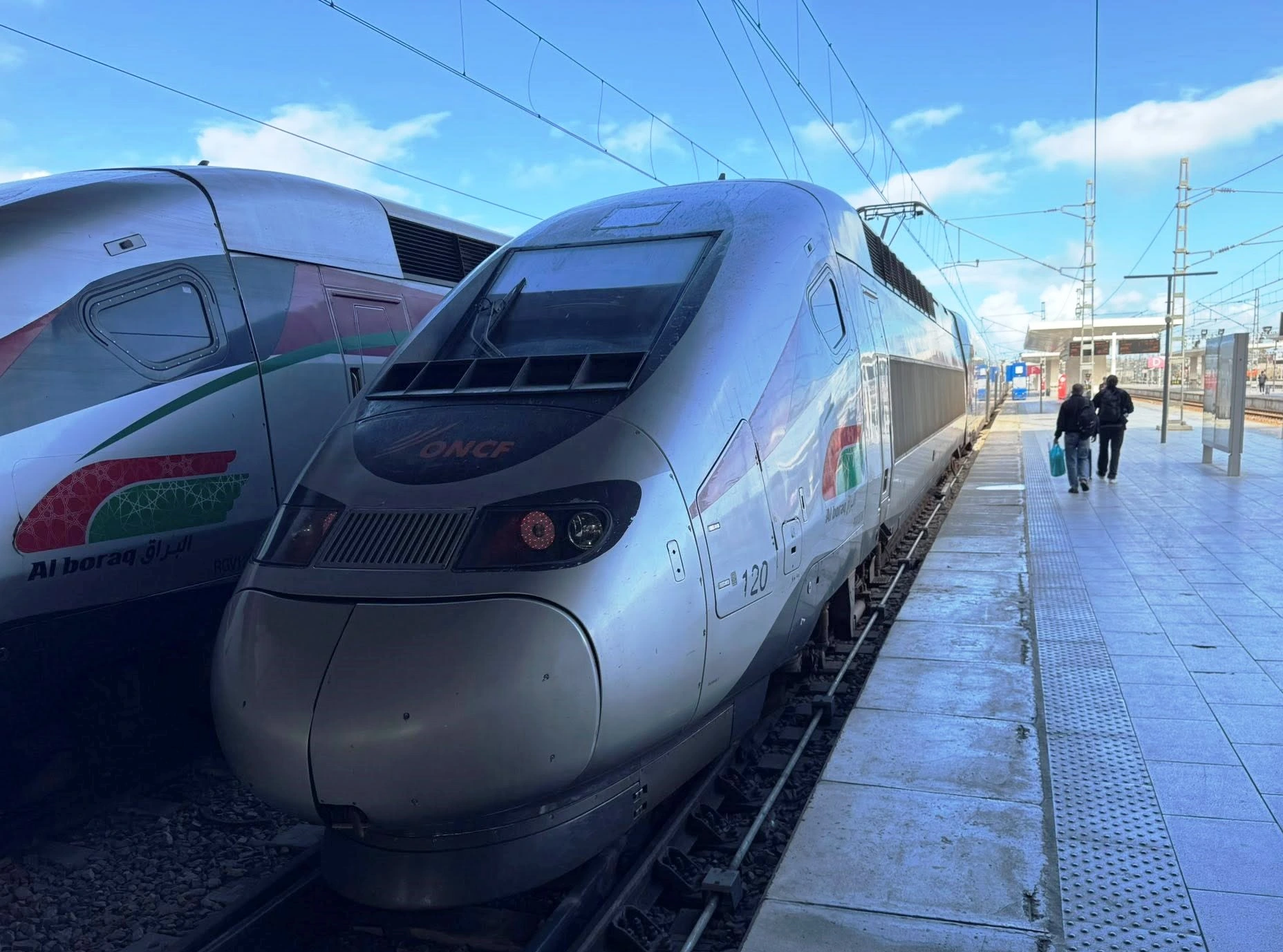
The alarm went off at 5:00 a.m. in our Casablanca hotel room. Too early? Maybe. But today we were catching Africa’s fastest train, and the excitement made it easy to get out of bed.
The Al Boraq—Morocco’s pride and the continent’s first high-speed train—was about to take us from Casablanca to Tangier in just over two hours. A journey that used to take five hours now happens in less than half the time. I wanted to experience it firsthand, so we booked first-class tickets to see what the Morocco high speed train was really like.
Here’s everything you need to know about riding the Al Boraq, from booking tickets to what it feels like when Africa’s fastest train reaches 320 kilometers per hour.
The Al Boraq started operating in 2018 and changed how Moroccans travel between their biggest cities. The name comes from Islamic tradition—Al Boraq was a mythical creature that, according to legend, carried the Prophet Muhammad from Mecca to Jerusalem in a single night.
What makes this train special? It’s powered by wind energy, reaches speeds of 320 km/h, and connects Casablanca to Tangier in about 2 hours and 10 minutes. Before Al Boraq, this same journey took around 5 hours on regular trains.
The train is a double-decker, and all passenger seats are on the upper level. It makes two stops along the way—first in Rabat, then in Kenitra—before reaching Tangier.
Booking Your Morocco High Speed Train Tickets: What I Learned
I bought our tickets online before arriving in Morocco, and I have to be honest—the experience wasn’t smooth. The website was quite glitchy. I had to try several times before the booking actually went through.
Another thing to know: they don’t accept all cards. I tried three different cards before one finally worked. So if you’re booking online, have a backup payment method ready.
Our first-class tickets cost 378 dirhams for both of us (around $38 USD). But here’s something important—ticket prices change based on the day and time you travel. An early morning train might cost less than an afternoon departure, so it pays to compare different times when booking.
You don’t need to print your tickets. Just show them on your phone at the station.
Casa Voyageurs Station: Modern and Beautiful
We arrived at Casa Voyageurs station around 6:30 a.m. for our 8:00 a.m. departure. The building itself is impressive—modern architecture, very clean, and spacious inside.
The station isn’t just for the high-speed train. Many other trains depart from here too. There are shops, cafes, and restaurants, though most weren’t open yet when we arrived so early.
One pleasant surprise: I didn’t need to check in at any counter. With first-class tickets, we could walk straight to the lounge.
The First-Class Lounge: A Quiet Start to the Journey
The first-class lounge at Casa Voyageurs is spacious and comfortable. It has working spaces with power outlets—perfect if you need to charge your devices before the journey. Free WiFi is available, which is helpful since there’s no WiFi on the train itself.
The lounge has a self-service bar where you can make your own coffee or tea. I tried the cappuccino from the machine, hoping for a strong morning fix. It was okay, but quite milky—not the kick I needed at 6:30 in the morning. My travel companion went straight for an espresso. Smart choice.
One thing that surprised us about Morocco: the sun rises quite late. In early morning, it was still completely dark outside at almost 7:00 a.m. Had we known this before booking, we might have chosen a later departure. But we wanted time to explore Tangier before catching our onward bus, so the early wake-up was necessary.
First Class on the Al Boraq: Comfort and Space
When boarding time came, we found our carriage—number two—and climbed upstairs. The Morocco high speed train is a double-decker, and all seats are on the upper level.
The seats immediately impressed me. Very spacious with plenty of legroom. They recline too, which makes the journey more comfortable. Each seat has a small table, a reading lamp, and—importantly—a power outlet. There’s even a small box for rubbish.
The cabin feels bright and modern with large windows on both sides. Near the carriage doors, you’ll find luggage storage racks for your bags.
The seats were so comfortable that many passengers fell asleep within minutes of departure. In fact, the whole train became incredibly quiet. At one point, it felt a bit awkward to even talk because everyone was so silent. Not the worst problem to have on a train journey.
The Journey: Speed, Stops, and Scenery
Our train departed Casablanca on time. For the first part of the journey, the Al Boraq runs on older tracks, so it moves at normal train speeds. You won’t feel the high-speed experience right away.
After the stop in Kenitra, things change. The train switches to new high-speed tracks, and this is where it can reach its maximum speed of 320 kilometers per hour.
I watched the speed display carefully, hoping to see that impressive number. The train did reach 320 km/h, but only for about a minute—maybe less. For most of the journey, it traveled much slower. Still, the ride was smooth and comfortable.
The windows could have been cleaner. As the sun finally rose, we wanted to enjoy the Moroccan countryside, but the dirty windows made it difficult to see clearly. A small complaint, but worth mentioning.
The Cafeteria: Another Coffee Stop
The train has a cafeteria carriage with a good variety of drinks, croissants, chips, and chocolate. There’s space to sit and eat if you want.
After my disappointing cappuccino in the lounge, I needed another coffee fix. This time, I got lucky. The cappuccino from the train cafeteria actually tasted like coffee—much better than the milky version from the lounge.
The cafeteria isn’t fancy, but it’s convenient if you get hungry or thirsty during the journey.
Second Class: A Quick Look
I walked through the second-class carriages to see the difference. Honestly, second class doesn’t look bad at all. The seats appear comfortable, and the space seems adequate. If you’re traveling on a budget, second class would be a perfectly fine option.
Arrival in Tangier: 11 Minutes Late
We arrived in Tangier at 10:28 a.m.—about 11 minutes behind schedule. We were supposed to arrive at 10:17 a.m. Not a big delay, and it didn’t affect our plans.
The journey took 2 hours and 28 minutes total. Much faster than the old 5-hour route, even if the train only hit top speed briefly.
My Honest Thoughts on the Morocco High Speed Train
Was it worth it? Yes. The first-class experience was comfortable, the journey was smooth, and we saved about 3 hours compared to older trains.
A few honest observations:
The train was packed. Every seat was taken. If you’re traveling during busy times or weekends, book your tickets in advance.
The quiet atmosphere was nice but felt a bit strange. Everyone was so silent that it made filming and talking feel awkward.
The top speed of 320 km/h is impressive on paper, but in reality, the train only reaches this speed for a short time. Don’t expect to feel like you’re on a Japanese bullet train for the entire journey.
The dirty windows were disappointing. When you’re traveling through Morocco, you want to see the landscape.
No WiFi on the train is a drawback if you need to work during the journey. Plan accordingly.
Practical Tips for Riding the Al Boraq
Book tickets online in advance through the ONCF website, but try multiple payment methods if needed. The website can be glitchy.
First class is worth it if you want extra comfort and lounge access. The price difference isn’t huge.
Arrive early at the station to enjoy the first-class lounge, especially if you have an early departure.
Download entertainment before boarding since there’s no WiFi on the train.
Sit on the right side (heading to Tangier) for better views of the coast after Rabat.
Don’t expect constant high speeds—the train only reaches 320 km/h on certain sections of track.
Beyond the Train: Discovering Tangier
After arriving in Tangier, we only had a few hours before our bus to Chefchaouen, but we fell in love with this coastal city. Tangier sits at the meeting point of Africa and Europe, where the Mediterranean Sea meets the Atlantic Ocean.
The beach promenade (Corniche) was just five minutes from the train station—calm waters, clean sand, and a peaceful atmosphere. The medina felt different from others we’d visited in Morocco—wider buildings with yellow accents, art deco architecture, and a Mediterranean vibe.
We tried a delicious beef tajine with prunes, almonds, and walnuts. The meat melted in our mouths, and the sweetness from the prunes balanced perfectly with the savory flavors. It became one of our favorite meals in Morocco.
Tangier has over 2,500 years of history. Phoenicians, Romans, Portuguese, Spanish, and British all controlled this strategic city at different times. From 1923 to 1956, it was even an international zone administered by several countries. This unique history created a cosmopolitan atmosphere you can still feel today.
Walking through Tangier’s medina, you hear Arabic, Spanish, and French mixing together. It’s a beautiful reminder of the city’s multicultural past.
Final Verdict: Should You Ride the Morocco High Speed Train?
If you’re traveling between Casablanca, Rabat, or Tangier, the Al Boraq is the best option. It’s faster, more comfortable, and more reliable than buses or older trains.
The first-class experience adds extra comfort and lounge access, making it worth the small additional cost. But second class looks perfectly fine too if you want to save money.
This is Africa’s fastest train, and riding it gives you a glimpse of Morocco’s modern infrastructure. It’s not perfect—the WiFi situation needs improvement, and the windows need better cleaning—but it’s a comfortable, efficient way to travel.
Most importantly, it saves you time. Those saved hours mean more time exploring incredible cities like Tangier, wandering through medinas, trying delicious food, and making memories.
Book your tickets, grab an espresso at the lounge (skip the cappuccino), and enjoy the ride.
Have you ridden the Al Boraq train? I’d love to hear about your experience! Did you travel first class or second class? What did you think of the speed and comfort? Share your thoughts in the comments below—and if you have questions about booking tickets or planning your journey, ask away!
