


Rabat – Rights groups warned this week that prisoners in Iran are facing increasing risks during the ongoing war with the United States and Israel, as air strikes and a nationwide internet blackout leave thousands of detainees vulnerable.
Detainees held at the notorious Evin prison in Tehran have reportedly remained locked inside their cells during bombardments, with limited access to food and no clear information about their safety.
According to the Iran Human Rights Society, the internal situation at Evin prison has become “chaotic,” with reports that prison administrative staff closed the gates and abandoned the premises after the strikes began.
Prisoners were left with only small amounts of bread to eat, while food distribution reportedly stopped entirely in some wards, including the women’s section.
The situation worsened on Tuesday when part of the prison wall was damaged during an air strike, raising fears for the safety of inmates.
Families gathered outside the prison compound but were unable to obtain information about possible casualties, although some prisoners later managed to briefly contact relatives.
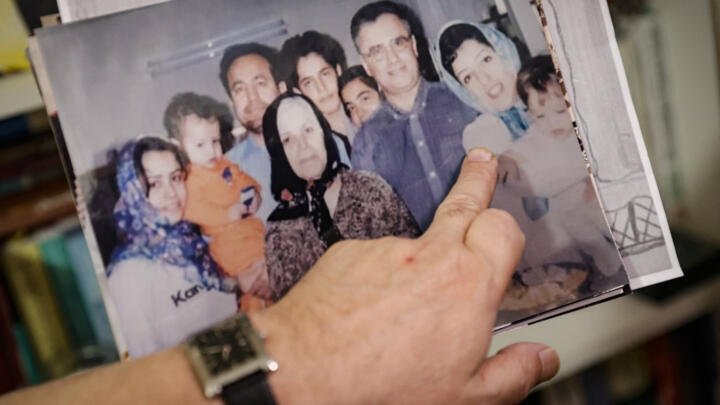
Vida Mehrannia, the wife of Iranian-Swedish academic Ahmadreza Djalali, who is detained at Evin prison, said she was able to speak to her husband for just two minutes on Tuesday.
“He told me they don’t have food, the situation is really bad, and they are afraid of what will happen,” she told AFP.
Djalali, who was sentenced to death in 2017 on espionage charges, reportedly told his wife that prisoners inside the jail felt “hopeless” as explosions continued nearby.
Foreign detainees are also being held at Evin prison, including British couple Lindsay and Craig Foreman, who were sentenced to 10 years in jail after being accused of spying, charges they deny.
Their son, Joe Bennett, said the couple could hear jets and explosions during a brief phone call.
“They’re hearing the jets going over. They’re hearing the bombs hitting surrounding areas outside of Evin,” Bennet told Reuters.
Across Iran, tens of thousands of political detainees are believed to be held in prisons, many of them arrested during nationwide anti-government protests earlier this year.
Rights groups say similar crises are unfolding in other detention centers, including Qezelhesar prison near Tehran and Lakan prison close to the Caspian Sea, where food shortages and limited medical care have been reported.
Amnesty International said prisoners across the country have described hearing and feeling nearby explosions as the war escalates.
“The sense of panic and fear amongs prisoners, from what we understand, is increasing day by day,” said Nassim Papayianni, the organization’s senior campaigner on Iran at Amnesty International.
“They don’t know what will happen next because prisons do not have shelters.”
The situation has been compounded by a nationwide communications blackout that has largely shut down internet access for more than five days, according to monitoring group NetBlocks.
While some detainees have managed to briefly contact relatives, many others have been unable to communicate with the outside world.
The foundation of Nobel Prize laureate Narges Mohammadi said it was “profoundly worried” about the activist, who is currently detained in Zanjan prison, after relatives lost contact with her during the blackout.
The group warned that the communications shutdown could allow authorities to carry out executions without notifying families or lawyers.
Human rights organizations have also raised concerns that Iranian authorities could use the chaos of war to intensify repression inside prisons.
“The Islamic Republic has a history of using the shadow of war and crises to carry out abuses in prisons,” the Center for Human Rights in Iran said.
Rights groups have called on Iranian authorities to release political prisoners and other non-violent detainees during the conflict, warning that inmates have no protection against aerial attacks.
“Prisoners have no ability to defend themselves against missiles or air strikes,” the Iranian Human Rights Society said.
“Any delay in decision-making could have irreparable human consequences.”