


Marrakech – The prolonged dispute over the Western Sahara did not end with gunfire. It ended on October 31, when the UN Security Council, through Resolution 2797, narrowed the political horizon to Morocco’s autonomy plan, forcing Algeria and the Polisario Front – humiliated and cornered – to sit at a negotiating table they had spent half a century refusing to acknowledge.
Fifty years of hollow armed resistance, theatrical ideological posturing, and bottomless Algerian petrodollar patronage did not collapse under Moroccan artillery fire – they collapsed under the suffocating, irreversible weight of their own geopolitical obsolescence.
The Polisario Front, a decomposing relic of Cold War liberation mythology, a cynically manufactured insurgency kept artificially alive on Algerian soil and Soviet-era romanticism, has not merely run out of road – it has run out of history itself.
What was once packaged to a credulous international audience as a righteous struggle for self-determination now stands exposed for precisely what it always was: a proxy instrument of Algerian regional ambition, dressed in the borrowed language of anti-colonialism, sustained not by the will of a people but by the calculated interests of a neighboring regime that never once intended to share in the consequences of the war it bankrolled.
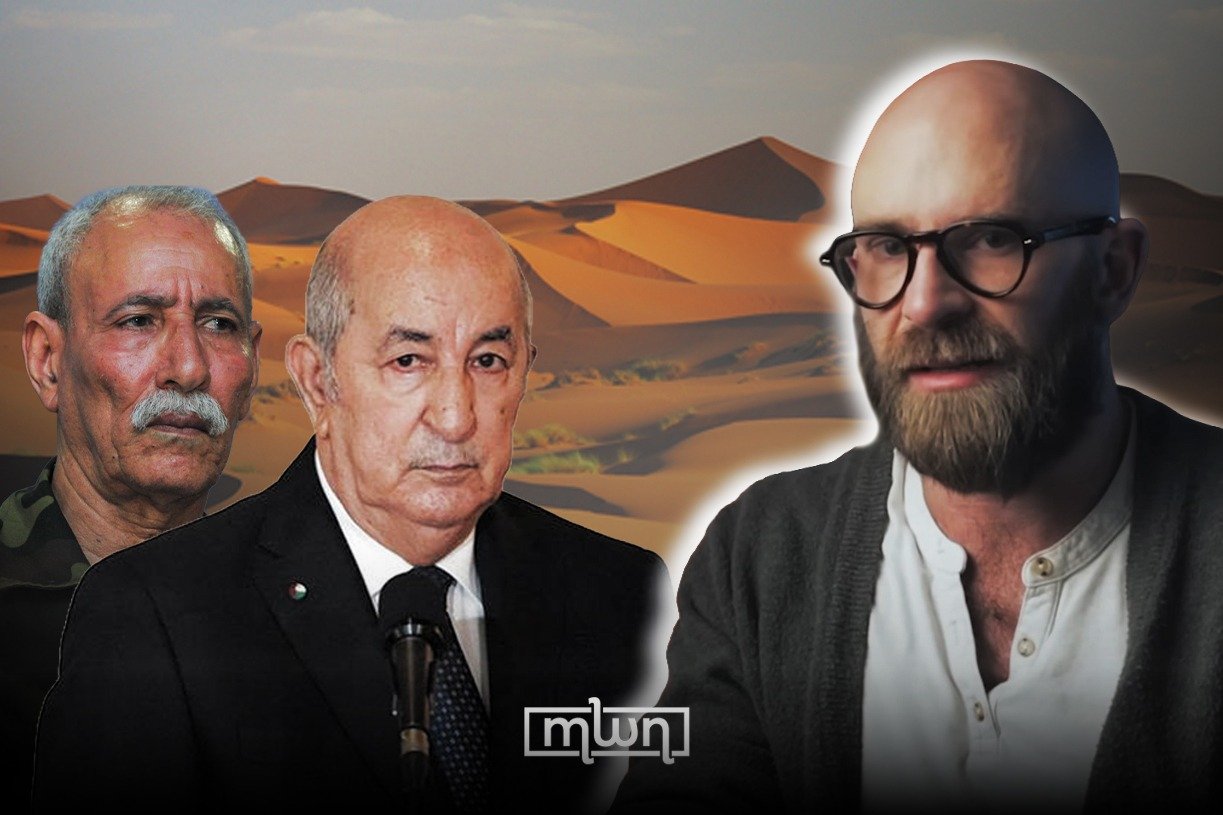
These realities were crystallized last week from an unlikely corner and the most unexpected of sources. WarFronts, a geopolitics YouTube channel commanding 1.3 million subscribers and a long editorial history of sympathy toward the Sahrawi separatist cause, published a video titled “Morocco Finally Conquered Western Sahara… And Nobody Noticed.”
Its conclusion was delivered without ceremony: “Morocco already won this war, not on the battlefield, but at the negotiating table, as it closed off any remaining path for the Polisario Front outside the confines of this deal.” Coming from a platform that built its audience on narratives hostile to Rabat, that sentence alone marks the burial of the independence fiction.
The channel did not arrive at this conclusion reluctantly. It arrived there analytically, systematically, and with the grim precision of someone acknowledging an autopsy result. “The way this story ends is already a foregone conclusion,” WarFronts stated plainly. “The Western Sahara conflict is over, and it’s only a matter of time before that’s made official.”
The Madrid conclave of February 8 and 9, first revealed by Spanish journalist Ignacio Cambrero writing for El Confidencial, was not a conclusion – it was the latest and most consequential in a series of secret contacts that had been accumulating since January under tight American diplomatic stewardship.
The meeting, held at the residence of US Ambassador Benjamin Leon Jr. and attended by UN Ambassador Michael Waltz, Trump’s senior Africa advisor Mossad Boulos, and the UN Secretary-General’s personal envoy for Western Sahara, saw Morocco present a sweeping 40-page revision of its autonomy proposal.
All parties subsequently acknowledged that the meeting had taken place. A further session occurred on February 23-24 in Washington, with additional rounds scheduled ahead of a planned May encounter in the US capital, where the United States intends to finalize a political framework agreement.
Madrid narrowed every remaining parameter. What comes next is the formalization of what has already been decided.
The negotiation now concerns implementation, not principle
François Soudan, editorial director of Jeune Afrique, stated the core reality without diplomatic softening: “The starting point of the ongoing negotiation process under American leadership is the implicit abandonment of the self-determination referendum.”
The independence option is not merely off the table – it has been declared obsolete, buried beneath UN Security Council Resolution 2797, passed in October 2025 with eleven votes in favor and not a single vote against. Russia and China, the Polisario’s last plausible great-power shields, chose to abstain. They did not vote against it. They did not veto it. They looked away.
WarFronts dissected that moment with clinical brutality: “It passed not because Russia and China were outvoted, but because they decided not to use their veto power.” That distinction is everything.
The expert thus paints the story of the Polisario Front’s demise. It was not defeated by superior numbers. It was abandoned by allies who quietly calculated that propping up a doomed insurgency on the fringes of the Sahara was no longer worth the diplomatic cost.
“Russia and its other allies clearly aren’t coming to back Algeria up,” the channel stated. “If Algeria did allow a direct conflict with Morocco, then it would face an enemy that did have the support of Europe and the United States.”
🇲🇦🇩🇿| Dégouté, un influent youtubeur pro-Polisario 🇩🇿 reconnaît qu’il n’y a plus aucune possibilité d’indépendance du Sahara et se résigne à la réalité : « Le Maroc 🇲🇦 a déjà gagné la guerre, le conflit du Sahara est terminé ».
Dans une vidéo vicieusement intitulée « Le Maroc 🇲🇦… https://t.co/sfsWJwHVoM pic.twitter.com/VgtlhW0uw3
— Morocco Intel (@MoroccoIntel) February 24, 2026
The diplomatic architecture that made this moment possible had been assembling for years with methodical deliberation. The United States endorsed Moroccan sovereignty in 2020. Spain followed in 2022. Israel in 2023. France in 2024 – the fall of Algeria’s last diplomatic bastion, given Paris’s long-standing role as its discreet protector.
The United Kingdom followed in 2025, declaring Morocco’s autonomy plan the “most credible, viable, and pragmatic” path to resolution. Saudi Arabia, the Emirates, and Qatar had long been aligned with Rabat. The noose had been tightening for years before Madrid made it visible.
Morocco’s revised proposal offers Western Sahara internal autonomy over local governance, economic affairs, water, and energy, while Rabat retains sovereignty over defense, foreign policy, and currency.
A regional parliament would combine directly elected members with mandatory quotas for Sahrawi tribal elders, youth representatives, and women. Former Polisario fighters would receive full amnesty. Sahrawi refugees stranded in Algeria’s Tindouf camps would be allowed to return.
In exchange, independence talk ends permanently, and the region formally adopts Morocco’s Hassania cultural identity.
However, Algeria and the Polisario object to these terms, including the Moroccan monarch’s appointment of the regional “prime minister,” preferring an elected executive, and insist that any referendum on the autonomy statute be restricted to Sahrawi voters rather than the full Moroccan electorate.
Although reports periodically surface and shift, these are broadly understood to be the last remaining points of friction in a negotiation whose fundamental outcome is no longer in dispute.
‘Going to Canossa’
Jeune Afrique’s Soudan did not spare Algeria the historical judgment it deserves: “In accepting to travel to Madrid under American diplomatic and psychological pressure to participate in negotiations around the Moroccan plan, Algeria and the Polisario went, in a sense, to Canossa.”
The reference was precise and deliberately brutal – Canossa, where in 1077 the Holy Roman Emperor Henry IV stood barefoot in the snow begging papal forgiveness, has since become history’s definitive shorthand for the humiliation of the powerful forced to kneel before the authority they spent years defying.
He added that President Abdelmadjid Tebboune is already calculating how to present what “could appear as a major reversal” to an Algerian public fed for decades on anti-Moroccan triumphalism – but concluded that for Algiers, “it is without doubt the price to pay to exit a certain diplomatic isolation.”
WarFronts was characteristically unsparing about the Polisario’s strategic bankruptcy: “Its chances of victory in an outright contest against Morocco are negligible.” The channel described the alternative to accepting Morocco’s offer with the calm finality of a death sentence – a slow, invisible war of attrition that the world would simply choose not to dignify with its attention.
“The conflict would be fought in a world that’s open about the fact that national actions are dictated by national interests. But outside of Algeria, there is no country with national interests that would force them to come to the Sahrawis’ defense.”
Even that Algerian support, the channel noted, would be reluctant and capped – with Algiers unwilling to risk direct confrontation with a Rabat backed by Washington and every major European capital. “More likely, Algeria would have to tell the Polisario front that they’re on their own.”
The humanitarian leverage the Polisario once brandished has long since rusted into irrelevance. International support for the Tindouf camps has withered year after year, leaving behind a structure sustained more by inertia than conviction.
In the channels assessment, the nearly 200,000 Sahrawis Algeria has hosted for decades have become “a greater and greater burden for Algeria every year.”
What was once the Polisario’s most potent moral shield has quietly inverted into an anchor dragging at Algiers’ strategic horizon – a protracted responsibility transformed from diplomatic asset into accumulating liability, one the Algerian state can no longer carry without cost or consequence.
WarFronts captured the totality of the Polisario’s collapse with a sentence that functions as an epitaph for the entire independence project: “The problem isn’t that the Sahrawi population doesn’t have options. But, that all of those options, except for one, obviously lead to ruin, and the Polisario Front doesn’t need to go through the pain of fighting a war to figure that out.”
With the certainty of Cassandra’s prophecy and the merciless logic of Thucydides, that one option is the deal Morocco is already offering.
Everything else is annihilation – unwitnessed and unlamented by a world that stopped paying attention long ago, except for a shrinking congregation of Western leftists who have lost every cause they have ever championed, clutching the Polisario banner with the same delusional devotion with which they once clutched Castro, Chávez, and every other corpse of a revolution history has already putrefied.
No agreement has been signed. But the outcome has already been written. Morocco did not conquer Western Sahara with tanks or airstrikes. It conquered it in every chancellery, every security council chamber, and every diplomatic corridor that mattered – until its opponents had nowhere left to stand.
