


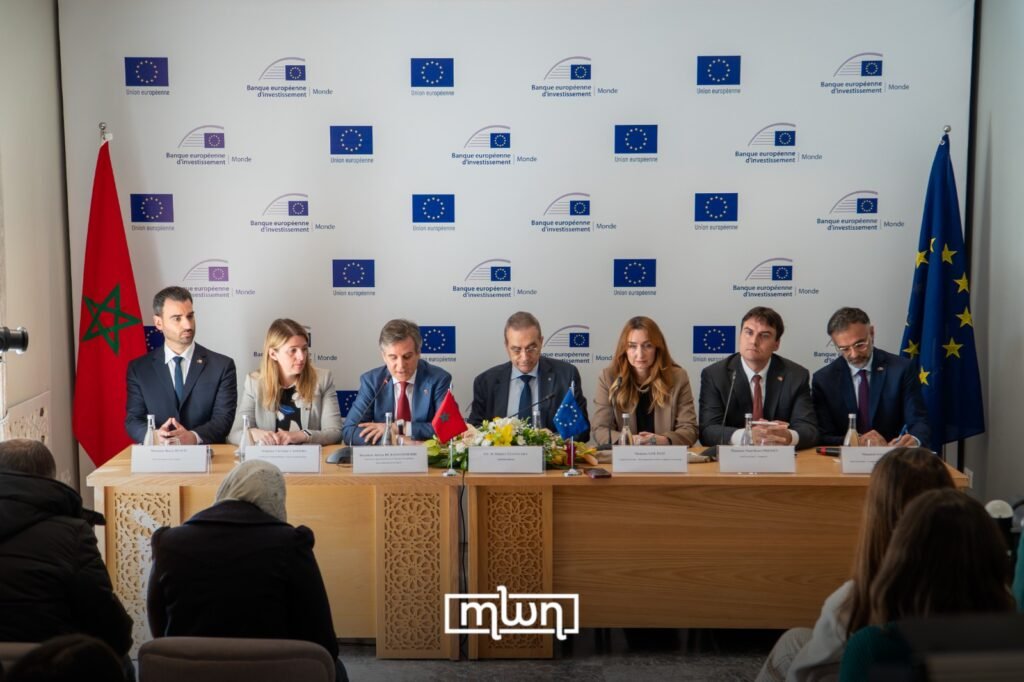
Rabat – The European Union used a press conference in Rabat today to emphasize that its partnership with Morocco is not only intact but expanding, both politically and financially.
EU Ambassador to Morocco Dimiter Tzantchev described 2025 as a turning point in relations between Rabat and Brussels, pointing first to the EU-Morocco Association Council in the EU capital in January.
The meeting was the first in seven years and brought together Moroccan officials and representatives of the 27 EU member states to reset formal dialogue at the highest level.
The Council reaffirmed the bloc’s commitment to what officials repeatedly called a strategic partnership. It also formalized the EU’s updated position on the Sahara issue, backing a United Nations-led political process and describing Morocco’s autonomy proposal as a realistic basis for a lasting and mutually acceptable solution.
Tzantchev described Morocco as a key partner in the EU’s southern neighborhood, particularly on migration, climate policy, energy security and regional stability in North Africa and the Sahel.
The bilateral cooperation is built on long-term trust and shared interests, he said, insisting that the EU intends to deepen it further through initiatives such as Global Gateway and the new Pact for the Mediterranean.
But beyond reiterating the political significance of the bilateral relationship, the message in Rabat underscored the financial magnitude of the cooperation.
Record financing in 2025
Alongside Tzantchev, representatives of the European Investment Bank outlined what they described as a record year for operations in Morocco.
Through its development branch EIB Global, the EIB signed in 2025 €740 million in financing agreements in Morocco. This is the highest annual amount the bank has committed to such endeavors since 2012.
Adrien de Bassompierre, head of the bank’s office in Morocco, said the figure reflects a focus on concrete impact. The financing targets water security, electricity networks and post-earthquake reconstruction, he explained.
Of the EIB’s record-breaking 2025 portfolio for Morocco, €70 million went toward modernizing drinking water production and transport systems, especially in smaller towns and rural areas. Meanwhile, €170 million went into strengthening Morocco’s electricity transmission network to help integrate renewable energy and improve stability.
The largest share, €500 million, was allocated to rebuilding infrastructure in areas affected by the September 2023 earthquake. Roads, schools and health facilities were the priorities of this commitment.
At the broader level, Ioannis Tsakiris, vice-president of the EIB, said the bank sees the partnership with Morocco as a driver of sustainable investment and tangible results for citizens. This support will continue in 2026 in line with EU priorities, he confirmed.
Loans are only part of the picture. EU officials also said MAD 2.5 billion were disbursed in 2025 as budget support tied to national reforms, including social protection and green transition programs.
Through blended finance mechanisms, more than MAD 8.5 billion in additional investments were mobilized in sectors such as water management, ports and rail.
Trade has also been a central component of this bilateral relationship. Exchanges between Morocco and the EU exceeded MAD 650 billion in 2024, making the European bloc Morocco’s largest trading partner and foreign investor.
Throughout the briefing, Tzantchev returned to one theme. The EU is determined to work toward a deeper and more structured bilateral cooperation in the years ahead, he repeated. Tzantchev described Morocco as a key partner for the European Union in its southern neighborhood, particularly on migration, energy security, climate policy and regional stability in North Africa and the Sahel.
Read also: Turkiye-Morocco Trade Exceeds $5 Billon for First Time in 2025