


Rabat – The Edvantis Group marked a decisive milestone in 2025 after securing international recognition for all its schools in the global Eduniversal ranking, while also completing state recognition for every campus it operates in Morocco.
The combined achievement places Edvantis in a singular position within the country’s private higher education sector, in academic standing and institutional status.
At the latest Eduniversal World Convention, each of the group’s schools received international distinctions, following an evaluation process based on performance indicators, qualitative audits, and validation by an international scientific committee.
The outcome positions Edvantis among a select group of higher education institutions with global visibility.
ISGA School of Management received four Palmes of Excellence, placing it among the top ten business schools in Africa. ISGA Engineering School also earned four Palmes of Excellence, a distinction that makes it the only engineering school on the continent to reach this level.
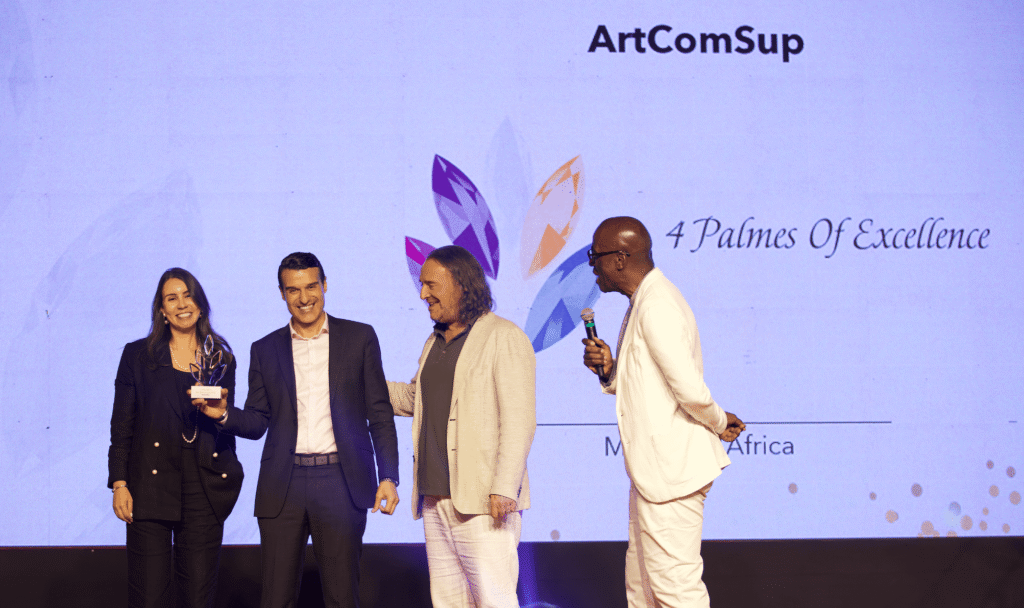
Edvantis’ Art’Com Sup school obtained four Palmes of Excellence in Arts and Luxury, becoming the sole African school in design and communication to join this category of international recognition.
Institutional recognition and regulatory weight
Last year also brought a major institutional shift. Edvantis now stands as the only private, multidisciplinary, and multicampus higher education group in Morocco with full state recognition across all its schools and campuses, following the official recognition of Art’Com Sup and Com’Sup. This status confirms a group-wide academic and regulatory model built on long-term planning and coherence.
For families and students, state recognition alongside international rankings offers a level of reassurance often absent in Morocco’s fragmented private education landscape. It also responds to growing concerns over diploma value, academic oversight, and alignment with national education standards.
Value-added skills and the measure of educational quality
Recognition alone, however, does not resolve the deeper question of educational quality. Morocco’s labor market increasingly values applied skills, adaptability, and interdisciplinary competence over formal credentials.
Business graduates face demands linked to entrepreneurship, financial literacy, and international compliance. Engineering profiles must respond to automation, digital systems, and industrial transformation. Creative fields now intersect with branding, technology, and cultural industries rather than remain isolated artistic paths.
In this context, the relevance of institutions such as Edvantis rests on curriculum design, teaching methods, and exposure to professional environments.
A job market that redefines vocational training
Morocco’s development priorities increasingly call for a reassessment of vocational and professional education.
The traditional divide between academic learning and vocational training no longer reflects labor market realities. Engineering, management, design, and communication now require vocational competence delivered at a high academic level.
Private higher education institutions operate under growing pressure to bridge this gap. Programs that remain theoretical risk producing graduates who struggle to adapt. Those that integrate practical training, industry partnerships, and real-world problem-solving stand a stronger chance of meeting market needs.
Growth, responsibility, and the private education model
These results stem from a four-year transformation carried out under the Impact 2026 strategic plan, which rested on academic standards, pedagogical renewal, international openness, and institutional responsibility.
Over this period, the group doubled its student population while consolidating recognition at both national and international levels.
“These distinctions do not reward a single year or a ranking,” said Tawhid Chtioui, President of the Edvantis Group in a statement.
“They recognize a trajectory, a level of rigor, and a clear vision of higher education. We chose transformation over convenience and long-term work over short-term announcements. Seeing Moroccan schools join the global academic elite is a collective pride, for our teams, our students, and for Morocco. This is not an end point. It is a moment of transition.”
The test ahead for Moroccan higher education
With this phase completed, Edvantis now moves toward its Elan 2030 strategy, which aims to strengthen international positioning, develop new academic fields, integrate emerging technologies, and deepen its role as an education actor with continental reach.
Yet the broader question remains open: can private higher education in Morocco consistently deliver the skills, vocational depth, and professional readiness that the country’s evolving economy requires?