


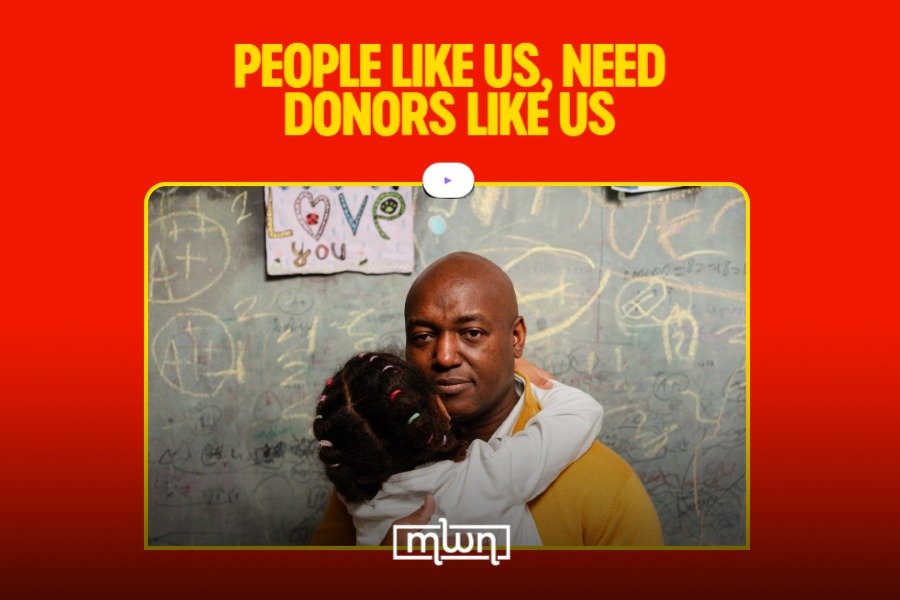
Casablanca – A new campaign launched in the Netherlands aims to increase blood, stem cell, and organ donation among Moroccan-Dutch communities after research found that willingness to donate is often present, but awareness and information gaps prevent people from registering.
The initiative, called “Donor van Ons,” was developed following a study exploring perceptions of living donation among Moroccan-Dutch individuals. The research examined the barriers and motivations shaping decisions around donating blood, stem cells, or organs while alive.
Dr. Charifa Zemouri, a public health researcher and lead investigator of the study, said the findings challenge the assumption that low registration rates reflect reluctance.
“People are often very willing to donate and help others during their lifetime. They perceive helping their fellow human beings as a great act of service to humanity, in the eyes of Allah and also in their own eyes,” Zemouri said in an interview with MWN.
Participants in the study said they wanted clearer information about donation procedures and reassurance that donation is religiously permissible.
“They want to consider multiple factors, such as need and shortages, urgency, and they also want to be well informed about procedures, transparency, and that it’s allowed according to Islam to help others during life in good health,” she said.
According to Zemouri, hesitation often disappears once people understand the need.
“It touches my heart that when our community is aware of the needs, willingness is no longer a question. It becomes about one thing: ‘Where can I sign?’” she said.
The campaign’s slogan, “people like us need donors like us,” reflects the medical reality that transplant compatibility often depends on shared ancestry.
Stem cell and organ transplants rely on genetic compatibility, particularly proteins known as human leukocyte antigens, which vary between populations. Because donor registries in Europe are largely composed of people of European descent, patients from other backgrounds often have greater difficulty finding suitable matches.
“From a biological perspective, successful blood and stem cell transplantation depends on genetic compatibility. The proteins on our cells, such as human leukocyte antigens (HLA), are inherited and vary across populations with different ancestral backgrounds,” Zemouri said.
“Because we cannot change our DNA or the protein composition on our cells, genetic matching is essential in transplantation.”
She added that ethnicity should be discussed carefully when it has clear medical relevance.
“As a society, we need to learn how to distinguish between situations in which ethnicity and genetics are medically relevant and when they are not,” she said.
During the study, Zemouri said many participants only understood the importance of donor diversity once the biology behind transplantation was explained.
She recalled a focus group participant of Surinamese background who said he had never realized how important matching within one’s own community could be. Once he understood how protein differences affect compatibility and rejection, Zemouri said it “deeply resonated with him and reinforced the importance of community support.”
The campaign’s messaging was designed to speak directly to the communities it aims to reach.
“We deliberately chose a campaign based on the information needs of the groups we want to reach, including a name and visual identity that directly speak to them,” Zemouri said.
“In this way, we aim to make them aware that if the number of donors with their specific background does not increase, there will be a structural shortage of suitable donors for the best match, thereby increasing inequality of opportunity and reducing their chances of survival.”
Awareness drives action
The study identified several factors shaping willingness to donate, including knowledge of the need for donors, perceptions of the procedures involved, religious considerations and the relationship between donor and recipient.
Among these, Zemouri said awareness of need was the most decisive factor.
“People know for example what blood donation is, and they are aware that someone can donate a kidney during their lifetime to a loved one. However, as long as there is no darrora — no urgent necessity — many ask: why bother?” she said.
Moments of visible need can quickly change that dynamic.
Zemouri pointed to the response in Morocco following the Al Haouz earthquake in 2023, when blood donation centers saw long queues of volunteers.
“Look at how His Majesty King Mohammed VI personally stepped forward to donate his blood. Communicating awareness not only through words, but through actions and leading by example, has an enormous impact especially if we operate as a collective,” she said.
A similar response recently followed a social media campaign highlighting the case of a young patient in urgent need of stem cells.
“Recently, C’est Mocro, a popular Dutch news and information Instagram account with 1.2 million followers, and I shared information about Hafsa, a Moroccan-Belgian girl who urgently needs stem cells to prevent death,” Zemouri said.
“The post gained significant traction on Instagram and, as a result, hundreds of people from the Moroccan-Dutch community registered as stem cell donors in the hope of being a match and saving her life.”
Hafsa Bidri, an 11-year-old in Belgium, suffers from beta thalassemia, a life-threatening blood disorder whose only curative treatment is a stem cell transplant requiring a compatible donor.
Family ties influence donation decisions
The research also found that attitudes vary depending on how invasive the donation procedure is.
“For blood and stem cells, people are generally comfortable donating to any patient who needs it because the procedure is not invasive and anonymous,” Zemouri said.
Living organ donation presents a different situation, as procedures such as kidney or liver donation involve surgery and months of recovery.
“When it concerns a family member — and not just any family member — people are often willing to make that sacrifice. Many would say, ‘I would do anything for my parent or my child,’” she said.
“I have reflected on this myself, and honestly, I would not want to go through the entire procedure and recovery process for a stranger. But I would do so for my parents.”
Zemouri said the research served as the scientific foundation for the Donor van Ons campaign.
If donor diversity does not increase, she warned, health disparities will persist.
“People with roots outside Western Europe will face a higher burden of disease and are more likely to die earlier from conditions such as sickle cell anemia, leukemia, or beta thalassemia,” she said.
For Zemouri, the campaign aims to turn the willingness identified in the research into action by encouraging more people to register as donors. “Finally, we will keep health disparities intact,” she told MWN.
Read also: Ouahbi: Only 564 Organ Donations Between 2013 and 2022