


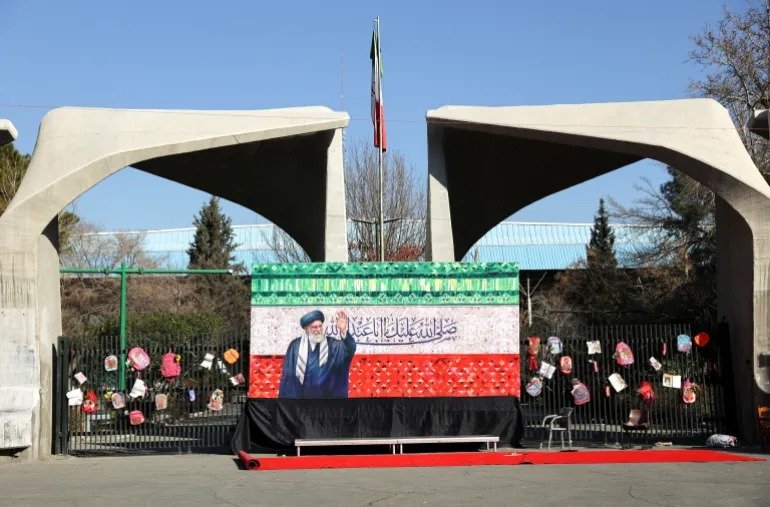
Rabat – The death toll in Iran has climbed to 1,045 after five days of joint US-Israeli attacks, according to Iran’s semi-official Tasnim news agency.
The latest wave of strikes has intensified fears of a broader regional war, with both military operations and political rhetoric growing more aggressive.
Internet connectivity in Iran has nearly collapsed. NetBlocks, a global internet monitoring group, reported that the country has been effectively offline for about 100 hours. “Metrics show internet connectivity flatlining at 1% of ordinary levels as the regional conflict escalates,” the group said in a statement on social media.
The communications blackout has made it difficult to verify casualty figures and assess conditions on the ground.
Israeli officials are framing the war as a fight similar to past campaigns against non-state armed groups. However, Iran is a UN member state with a population of more than 90 million people. Israeli leaders have openly discussed targeting Iran’s leadership and preventing the country from appointing a new supreme leader if current leadership structures collapse.
Analysts say Israel understands that killing top Iranian officials alone may not fundamentally change the situation. Still, Israeli authorities argue that sustained military pressure could eventually create conditions for political change inside Iran.
According to reports from Israeli military circles, there are expectations that bombardment could continue for at least two more weeks. Israeli officials have suggested that ongoing strikes could “soften the ground” and potentially spark a popular uprising against the government in Tehran.
The war has already spilled beyond Iran’s borders. Turkiye said a ballistic missile fired from Iran was intercepted by NATO air and missile defense systems over the eastern Mediterranean Sea. The missile reportedly fell over the Dortyol district near the Mediterranean coast, but no casualties were reported.
Iran has warned European leaders against joining the US-Israeli war that has destabilized the Middle East and disrupted global economies. While several European countries have condemned Iran’s retaliatory strikes, their response to US and Israeli actions has appeared divided. Some European Union members have discussed mutual defense measures, but major disagreements remain within the bloc.
Meanwhile, Syria announced it has closed its border crossing with Lebanon for departures after receiving a warning from Israel that the crossing could be targeted. Arrivals remain open, especially for Syrians fleeing Lebanon, according to officials at the Jdeidet Yabous crossing.
In addition, Gulf countries continue to report intercepting missiles and drone attacks.
