


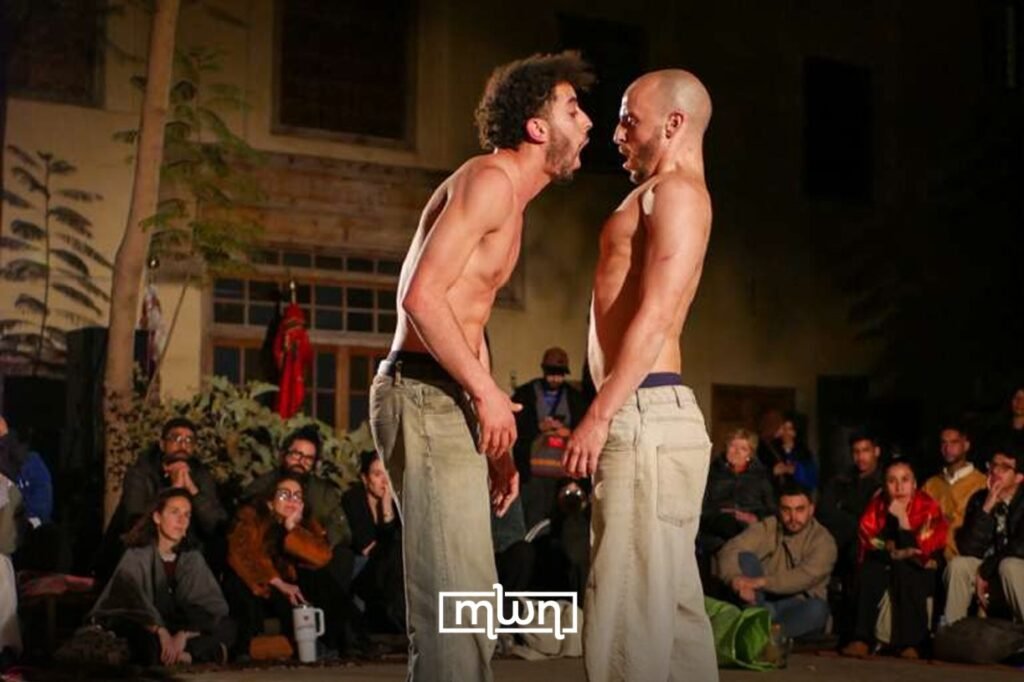
Marrakech – For nine nights from March 6-14, the 19th annual “On Marche” Festival turned Marrakech into a sentient stage for dancers, choreographers, and audiences from across Morocco and around the world.
Held during Ramadan, this year’s edition emphasized themes of reflection, communal sharing, and mystical exploration. The festival, completely free and open to the public, broadens engagement with contemporary dance as a dialogue between movement and culture.
Founded by Moroccan choreographer Taoufiq Izeddiou, the festival has grown into one of the most important platforms for contemporary dance in Morocco and across the African continent.
For Izeddiou, the project remains deeply personal. “It’s my baby. It’s a source of pride. It’s a meaning and a point of reference,” he told Morocco World News (MWN) in an interview. “And it’s the origin of the life of contemporary dance.”
Izeddiou emphasized the necessity of bringing artists and the public together to share their knowledge and experience.
“There is no single truth in dance,” he said. “There isn’t just one reality or one way of doing things. There are many ways of seeing dance, writing dance, speaking about dance.”
“That is the richness of dance. The audience also sees something different from what we ourselves know how to do.”

A global exchange of movement
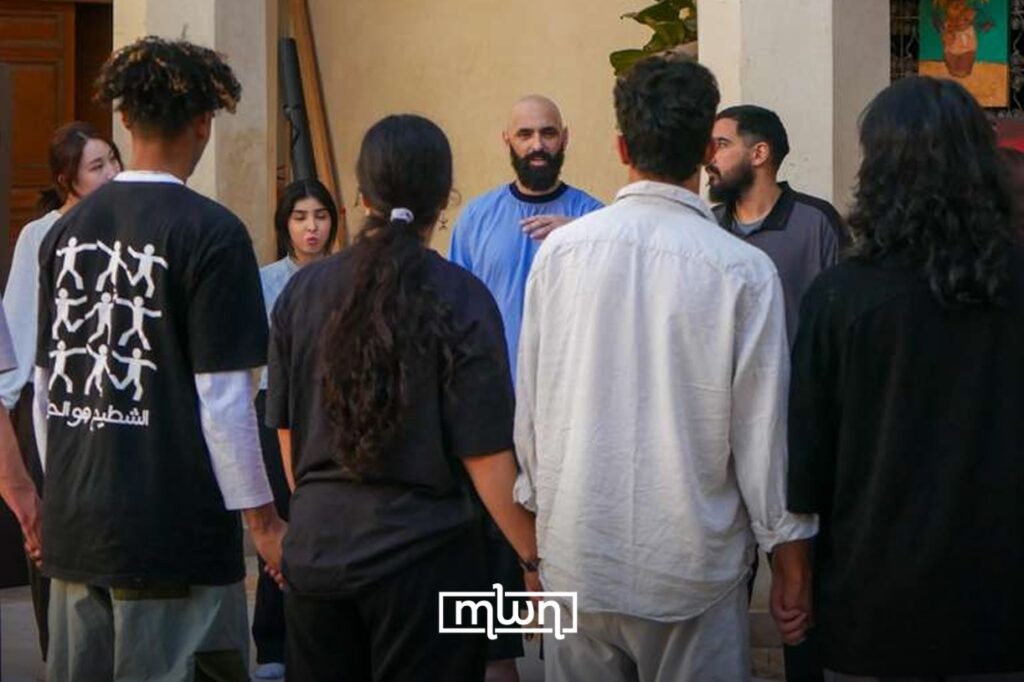
The international nature of the festival encourages artists to expand their bubbles and learn from people they may never engage with, if not brought together by On Marche.
“There are Koreans, Spaniards, French, Germans, Mozambicans, Algerians, Egyptians, Swiss,” Izeddiou said. “In the end it’s a question of the body. We all resemble each other in our thinking and in our commitment, and then everyone creates their own version.”
Festival participants shared a common sentiment that they appreciated the chance to exchange ideas and learn from other artists.
Yigyeong Ha, a 28-year-old dancer from Busan, South Korea, traveled to Marrakech with a group supported by the Busan International Culture Foundation. She told MWN that the experience expanded the team’s creative outlook.
Working with other dancers and the public “broadened our awakenings, our artistic perspective,” she said, describing it as almost like a “move to the third dimension.”
Emerging voices
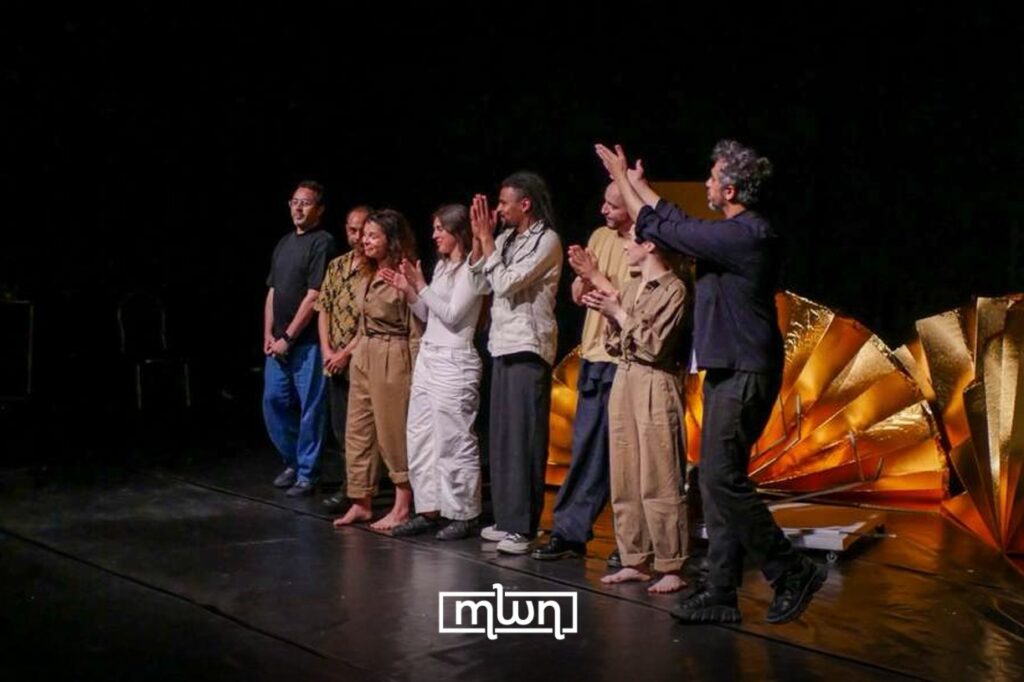
Alongside international performances, the festival continues to play a key role in supporting emerging Moroccan artists. The 19th edition featured the 4th edition of the “Taklîf” competition, a program dedicated to young Moroccan choreographers, in Morocco or from the diaspora.
Hanane Solani, a 25-year-old dancer participating in the Taklîf program, described the experience as both demanding and energizing.
“I met a lot of people, beautiful energies,” she said to MWN. “Even though it’s Ramadan and even though it’s been tough, I feel energized. I think the important part is the gathering. I feel that’s what I cherish the most. Especially here in Marrakech, there’s a different energy.”
That sense of collaboration was echoed by dancers Salmane Bougari and Achraf Chadli, who created their first performance together after years of friendship.
“We decided to create our own show, our own vision of expression,” they also said to MWN, “The festival really gives us the opportunity to make something, to show people who we are.”
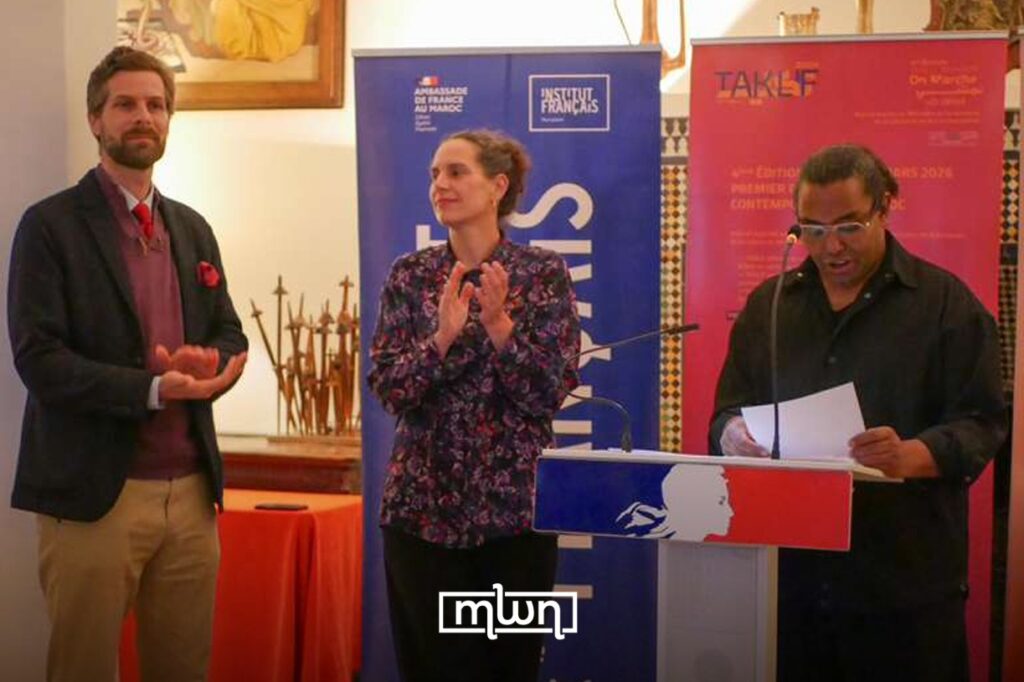
Their project was awarded residencies at the Institut Français in Marrakech, Le Carreau du Temple in Paris, Agora Cité International De La Danse in Montpellier, and Scène nationale Carré-Colonnes.
Supporting new creations
Backed by longstanding partners — the Ministry of Youth, Culture and Communication; the Wilaya and Regional Council of Marrakech-Safi; Es Saadi Marrakech Resort; the French Institute; and the École supérieure des arts visuels (ESAV) in Marrakech — On Marche continues to spotlight contemporary dance and emerging artists.
Chakib Yemlahi and Marouane Mezouar, the two other recipients of awards emphasized the opportunity residencies give to enrich an artist’s work and encourage their dreams.
Moroccan dancer Marouane Mezouar, received the €1,500 Prix Jeunes Talents TV5Monde along with artist residencies for his first solo work.
“For me it represents the beginning of creation, because it is my first solo,” Mezouar said.
The piece emerged from a personal period marked by health challenges that forced him to rethink his relationship to the body. “Instead of seeing it only negatively, I decided to think about how to use that fragility to express something.”
For Mezouar, presenting the work at the festival confirmed the importance of dialogue between artists and audiences. “For me, being an artist is not only about creating things — it’s also about thinking together, listening, and having conversations,” he said.
“That’s how we build things.”
Dance beyond the stage
A defining element of the festival is its commitment to accessibility. While many international dance events operate within formal theater circuits, On Marche has consistently sought to bring dance to a wider public.
“For me it’s important that it remains accessible—that it doesn’t stay elitist, only for people who can pay,” Izeddiou explained. “There are people who cannot pay.”
That philosophy reflects the backgrounds of many Moroccan dancers themselves.
“Most dancers come from working-class neighborhoods and modest families. They are not rich dancers. We are not rich,” he said.
“We are children of the medina, of the city. And I understood that dance was given to me for free, so I try to share it for free as well.”
He acknowledged the challenges with model. “I think everyone is aware of the difficulties of finding funding. But everyone is also aware that we remain demanding,” Izeddiou
“Just because we don’t have many resources doesn’t mean we cannot be demanding. It doesn’t mean we cannot aim for quality, or keep a sharp eye on important things.”
The politics of movement
Beyond performance, many artists at the On Marche Festival spoke about dance as a subtle but powerful political gesture.
Moroccan choreographer Mehdi Dahkan explored this idea in his piece “KMS of Resistance”, a choreographic and sonic work built around breath and movement as acts of survival.
For Dahkan, the body itself becomes a form of agency in environments where other forms of expression can feel constrained.
“Your body is the only thing you really have control of,” he told MWN. “It’s the first thing you can actually resist with.”
In a world increasingly marked by social fragmentation, even collective movement can take on new meaning.
“To choose to move it in a certain way sometimes can be a very big act of resistance,” Dahkan added. “And also to choose to be together, in sync together, with dancing – it becomes such a powerful thing in a time when everybody is separated.”
For dancer and choreographer Mohamed Lamqayssi, who has been involved with the festival since 2011, the political dimension of dance in Morocco is often implicit in the act itself.
“In Morocco especially, dancing equals being in a political position because it’s automatically talking about something that is almost forbidden, or not a common way of expression,” Lamqayssi also said to MWN, describing the act of dancing as inherently “a resistant act.”
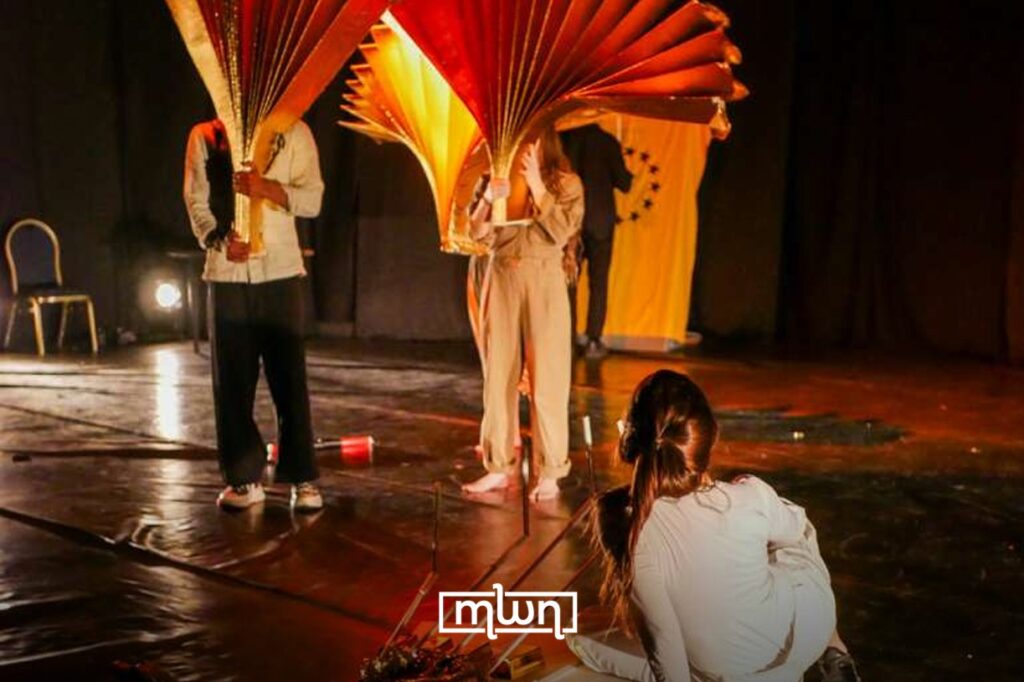
Artist Youness Atbane approached similar themes from a different angle in his work-in-progress performance “The Golden Museum of Crisis”, which closed the festival. Blending contemporary dance with elements of humor and theatricality, Atbane uses irony to open space for more difficult conversations.
He intentionally incorporates what he calls “very humoristic” elements into his performances, allowing him to “slide very heavy subjects” into the work while easing the tensions they might otherwise provoke.
“When an audience comes and they know what the art is going to say, there is no more mystery,” he said. “Beauty is the mystery of life.”
For Atbane, the artist’s role is not simply to present answers, but to illuminate what remains unseen.
“I think the role of the artist is to reveal these hidden areas,” he added, giving audiences “some new sense, new feelings, new subjects.”
Building the future of dance
Even after more than 20 years, Izeddiou believes the festival still plays a crucial role in shaping Morocco’s contemporary dance landscape.
“Today it’s already a reference,” he said. “It’s a source of pride to have, in this country and on this continent, a festival with 20 years dedicated to dance.”
Despite financial challenges, he insists artistic ambition must remain high. “Just because we don’t have many resources doesn’t mean we cannot be demanding,” he said.
Looking ahead, Izeddiou’s message to young dancers is simple: “Work. Persevere over time. Give it time. Dance needs time. It’s not something that happens quickly.”
“If you don’t know where you’re going, look at where you come from,” Izeddiou also encouraged artists to explore their roots.
In the theme of the festival, Izeddiou urges that understanding one’s own history, as well as that history within a broader global context is essential for creating meaningful work. “That means they must know their own culture very well. They must also know other cultures, in order to create something unique,” he said.
“Dance cannot continue through copy-and-paste, it has to be invented,” he said. “You must return to your childhood. You must search in your childhood, in your neighborhoods, in your language.”