


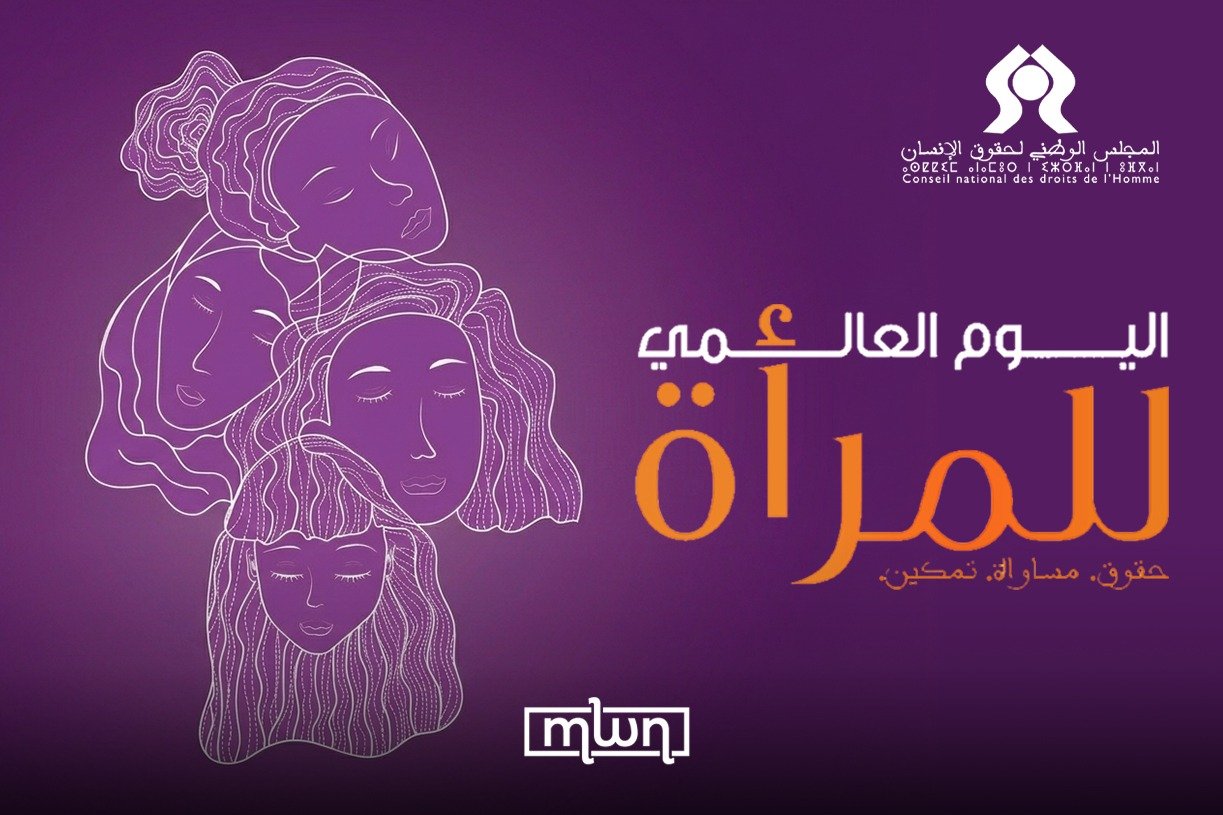
Rabat – Today, International Women’s Day, observed under the theme “Rights. Justice. Work. For All Women and Girls,” Morocco’s National Human Rights Council (CNDH) renewed its call to protect women and girls from discrimination and violence.
The council stressed that ensuring full access to human rights is not a choice, but an urgent obligation for society.“This day reminds us of the gaps that remain in our society,” said Amina Bouayach, CNDH’s president.
“It is a moment to honor the paths of women and those who defend their rights, and to reaffirm our duty to protect their dignity and secure equal opportunities for all women and girls,” the president added.
Bouayach, who also leads the Global Alliance of National Human Rights Institutions, pointed to persistent disparities worldwide. Women globally have access to only 64% of the legal rights guaranteed to men.
At the current pace, closing these gaps could take nearly three centuries, she noted, a stark reflection of the work still ahead for governments, civil society, and the international community.
“Without full legal rights for everyone, justice and fairness remain out of reach. Guaranteeing equal access for all women and girls to human rights is a fundamental condition for fair and sustainable societies,” Bouayach added.
The council called on all partners and civil society actors to transform this year’s theme into concrete action. Every effort to remove barriers and challenge discriminatory laws represents a step toward enabling Moroccan women and girls to fully claim their rights.
Addressing gender-based violence remains a top priority. One in three women worldwide experiences abuse during her lifetime, making it one of the most widespread violations of human rights.
The council has placed women’s rights at the center of its work. Equality, economic empowerment, and protection from violence guide its monitoring, advocacy, and public policy interventions.
Annual reports and campaigns provide data and recommendations to reinforce these efforts at both national and community levels.
“Equality between women and men forms the foundation of a democratic society built on dignity, fairness, and social justice. International Women’s Day is not a symbolic date, it is a renewed call to action. Women’s rights are human rights, and their realization demands strong laws, policies, and a society that refuses all forms of discrimination and violence,” Bouayach concluded.
Morocco has made some strides in advancing women’s rights, from legal reforms on inheritance and family law to initiatives promoting women’s participation in public life. These efforts, while commendable on paper, often fall short in practice.
Many policies remain distant from the daily realities of Moroccan women, especially in rural areas, where social norms, economic barriers, and limited access to justice prevent rights from being fully materialized.
Laws and programs exist, but their implementation lacks consistency, leaving too many women without real protection or opportunity. Progress has occurred somewhat, yet it remains fragile and incomplete, pointing to the gap between formal recognition and lived experience.
