


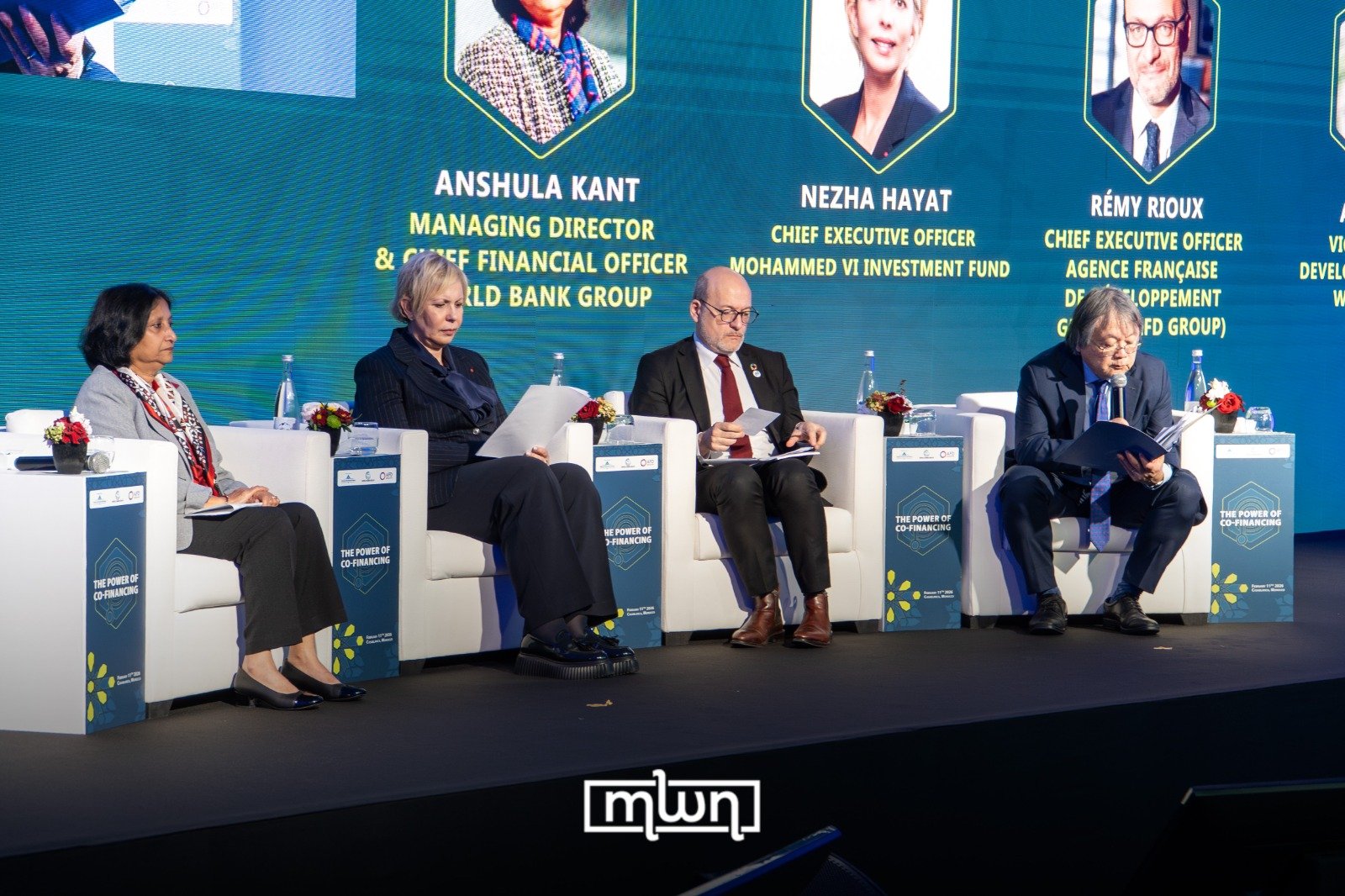
Casablanca – The Hyatt Regency hotel in Casablanca hosted today a high-level forum titled “The Power of Joining Forces: Co-financing for Progress,” bringing together key development finance actors to discuss collaborative funding approaches.
Organized by the World Bank Group in partnership with the Moroccan Ministry of Economy and Finance and Agence Française de Développement (AFD) Group, the event focused on co-financing, highlighting its growing importance and examining how it can be applied in practice.
Co-financing is a mechanism in which multiple development partners pool resources to fund the same project. It helps increase available funds, share risk, and coordinate technical expertise, making it a critical tool for large-scale development initiatives.
The role and benefits of co-financing
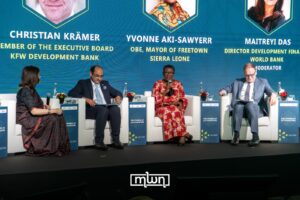
Speaking to Morocco World News, Mr. Aki Nishio, Vice President of Development Finance at the World Bank, said that co-financing “is really a very important tool for the international community to address some big global challenges like climate change, like pandemics, like fragility.”
He explained that co-financing achieves three main goals. First, it creates more impact in scale because working across institutions allows financing of larger projects.
Second, it mitigates risk and encourages innovation, as any development project involves risks. “The World Bank has the ability to mitigate those risks, and also by banding together through co-financing, you are kind of diversifying that risk,” Nishio explained.
Third, co-financing improves knowledge sharing and efficiency. “We can draw on the knowledge that is embedded in different institutions, bring them together, and also by doing that, we reduce the burden on the recipient countries,” he added.
Collaboration amid global challenges
At a time when the world faces multiple economic and development challenges, participants emphasized the role of collaboration among public institutions, development banks, and the private sector in mobilizing resources and maximizing development impact.
Speakers also highlighted that strengthening co-financing mechanisms can help countries accelerate progress toward ending poverty and promoting shared prosperity.
“The more we work together, the more we pool our resources behind country priorities,” Anshula Kant, Managing Director and CFO of the World Bank Group, told Morocco World News.
Morocco’s experience with co-financing
Morocco was highlighted as a particularly relevant setting for the forum. The country has extensive experience with co-financed development projects and long-standing cooperation between multilateral institutions and bilateral partners.
Over the past decade (FY16–26 YTD), Morocco has implemented five World Bank Group-supported projects through co-financing, mobilizing more than $2 billion.
These partnerships have supported initiatives in sectors such as urban development, agriculture, and transport. Cooperation is now expanding into health, energy, and digital development.
Initiatives such as Mission 300 and AgriConnect were also highlighted as examples of shared platforms designed to mobilize financing at scale and strengthen collaboration among development partners.
Although she did not attend in person, a pre-recorded video message from Minister of Economy and Finance Nadia Fettah was broadcast during the forum.
“Co-financing is no longer a technical choice; it is a political choice,” the minister argued at the forum, describing it as a decision to prioritize cooperation over competition and impact over the dispersion of efforts, and to promote co-construction and co-development.
In a statement shared ahead of the forum, Fettah also noted that “Morocco’s experience shows that co-financing is not just about pooling resources – it is about delivering larger, faster and more transformative results.”
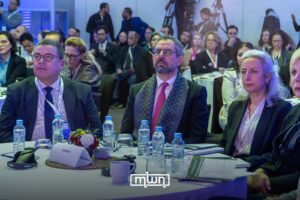
The event brought together senior representatives from multilateral development banks, bilateral agencies, and national institutions, alongside public and private-sector stakeholders, to exchange views on strengthening co-financing mechanisms and enhancing coordination among development partners.
Discussions also addressed the importance of mobilizing private capital, reducing aid fragmentation, and streamlining procedures to improve the efficiency of development financing.
Rémy Rioux, speaking to Morocco World News, said, “We are here […] to see how to go further, go faster and more effectively by co-financing, that is to say, by putting together our technical financial capabilities with those of the Moroccan institutions and all our partners.”
