


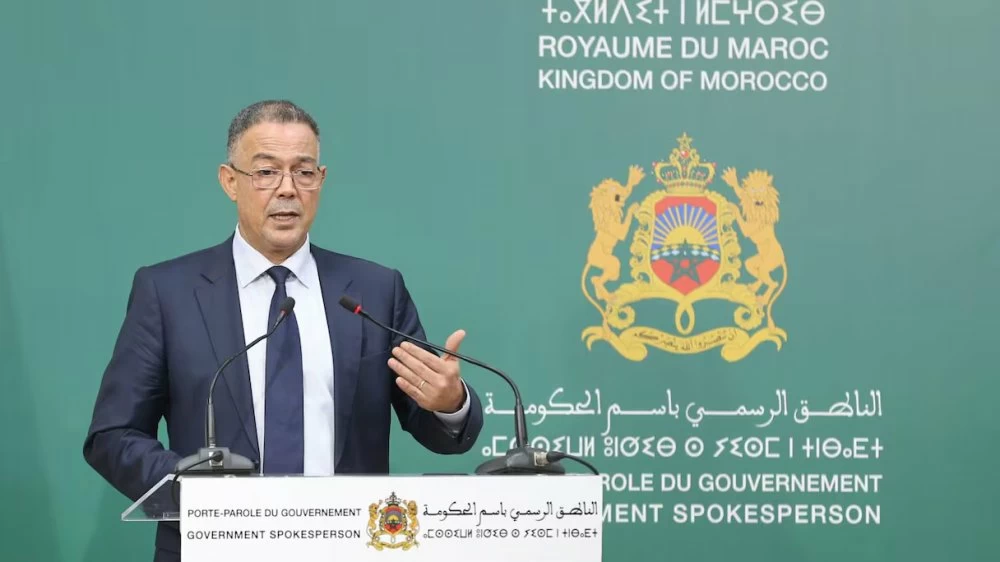
Marrakech – Morocco’s delegate minister in charge of the budget, Fouzi Lekjaa, announced on Thursday that the government is spending over MAD 1.6 billion ($160 million) per month to shield consumers from the energy price surge triggered by the Middle East crisis and the blockage of the Strait of Hormuz.
Speaking at a press briefing following the government council meeting on April 2, Lekjaa laid out the scale of the shock.
The price of a barrel of oil jumped 44% in March, rising from $70 to $100. Diesel surged 75%, climbing from $717 to $1,260 per ton. Butane gas prices rose 38%, from $547 to $751. Inputs used in electricity production followed the same path. Natural gas increased 63%, fuel oil rose 60%, and coal went up 21%.
Lekjaa linked the crisis directly to global instability. He said the Middle East conflict had created disruptions in global trade, supply chains, and manufacturing centers, with direct consequences on national economies.
In response, the government activated three main measures to contain the fallout.
The first concerns butane gas, a staple for Moroccan households. Lekjaa confirmed the price of the 12 kg bottle will remain unchanged. To make that possible, the state raised its subsidy from MAD 30 ($3) to MAD 78 ($7.8) per bottle. That amounts to MAD 48 ($4.8) in additional support per unit. The monthly cost of this measure alone reaches MAD 600 million ($60 million).
The second measure targets electricity tariffs. Lekjaa stated that no price changes would be applied to either domestic or industrial consumers. The government will absorb the rising cost of fuel, natural gas, and coal used in power generation. This commitment costs the treasury an estimated MAD 400 million ($40 million) per month.
Together, the butane and electricity subsidies represent MAD 1 billion ($100 million) in monthly spending.
The government continues to monitor the situation closely
The third pillar is direct support for the transport sector. The government reinstated a subsidy of MAD 3 ($0.3) per liter of fuel consumed by professional operators. The measure covers taxis, buses, school transport, tourist transport, and rural transport. It has been in effect since March 15 and runs through April 15.
Lekjaa said the cost of this aid stands at MAD 648 million ($64.8 million) per month. Bank transfers to beneficiaries began on Thursday.
Lekjaa indicated the government is also examining the situation in other affected sectors.
He added that the country’s fiscal management can absorb these exceptional costs. Budget results through the end of March 2026 were positive and in line with projections, he said.
The minister noted that all measures fall within the framework of royal directives calling for immediate responsiveness during crises.
An inter-ministerial committee, chaired by Head of Government Aziz Akhannouch, is closely monitoring developments. The committee met on March 30 to assess the impact of the Middle East tensions on the Moroccan economy.
Lekjaa concluded that the government stands ready to adjust its response depending on how the international situation evolves, with the priority being to limit the crisis’s impact on citizens as much as possible.
Read also: Morocco’s Energy Minister Confirms Diesel Stock Sufficient for 51 Days Amid Middle East War