


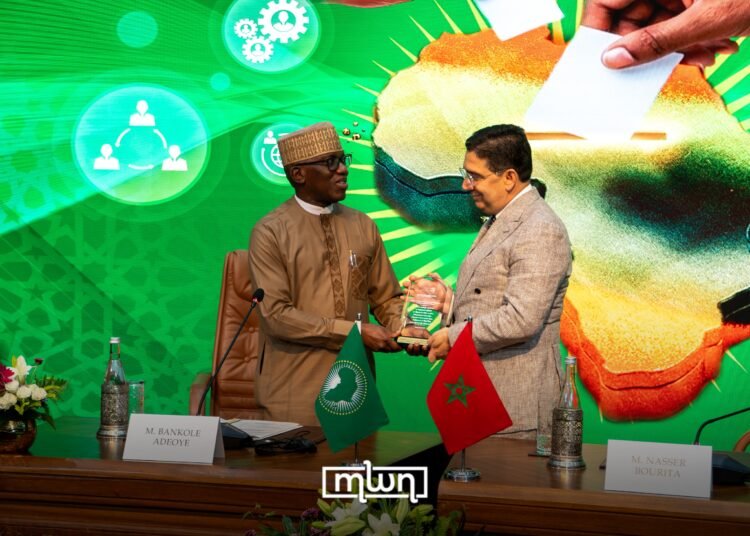
Rabat – An electoral process loses part of its legitimacy when it leaves sections of society outside its scope, Morocco’s Minister of Foreign Affairs, Nasser Bourita, said on Monday in Rabat during a continental gathering on election observation.
He spoke at the opening of the fifth edition of the African Union Election Observation Training Cycle, a program run in partnership with the African Union and co-chaired by the AU Commissioner for Political Affairs, Peace and Security, Bankolé Adeoye.
Bourita said elections gain strength when they reflect the full spectrum of society. He pointed to women, young people and persons with disabilities as essential actors in public life. Their presence, he said, should stem from principle rather than symbolism, since inclusion reinforces both credibility and quality of democratic practice.
He described the training cycle as a reflection of a shared continental effort that has matured over time between Morocco and the African Union. The initiative serves a wider goal of strengthening stability and democratic practice across Africa, Bourita argued.
The minister also said the program rests on the core idea that African democracy depends on African expertise. According to him, election observation gains meaning when it relies on trained professionals who act with independence and responsibility.
He commended the role of Bankolé Adeoye, crediting his leadership for sustaining momentum behind the program over the past years.
Figures shared during the ceremony show that nearly 400 observers have received training in Rabat since the launch of the cycle. They come from 53 African countries across all regions of the continent. Women represent about 65% of participants, while young people account for roughly 85%.
Bourita also warned that elections now face new pressures linked to digital tools, citingdeepfakes, algorithm-based misinformation and misuse of artificial intelligence as growing risks that can distort public debate. Election observers need updated skills and tools to respond to this shifting environment, he stressed.
The program also included a seminar-dialogue on democracy and elections in Africa, co-organized with the Policy Center for the New South. The discussion examined how digital change reshapes democratic practice, with particular attention to the role of youth in developing responses to artificial intelligence in political life.