


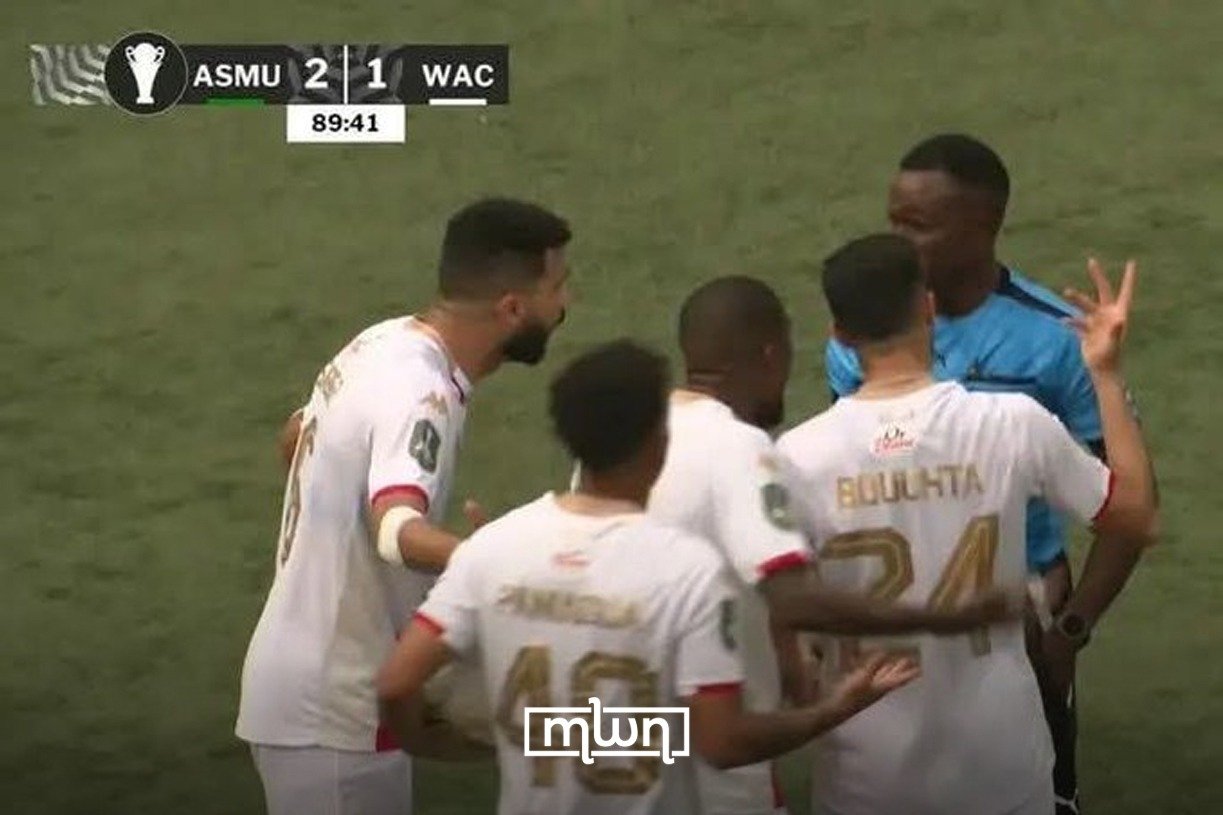
Rabat – A refereeing decision in Wydad Casablanca’s CAF Confederation Cup game against AS Maniema Union has caused major debate across African football after video evidence suggested a clear mistake in applying the Laws of the Game.
The match, played in the Democratic Republic of Congo, ended with Maniema Union winning 2-1. But the spotlight quickly shifted to a strange incident involving the Maniema goalkeeper late in the match.
The referee gave a yellow card to the goalkeeper, who had already been booked earlier. By rule, a second yellow should lead to a red card and dismissal.
Instead, the referee appeared to record the caution against a defender, allowing the goalkeeper to stay on the field. No red card was shown, and Maniema Union finished the game with all players.
Refereeing experts have called this a clear procedural error, not a matter of interpretation.
The Laws of the Game allow referees to correct mistaken identity before play restarts. But once a second yellow is given to the right player, dismissal is mandatory.
If the referee shifted the card to another player to avoid sending off the goalkeeper, it would be a misapplication of the rules, which can have serious consequences for competition integrity.
The decision drew sharp criticism. Moroccan international Hakim Ziyech posted a sarcastic Instagram story reading “Welcome to Africa!! Where you give the goalkeeper his second yellow card. But then you can act like you give it to the defender,” questioning how such errors happen at the continental level.
Wydad players also protested during the match, but the club has not confirmed whether it filed an official complaint. CAF has remained silent, with no statement on the referee’s actions or possible review.
The episode has reignited frustration over officiating in African tournaments. Unlike subjective calls, misapplying the rules undermines trust in competition fairness.
For Moroccan clubs, it shows the challenge of competing under inconsistent refereeing, while CAF’s lack of communication continues to anger stakeholders.
