


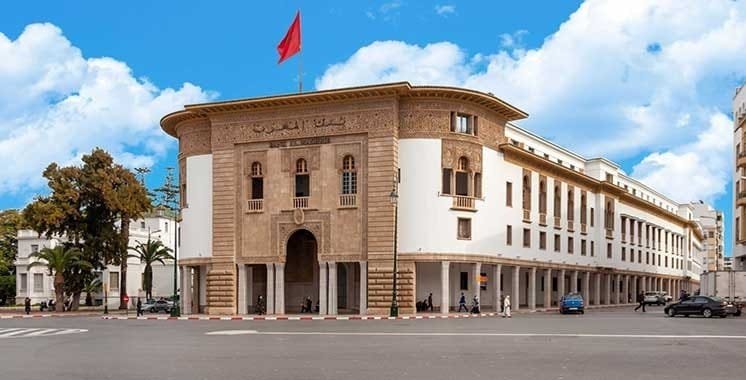
Rabat – Bank Al-Maghrib (BAM) has opted for continuity, keeping its benchmark interest rate unchanged at 2.25% following its first quarterly meeting of 2026, as policymakers weigh solid domestic momentum against an increasingly uncertain global environment.
The decision places the interest rate at the center of Morocco’s monetary stance, signaling a preference for stability at a time when inflation remains contained and economic activity shows resilience.
A steady rate in a shifting environment
The central bank’s board based its decision around three key factors: sustained growth in non-agricultural sectors, moderate inflation projections, and heightened geopolitical uncertainty, particularly linked to tensions in the Middle East.
Inflation, which has remained subdued in recent months due to easing food and fuel prices, is expected to stay low at 0.8% in 2026 before edging up to 1.4% in 2027. This trajectory gives the central bank room to maintain its current rate without tightening financial conditions.
At the same time, the Moroccan economy continues to expand at a solid pace. Growth is projected to reach 5.6% in 2026, supported by strong investment in infrastructure and a rebound in agricultural output following favorable weather conditions.
Transmission of past cuts still underway
The decision to hold the key rate also reflects the ongoing transmission of earlier monetary easing. Since June 2024, the cumulative reduction in lending rates to the non-financial sector has reached 61 basis points, compared to a 75-basis-point cut in the policy rate.
This gap suggests that the full impact of previous rate decisions has yet to filter through the economy, reinforcing the case for a pause rather than further adjustments.
External risks shape cautious stance
Global uncertainty continues to weigh heavily on policy choices. The central bank pointed to geopolitical tensions, including developments in the Middle East and their potential impact on energy prices, as a major source of concern.
Oil prices, in particular, are expected to rise in 2026, which could feed into higher import costs and widen the current account deficit. The energy bill alone is projected to increase significantly this year before easing again in 2027.
While stress tests suggest the national economy remains resilient under a short-lived external shock scenario, prolonged instability could have more pronounced effects.
BAM reaffirmed a flexible, data-driven approach. Future decisions on the interest rate will depend on incoming economic data, with no predefined path for tightening or easing.
This “meeting-by-meeting” strategy aligns Morocco with a broader global trend, as major central banks also adopt cautious stances amid mixed signals on inflation and growth.
For now, the unchanged key rate reflects a balancing act: supporting economic expansion while remaining alert to external shocks that could quickly alter the outlook.
