


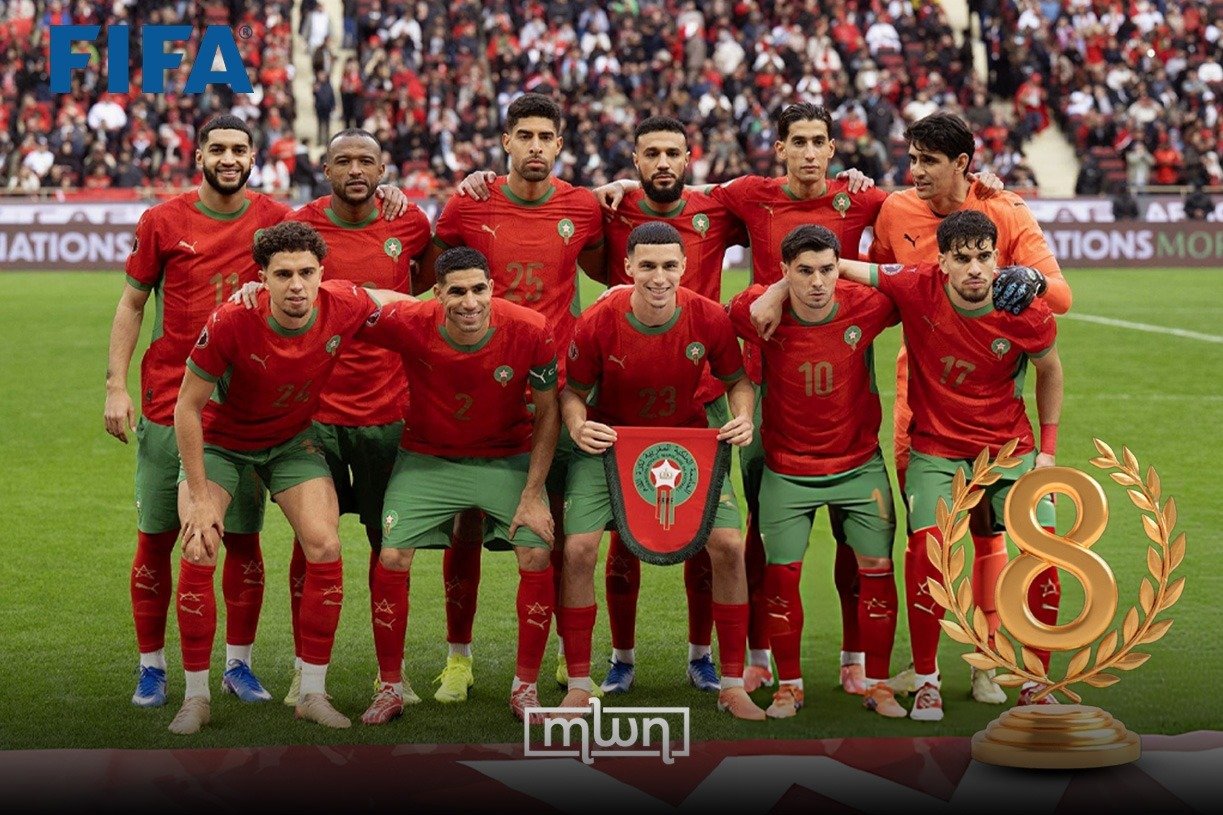
Morocco’s heartbreak in the Africa Cup of Nations final has been overshadowed by an unprecedented achievement: the nation reached eighth place in the FIFA world rankings this month — their highest-ever position. The ranking, which places the Atlas Lions ahead of traditional powers like Germany and Belgium, reveals an important truth: continental tournaments measure only one dimension of footballing excellence.
A Pipeline of World-Class Talent
This international success reflects decades of institutional investment in player development — an investment now yielding results at multiple levels of competition. Morocco’s football strength manifests clearly in players competing at Europe’s highest levels. Right-back Achraf Hakimi plays for Paris Saint-Germain, one of Europe’s premier clubs. Midfielder Sofyan Amrabat competes for Real Betis in Spain’s La Liga. Forward Youssef En-Nesyri represents another star performer in elite European competition. These players did not arrive at European clubs by accident; they emerged from Morocco’s developing youth system and represent the next generation of the country’s football infrastructure.
This international presence creates multiple benefits. Revenue flows to Morocco’s football federation through transfer transactions. More critically, it establishes role models for younger Moroccan footballers. These success stories demonstrate conclusively that elite global performance remains within reach for Moroccan athletes. Young players consequently pursue excellence with observable domestic examples of achievement, establishing a virtuous cycle of continuous improvement and aspiration.
Young Footballers Leading the Continent
Beyond the senior national team, Morocco maintains strong standing in African youth football categories. The nation’s U-23 team ranks highly across the continent, an indicator of consistent pipeline development. Young players currently advancing through Morocco’s academy system suggest that excellence will persist beyond the current generation of established stars.
This emphasis on youth represents a deliberate policy choice. Nations that concentrate solely on immediate senior-team performance risk eventual decline when aging players retire. Morocco’s different approach — investing substantially in youth infrastructure and player development — creates sustainable, long-term competitiveness.
Continental Achievement Across Multiple Competitions
While the AFCON final represented Morocco’s most recent continental competition, the nation’s broader competitive record demonstrates consistent excellence. Morocco has claimed the African Champions League with club teams on multiple occasions. The nation’s clubs have reached knockout stages of continental club competitions at higher rates than most African nations.
Morocco’s single AFCON championship, won in 1976, remains a source of continental pride even as fifty years have passed without repeating that success. The nation has appeared in two additional finals — losing to Tunisia in 2004 and to Senegal in 2026 — but the championship drought has lasted five decades. Rather than interpreting recent AFCON results as indicators of overall national decline, however, a more nuanced analysis emerges. Morocco’s eighth-place FIFA ranking (its highest ever), consistent presence of elite players in Europe’s top leagues, and dominance in African youth categories all suggest a football program in genuine ascendancy. The 2025 AFCON final loss represents disappointment in one tournament rather than evidence of structural weakness. For a nation building comprehensive footballing excellence across multiple levels of competition, a single continental tournament outcome carries less significance than sustained development metrics suggest.
The World Cup Moment
Morocco’s football program experienced a watershed moment at the 2022 FIFA World Cup in Qatar, when the team reached the tournament semi-finals — a historic achievement for an African nation. That accomplishment preceded the current ranking improvements and demonstrated that sustained development at club and national team levels produces tangible success on the world’s largest football stage.
With the 2026 World Cup approaching — to be co-hosted across North America — Morocco stands as a strong qualifying candidate. The nation’s recent performance trajectory and eighth-place ranking suggest Africa will have a competitive representative at the tournament.
Looking Beyond Single Tournaments
The AFCON represents African football’s premier continental competition, and Senegal’s new trophy will add to its history of accolades. However, evaluating national football programs solely through one tournament produces incomplete analysis. Morocco’s climb to its highest-ever world ranking demonstrates that a nation can build serious football infrastructure and international competitiveness through sustained effort and strategic planning.
For Morocco, the current moment presents opportunity. The eighth-place ranking reflects genuine quality and development. Young players advancing through the academy system indicate future strength. Elite-level performers competing in Europe’s best leagues maintain Morocco’s presence at global football’s highest levels. A disappointing tournament result, while naturally discouraging to supporters, cannot erase these structural advantages.
The beautiful game produces unpredictable moments. Single matches contain elements of chance, officiating decisions, and tactical circumstances that determine outcomes independent of overall team quality. Morocco demonstrated this reality in the AFCON final — competing fiercely against Senegal while ultimately losing a closely contested match under challenging circumstances.
Morocco’s trajectory, however, points consistently upward. For any national program seeking elite status, this trajectory matters more than any single tournament result. Morocco’s current position and development strategy offer genuine cause for confidence.
