


Rabat – Cairo is set to welcome the inaugural Ai Everything Middle East and Africa from February 11 to 12, an event that reflects a global conversation about AI as a structural, transformative force.
The two-day summit, organized by GITEX GLOBAL and hosted by Egypt’s Ministry of Communications and Information Technology in partnership with ITIDA, is positioned not as a showcase of futuristic ideas but as a practical forum where strategy meets execution.
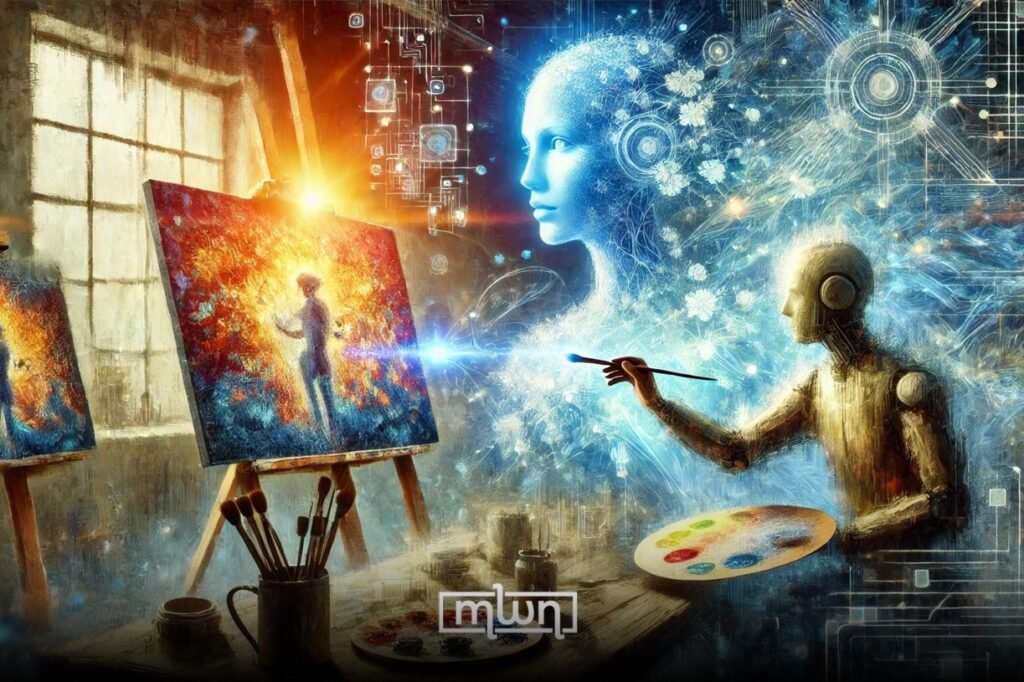
At the heart of the discussions this year is the theme of the AI Creative Economy.
While AI is often framed in terms of industrial efficiency, finance, or logistics, its impact on creative sectors, arts, literature, music, architecture, and digital content is increasingly profound.
AI has become a partner, collaborator, and disruptor, reshaping how cultural products are conceived, produced, and consumed.
AI as a creative instrument and cultural disruptor
In advertising, AI platforms generate and test multiple ad variations, automatically selecting the most effective campaigns. This process is not just about efficiency; it transforms creative decision-making itself, relying on data analytics to predict audience response and optimize messaging.
In architecture, AI supports every stage of the design process, from ideation and iteration to planning, construction, and maintenance. Algorithms can process vast datasets, from solar exposure patterns to cultural heritage considerations, allowing designers to create buildings that are both functional and culturally resonant.
Crafts and traditional arts are also experiencing AI-driven transformation. Machine-assisted production reduces the time spent on repetitive tasks, allowing creators to focus on conceptual work, experimentation, and refinement.
Generative AI enables new forms of digital expression, where hobbyists and professional artists alike can explore visual, musical, and literary ideas that were previously difficult or time-intensive to realize.
Yet AI’s integration into creative fields raises questions of ownership. Who owns authorship when an algorithm contributes to a work? How can cultural value be maintained when production is automated? How do creators monetize AI-assisted works sustainably? These questions are not peripheral since they define the contours of a rapidly emerging economy where knowledge, data, and creativity converge.
Why the Ai Everything event matters
The Cairo summit offers more than a showcase of AI applications; it is a moment for scrutiny and strategy. By focusing on applied AI, the event aligns with Egypt’s National Artificial Intelligence Strategy 2025-2030, which embeds AI into economic planning, public service reform, and digital autonomy.
Participants, from policymakers and researchers to investors and entrepreneurs, will engage in discussions that move beyond hype, addressing frameworks, cooperation models, and regional realities.
For the Middle East and Africa, the event serves as a lens on the broader stakes of AI in creative economies. As AI increasingly shapes cultural production, it also influences economic models, labor dynamics, and market structures.
Industries that once relied solely on human ingenuity now operate in collaboration with algorithms, creating opportunities for efficiency, innovation, and global competitiveness, but also introducing risks around intellectual property, cultural homogenization, and unequal access to technology.
A turning point for creative economies
AI’s integration into creative sectors signals a structural shift: culture and creativity are no longer just expressive or symbolic; they are economic drivers.
By facilitating faster ideation, experimentation, and production, AI can expand creative output while reshaping value chains. Yet its disruptive potential demands careful governance, ethical frameworks, and policies that balance technological advancement with cultural preservation and equitable participation.
The Ai Everything summit thus arrives at a critical moment. It is a laboratory for innovation and a forum for reflection on how AI can sustain, not overshadow, the creative economy.
For Egypt, hosting the event positions the country as a hub for AI-driven growth, not just in technology but in culture and creative enterprise. For the region, it is an invitation to rethink how AI shapes not only markets but the very ways societies imagine and produce culture.
In short, AI in the creative economy is no longer a sidebar; it is central to the future of work, art, and economic growth. Events like Ai Everything offer a rare opportunity to examine, debate, and direct this transformation, ensuring that the algorithms shaping tomorrow do so in ways that are innovative, inclusive, and culturally resonant.