


Marrakech – As FITUR 2026, Europe’s second-largest dedicated tourism fair, drew to a close in Madrid with record attendance surpassing 255,000 visitors, Morocco’s ascent as a Mediterranean tourism powerhouse emerged as one of the fair’s most closely watched narratives.
The event generated an estimated €505 million in economic impact for the Spanish capital, providing a high-profile stage for Morocco’s expansive delegation of more than 200 tourism professionals led by the National Moroccan Tourism Office (ONMT).
Their presence signaled the kingdom’s deliberate prioritization of the Iberian market, where projections suggest Morocco could attract 5 million Spanish tourists by 2026 and as many as 6 million by 2030. The countdown to the 2030 World Cup marks a turning point for Morocco’s tourism strategy: no longer aspirational, it has become operational, data-driven, and structurally central to regional aviation calculations.
Morocco’s meteoric rise is reshaping competitive dynamics across the Mediterranean basin and drawing heightened attention from aviation industry strategists. From just 4.3 million visitors in 2000 to nearly 20 million in 2025, the country’s tourism trajectory has been nothing short of transformational, propelling it to the forefront of Africa’s tourism landscape.
Spanish economic daily El Economista has gone so far as to describe Morocco as a “real threat” to established European destinations, a characterization that reflects shifting traveler preferences, improved connectivity, and sustained investment in infrastructure and hospitality.
For aviation players, this reordering of flows is not merely symbolic. It instead demands new distribution models, new partnerships, and a recalibration of how North African markets are integrated into global air travel networks.
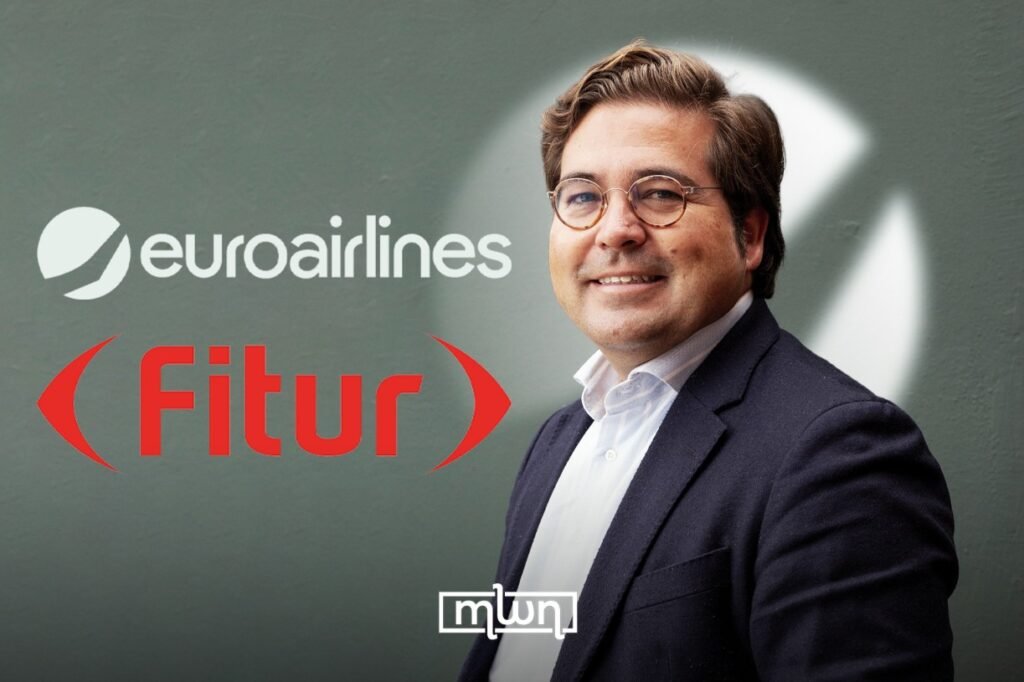
It is within this context that Euroairlines, the Spanish aviation distribution specialist, is positioning itself for expansion in Morocco. Speaking to Morocco World News (MWN) on the sidelines of FITUR, CEO Antonio López-Lázaro outlined ambitions closely aligned with the kingdom’s growth curve, viewing Morocco’s World Cup-led momentum as a catalyst for long-term demand rather than a one-off spike.
The macroeconomic indicators reinforce this outlook: tourism revenues exceeded MAD 124 billion ($12.4 billion) through November 2025, a year-on-year increase of roughly 20%, now accounting for around 7% of Morocco’s GDP.
As Morocco consolidates its status as the continent’s leading tourism hub and targets 26 million visitors by 2030, Euroairlines sees a market primed for sophisticated distribution solutions – one where scale, connectivity, and strategic foresight will determine who captures the next phase of Mediterranean travel growth.
Morocco identified as Africa’s breakout market
Founded in 2000 and headquartered in Castellón de la Plana, Euroairlines operates with IATA code Q4 across more than 50 countries worldwide. The company has evolved from its origins as a general aviation operator into a comprehensive aviation distribution platform, connecting airlines and operators with major international markets through its IATA plate system.
López-Lázaro identified Morocco as a market with “the greatest transformative potential” within Africa, citing the country’s stability, international ambitions, and strategic geographic position between Europe, Africa, and the Atlantic.
“The most relevant opportunities in Africa lie in partnerships with regional airlines and operators seeking to grow beyond point-to-point operations,” he told MWN, articulating how Euroairlines’ IATA plate system could unlock market access previously restricted to major alliance members.
With the backing of the International Air Transport Association (IATA), Morocco’s “Airports 2030” strategy envisions expanding passenger capacity to 95 million by 2035 through a massive MAD 38 billion ($3.8 billion) investment program.
The CEO’s assessment reflects broader industry recognition of Morocco’s competitive advantages. European inflation, which peaked near 11% in October 2022, has redirected tourist flows toward more affordable destinations offering Mediterranean climates, cultural depth, and culinary diversity at lower cost. Morocco has capitalized on this shift, pairing a clear pricing advantage with steadily rising service quality and infrastructure standards.
“In Morocco, we see room to develop new routes, strengthen existing hubs, and better connect secondary markets,” López-Lázaro stated. His company’s distribution model aims to help Moroccan carriers access major global distribution systems and international travel agencies, both online and offline.
Euroairlines’ strategic approach centers on facilitating connectivity beyond traditional alliance structures, with a distribution model designed to bridge the critical market-access gaps faced by smaller carriers seeking global reach.
“Our model allows airlines to operate within an international connectivity logic without needing to belong to major alliances,” López-Lázaro noted, referencing the company’s slogan “connecting beyond.” The IATA plate system enables combined itineraries, interline agreements, and connecting flows that expand commercial reach for airlines operating in Morocco.
A once-in-a-generation catalyst
Co-hosting the 2030 World Cup alongside Spain and Portugal represents a once-in-a-generation catalyst for aviation demand. FIFA estimates the tournament will draw over 1.5 million tourists, unleashing what López-Lázaro called an “unprecedented flow of travelers” between Europe, North Africa, and global markets.
The CEO characterized this movement as encompassing “investment, visibility, and international positioning” far beyond traditional sports tourism.
By co-hosting the tri-continental football mega-event, Morocco emerges as “Africa’s gateway to the world,” López-Lázaro said. Euroairlines’ distribution model could facilitate rapid integration of new operators, capacity reinforcements, charter flights, and event-specific routes into global distribution channels. This approach aims to build “more structural and long-lasting connectivity beyond the World Cup itself.”
Morocco’s preparations for the 2030 global sporting showcase coincide with Royal Air Maroc’s aggressive network and fleet expansion strategy. The national carrier aims to quadruple its fleet by the mid-2030s, positioning Casablanca as a major intercontinental hub linking Africa, Europe, and the Americas, while rolling out new long-haul and regional routes and boosting frequencies on strategic corridors.
Low-cost carriers have moved in parallel: Ryanair is set to open its fifth Moroccan base in Rabat with 20 routes – seven of them new destinations – indicating the rapid scaling of capacity and connectivity ahead of the tournament.
AI as competitive force multiplier
In this regard, the company’s technological advancement forms another pillar of its expansion strategy. Artificial intelligence integration across operational and commercial processes represents a key focus for 2026.
“We are already implementing AI to optimize internal processes, analyze market data, and improve efficiency in our day-to-day operations,” López-Lázaro explained, specifically citing booking management, pricing, competitive analysis, and client information flow management.
In markets such as Morocco, AI integration could serve as a force multiplier for competitiveness rather than a marginal upgrade. López-Lázaro noted that many medium-sized and small airlines lack capacity to develop advanced solutions independently.
“By integrating artificial intelligence into our business model, we can help our clients benefit from data analysis, commercial optimization, and informed decision-making,” he noted, positioning Euroairlines as a technology enabler for Morocco’s aviation sector.
Euroairlines’ expansion plans for 2026 include onboarding 50 new clients and entering 50 new markets, with particular emphasis on Asia, the Middle East, and Africa. The company also aims to consolidate cargo and intermodality services, integrating trains, buses, and ferries to offer comprehensive transport solutions.
Spain remains a core market
Morocco’s aviation infrastructure push is matching its tourism ambitions. Expansion at Casablanca’s Mohammed V Airport will add capacity for 20 million passengers through the MAD 12.8 billion ($1.28 billion) new terminal and runway upgrades. Roughly €2.3 billion is in the meantime being invested across key airports, including Marrakech, Agadir, Tangier, and Fez to support sustained tourism growth.
Morocco’s connectivity strategy is no longer Euro-centric, with Casablanca’s direct Beijing route – operating for over a year – underscoring a strategy to tap Asian markets and reduce structural dependence on traditional sources.
Tourism Minister Fatim-Zahra Ammor has stressed that expansion will remain qualitative, emphasizing that Morocco is “not seeking numbers for numbers’ sake,” but growth that generates “foreign currency, economic activity, and employment for Moroccans.”
The Spanish market’s importance to Morocco was evident at FITUR, where the ONMT secured partnerships with major Spanish travel prescriptors, including Ávoris, W2M, and El Corte Inglés groups.
These agreements target volume security for upcoming seasons while improving Morocco’s visibility in Spanish catalogs and directing demand toward higher value-added products such as cultural circuits, city breaks, golf tourism, desert experiences, and MICE services.
Air connectivity between Spain and Morocco continues to deepen, with 3 million seats scheduled for summer 2026. The expansion blends higher frequencies on existing routes with new direct links, reinforcing growth projections for Spanish arrivals. Spain is currently Morocco’s second-largest source market, while the kingdom ranks as the leading destination for Spanish travelers outside Europe and the United States.
As Europe’s second-largest tourism fair dedicated exclusively to the industry, FITUR provided a critical platform for advancing aviation and tourism partnerships. Its Knowledge Hub – spanning eight auditoriums, ten conference tracks, and more than 200 sessions with over 250 speakers – enabled high-level exchanges among 10,000 companies representing 161 countries.
With 2030 approaching, partnerships with aviation distributors like Euroairlines are key to strengthening global connectivity and broadening tourism growth nationwide.