


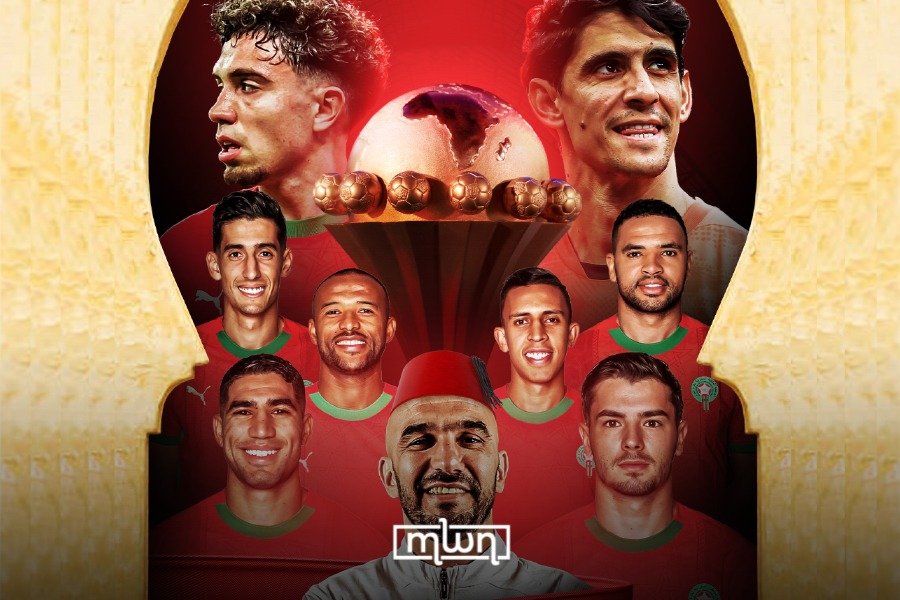
Rabat – Morocco fell short of securing its second Africa Cup of Nations title — not because it lacked quality or determination, but because Senegal plunged the final into chaos in one of the most dramatic and unsettling endings the tournament has ever seen.
The Atlas Lions fought, resisted, and pushed with every possible effort to claim the win. But what should have been a fair, high-level football showdown descended instead into disorder, overshadowing the spirit of competition that defined Morocco’s journey throughout the tournament.
In the final minute of regular time, a Senegalese defender committed a clear foul on Brahim Diaz, awarding Morocco a well-deserved penalty. The decision, evident to the entire stadium and to millions watching, was confirmed by VAR. Yet Senegal erupted in protest. Head coach Pape Thiaw displayed blatant unsportsmanlike conduct, with players joining him in contesting an indisputable call.
The Senegalese team threatened to abandon the pitch and headed toward the locker room, halting the match for endless minutes. Their actions disrupted the game’s rhythm and visibly affected the Moroccan players, who returned to the penalty under immense emotional pressure.
Diaz’s missed penalty became a heartbreaking moment that Moroccans will remember for years. It was a cruel twist for a generation witnessing their national team reach the AFCON final for the first time in 22 years.
Despite the ending, Moroccans remain overwhelmingly proud of their national team. Their AFCON journey was marked by quality football, resilience, unity, and the hope of a new chapter in Moroccan sporting history. And no final, especially one lost in the most unbelievably chaotic circumstances, can ever erase that. The drama might not have been planned in advance, but it was not surprising to those who have been watching the off-pitch buildup to today’s final.
For the past days, Senegal’s coach and federation have tried to tarnish Morocco’s image – first as a neglectful host that had put their Senegalese players in harm’s way, and then as CAF’s and referees’ favorite to win the final.
On Friday, the Senegalese football federation sent out a strongly worded statement accusing Morocco of failing to protect the Senegalese team after they arrived at the Rabat Agdal train station from Tangier.
While the world has unanimously applauded the organizational excellence of this year’s AFCON, the Senegalese federation chose to cast doubt on Morocco’s logistics.
Coach Pape Thiaw went further at the pre-match press conference on Saturday. “We have to say what happened is abnormal, abnormal. For a team like Senegal to be left with the crowd like that, the players were in danger. Anything could have happened through the actions of malicious people,” he said. He then went on to suggest, sarcastically, that CAF’s apparent support of Morocco should not be a reason to tarnish AFCON’s global image and reputation.
In an effort to ease the tension created by such offensive remarks and dismissive attitudes, Senegal’s Ministry of Foreign Affairs issued a statement on Saturday reaffirming the strong brotherhood and longstanding ties between the two nations.
“The Ministry wishes to recall the excellence of the age-old relations of friendship and solidarity between Senegal and Morocco,” the statement said.
And so, while the Atlas Lions lost tonight’s final, they won hearts across Morocco and beyond — except among Morocco-bashers who had long been invoking farcical conspiracies to protest their own teams’ disqualification. Unable and unwilling to take responsibility for their teams’ failures in the pitch, many have in recent days blamed Morocco for supposedly creating a hostile environment.
Following his team’s heartbreaking loss tonight, Morocco’s head coach Walid Regragui congratulated the Senegalese team. Yet he rightly emphasized that the dramatic turn of events in the match was a disgrace to Africa and African football.
The Atlas Lions ended the match with just 10 players after Hamza Igamane suffered an injury during extra time. Despite this, they continued to create moments of danger, pride, and joy — everything a Moroccan could wish for. Dima Maghreb!
