


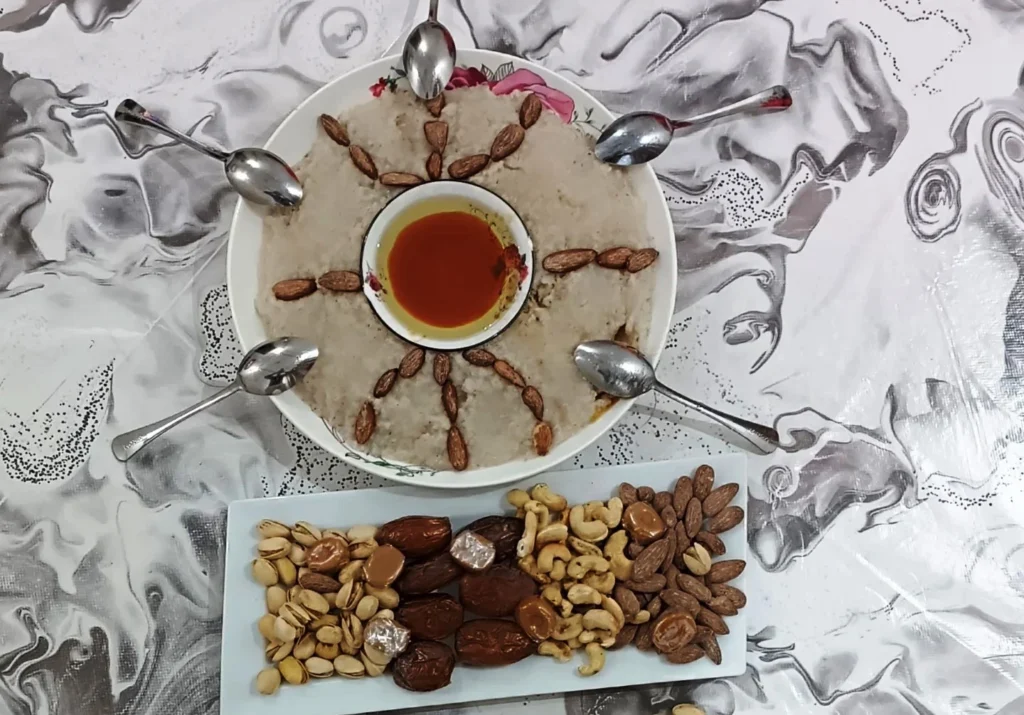
January 12th isn’t just another day in Morocco—it’s Amazigh New Year, and the whole country celebrates year 2976!
When I first learned about the Amazigh calendar, I was amazed. While most of the world follows the Gregorian calendar, Morocco’s Amazigh (Berber) communities have been counting years differently for nearly three millennia. Every January 12th marks Id Yennayer, the Amazigh New Year, and with it comes a special dish that connects Moroccans to their agricultural roots and ancient traditions.
Let me share with you the Tagoula recipe, a traditional dish that brings families together and carries a beautiful message of hope for the year ahead. This isn’t just food—it’s a celebration wrapped in golden grains and melted butter, with a lucky surprise hidden inside.
What is Tagoula and Why Do Moroccans Make It?
Tagoula is a traditional Moroccan dish made from cooked cereal grains—usually barley semolina—mixed with smen (fermented butter) or olive oil. But here’s the magical part: somewhere in that golden mixture, someone hides a date pit. Whoever finds it? They’re blessed with good fortune and happiness for the entire year ahead.
The dish itself looks simple. Cooked grains form a mound in a large platter, and in the center sits a small bowl filled with melted smen that pools like liquid gold. Everyone gathers around, takes their portion, and hopes to be the lucky one who discovers the hidden date pit.
This tradition is especially popular in southern Morocco, where the Amazigh New Year celebration runs deep. The holiday marks the beginning of the agricultural year—a time when farmers look to the land with hope for rain, good harvests, and prosperity.
The Amazigh New Year: More Than Just a Date
Id Yennayer, celebrated on January 12th, represents the first day of the Amazigh calendar. In 2025 by the Gregorian calendar, Amazigh communities are celebrating year 2976. Think about that—this calendar has been tracking time since around 950 BCE!
The celebration is deeply connected to the earth and agriculture. For centuries, Amazigh farmers have marked this day as the start of their farming cycle. After the winter solstice, days begin to lengthen, and the land prepares for spring planting. Tagoula, made from grains like barley and wheat, symbolizes the hope for a bountiful harvest in the months to come.
When families gather to eat Tagoula on this day, they’re not just sharing a meal. They’re honoring their ancestors, celebrating their connection to the land, and welcoming a new agricultural cycle with optimism.
Traditional Tagoula Recipe: How to Make This Amazigh Dish
Ready to make Tagoula? The recipe is surprisingly simple, though it requires patience and the right ingredients. Here’s how Moroccan families prepare this special dish.
Ingredients You’ll Need
For the grain base:
- Barley semolina (or substitute with corn, buckwheat, or other cereals)
- Water
- Salt
For the topping:
- Smen (traditional fermented butter) or olive oil
- 1 date (you’ll only use the pit)
Step-by-Step Preparation
1. Prepare Your Grains
If you’re using whole grains like buckwheat (as some families do), you’ll need to crush them slightly first. Traditional Moroccan cooks use a mortar and pestle or a food processor for this step. The goal is to break the grains into smaller pieces so they cook evenly and create that characteristic grainy texture.
2. Cook the Grains
Place your barley semolina or crushed grains in a large pot. Add water and salt. The exact ratio depends on your grain—barley semolina needs less water than whole buckwheat. Cook slowly, stirring regularly, until the mixture becomes thick and porridge-like. You’ll know it’s ready when the grains are fully cooked and the texture resembles a dense, grainy pudding.
3. Prepare the Smen
If you have access to fresh milk and want to make traditional smen the old way, here’s the process Moroccan shepherds have used for generations:
After milking a cow, pour the fresh milk into a traditional butter churn (or a modern jar with a tight lid). Shake vigorously for several minutes—this can take 15-30 minutes of continuous shaking! Eventually, the milk separates into butter and buttermilk. Collect the butter and cook it gently until it melts completely. This cooked butter becomes your smen.
Don’t have a cow? No problem! Most Moroccan cooks today use store-bought smen or substitute with high-quality olive oil.
4. Assemble Your Tagoula
Transfer the cooked grain mixture to a large serving platter. Shape it into a mound or spread it evenly across the dish. Make a small well in the center and place a small bowl there. Pour your melted smen or olive oil into this bowl.
5. Hide the Date Pit
Here comes the fun part! Take one date and remove the pit. Carefully hide this pit somewhere in the grain mixture. Make sure it’s well-hidden but not impossible to find. This is the lucky charm that will bring fortune to whoever discovers it!
Regional Variations: Different Grains, Same Tradition
While barley semolina is the most traditional choice for Tagoula, Moroccan families across different regions adapt the recipe based on what’s available locally.
Some families use corn semolina, which gives the dish a slightly sweeter flavor and a brighter yellow color. Others prefer buckwheat, which needs to be crushed before cooking and creates a heartier, nuttier taste. In some areas, people even mix different grains together.
The beauty of Tagoula is its flexibility. The core concept remains the same—cooked grains, melted fat, and a hidden date pit—but each family adds their own touch based on local ingredients and personal preferences.
The Symbolism: Why a Date Pit?
You might wonder, why hide a date pit specifically? Why not a coin or another small object?
Dates hold special significance in Moroccan culture. The date palm is a symbol of life, sustenance, and resilience in desert regions. By hiding a date pit in Tagoula, Moroccans are literally planting the seed of good fortune for the coming year. The person who finds it is believed to be blessed with happiness, health, and prosperity for all twelve months ahead.
It’s a beautiful way to start the year—with hope, community, and a little bit of luck.
How Moroccans Celebrate Id Yennayer Today
While Tagoula is the centerpiece dish, the Amazigh New Year celebration includes many other customs and foods. Families prepare special meals, children receive small gifts, and communities come together for music and dancing.
In southern Morocco, particularly in Amazigh villages in the Atlas Mountains and the Souss region, the celebration is most vibrant. You’ll see traditional dress, hear Amazigh music, and find markets filled with special foods prepared only for this occasion.
Even in cities like Marrakech and Casablanca, Moroccan families with Amazigh heritage maintain these traditions. Many restaurants now offer special Id Yennayer menus featuring Tagoula and other traditional dishes.
Practical Tips for Making Tagoula at Home
Finding Ingredients
If you live outside Morocco, look for barley semolina or barley flour in Middle Eastern or health food stores. Buckwheat groats work wonderfully as a substitute and are available in most grocery stores.
For smen, check specialty Moroccan or Middle Eastern markets. If you can’t find it, use ghee (clarified butter) or good quality olive oil. The flavor won’t be exactly the same, but it will still be delicious.
Serving Suggestions
Tagoula is typically served warm, with everyone eating directly from the communal platter. Use your right hand (as is customary in Morocco) to scoop portions, being careful to check for that lucky date pit!
Some families drizzle extra smen or olive oil over their individual portions. Others enjoy it plain, appreciating the simple, earthy flavor of the grains.
Storage
Leftover Tagoula can be stored in the refrigerator for 2-3 days. Reheat gently with a little water or oil to restore the creamy texture.
Join the Celebration: Experience Id Yennayer in Morocco
If you’re planning to visit Morocco in January, experiencing Id Yennayer firsthand is unforgettable. The celebration happens nationwide, but southern Morocco offers the most authentic experience.
Consider timing your trip to Marrakech, Agadir, or smaller Berber villages in the Atlas Mountains around January 12th. Many hotels and riads offer special Id Yennayer dinners where you can taste Tagoula and learn about Amazigh traditions from locals.
Your Turn: Share Your Tagoula Experience
Have you tried making Tagoula at home? Have you celebrated Id Yennayer in Morocco? I’d love to hear about your experience!
If you make this traditional dish, let me know how it turns out. Did you use barley, corn, or buckwheat? Did you make your own smen or use olive oil? And most importantly—who found the lucky date pit?
Share your stories, photos, and questions in the comments below. And if you know other Amazigh New Year traditions from different regions of Morocco, please tell us about them. Every community has its own special way of welcoming year 2976, and I’m always eager to learn more.
Happy New Year, or as we say in Morocco: Aseggas Ameggaz! May this year bring you health, happiness, and many delicious meals shared with loved ones.