


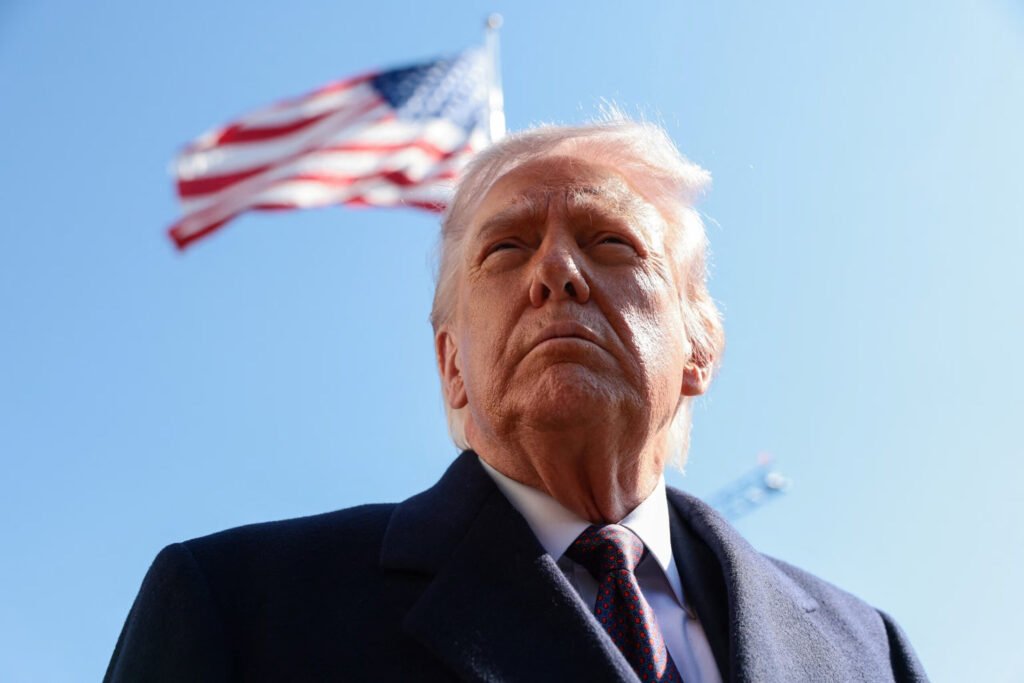
Marrakech – US President Donald Trump declared Friday that Cuba “is gonna fall pretty soon,” signaling the Caribbean island as his administration’s next target for regime change after the ongoing US-Israeli air campaign against Iran.
“Cuba is gonna fall too. They want to make a deal so badly,” Trump told CNN’s Dana Bash in a phone interview. “I’m going to put Marco over there, and we’ll see how that works out.”
Trump was referring to Secretary of State Marco Rubio, the son of Cuban immigrants who came to the United States just before Fidel Castro took power in 1959. Rubio has long pushed for regime change on the island during his years as a US senator from Florida.
‘It’s fallen right into my lap’
The president said Iran remains the current priority, but insisted Cuba is ready. “We’re really focused on this one right now. We’ve got plenty of time, but Cuba’s ready – after 50 years,” he said. “I’ve been watching it for 50 years, and it’s fallen right into my lap because of me.”
The sentiment is not limited to the White House. “Cuba’s next,” Sen. Lindsey Graham, R-S.C., said Sunday on Fox News shortly after the Iran strikes began.
A day earlier, Trump struck an exuberant tone at the White House during an event honoring Inter Miami CF, the 2025 Major League Soccer champions. Speaking to the Miami-heavy audience that included people of Cuban heritage, he opened with a broad declaration. “What’s happening with Cuba is amazing,” he said.
He then told the crowd it “will be just a question of time before you and a lot of unbelievable people are going to be going back to Cuba, hopefully not to stay.”
“We want you back, and we don’t want to lose you. We don’t want to make it so nice that they stay. But some people probably do want to stay. They love Cuba so much,” he added.
Trump lavished praise on Rubio’s work at the State Department. “He’s doing some job, and your next one is going to be, we want to do that special Cuba,” he said Thursday. Turning directly to Rubio, he added: “And you’ve been doing a fantastic job on a place called Cuba.”
But Rubio, Trump indicated, wants to finish the Iran campaign first: “He’s waiting. But he says, ‘Let’s get this one finished first.’”
He warned against moving too fast on multiple fronts. “We could do them all at the same time, but bad things happen. If you watch countries over the years, you do them all too fast, bad things happen,” he said.
In a separate interview with Politico on Thursday, Trump confirmed the United States is in direct contact with Cuba’s communist leadership. “They need help. We are talking to Cuba,” he said. He also took credit for choking the island’s economy by cutting off Venezuelan oil supplies following the capture of President Nicolas Maduro in January.
“We cut off all oil, all money, everything coming in from Venezuela, which was the sole source. And they want to make a deal,” Trump told Politico. “And that’s one of the small ones for me.”
‘Cuba needs to change’
Rubio himself has struck a firm tone on Cuba. “Cuba’s status quo is unacceptable. Cuba needs to change,” he said late last month after Cuban forces killed four Cuban Americans whose boat entered the island’s territorial waters. He called for “dramatic reforms” that would open space for economic and eventually political freedom.
In recent weeks, however, Rubio has shifted focus from human rights rhetoric to emphasizing economic changes on the island.
Meanwhile, Trump’s administration has begun exploring whether federal prosecutors could charge members of the Cuban regime or Communist Party with crimes tied to drugs or violence, according to NBC News. The multiagency effort could serve as a basis for additional sanctions beyond the decades-old US embargo on the island.
Cuban American members of Congress wrote to Trump in February urging the Justice Department to consider indicting former President Raul Castro over the 1996 shooting down of two unarmed civilian planes that killed four Cuban American pilots. Florida’s attorney general said this week a state-level case against Castro would be reopened.
On the island itself, Cuban President Miguel Diaz-Canel made an “urgent” call this week to transform Cuba’s economic model. A decree-law published Wednesday in the Official Gazette opened the door to public-private companies for the first time in 67 years.
Trump has ruled out military intervention in Cuba, at least publicly. But he has described U.S. efforts to block fuel shipments to the island as a “blockade,” triggering widespread shortages, blackouts, and a suspension of commercial air traffic.