


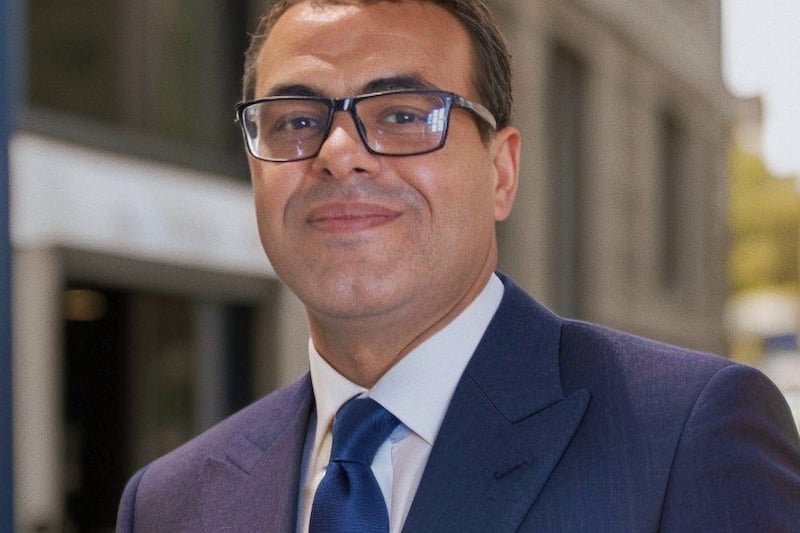
Rabat – Abdessamad Moutia has been appointed Director of the Higher Institute of Audiovisual and Cinema Professions (ISMAC), marking a new chapter for one of Morocco’s key institutions in film and media training.
His appointment was approved on Thursday during the Government Council meeting chaired by Aziz Akhannouch, as part of a series of senior nominations validated in accordance with Article 92 of the Constitution.
The appointment places Moutia at the head of one of the country’s leading public institutions in film and audiovisual training.
Operating under the Ministry of Youth, Culture, and Communication – Communication Department, ISMAC prepares future professionals for careers in cinema, television, and digital media.
Its graduates supply production companies, broadcasters, and creative industries that now face rapid technological shifts and new audience habits.
Moutia’s nomination comes at a time when Morocco’s audiovisual sector seeks stronger academic leadership and closer ties between training and market needs.
The institute holds a strategic position in shaping technical and artistic expertise, from directing and screenwriting to sound engineering and post-production.
With global platforms reshaping content creation and distribution, expectations remain high for institutions such as ISMAC to maintain rigorous standards and adapt to industry realities.
The council also validated other key appointments. At the High Commission for Planning, Othmane Kettani was appointed Director of the National Institute of Statistics and Applied Economics.
Meanwhile, Mustapha El Yabouri assumes the role of Inspector General at the Ministry of Higher Education, Scientific Research and Innovation.
At the Ministry of National Education, Kenza Abourmane was named Director of the Organization of School Life, Extracurricular Activities, and Educational and Vocational Guidance.
In the same session, the government adopted draft law No. 68.25, which revises the legal framework of the National Agency for the Evaluation and Quality Assurance of Higher Education and Scientific Research.
According to Government Spokesperson Mustapha Baitas, the reform aims to raise evaluation standards in higher education and scientific research and to bring national mechanisms closer to widely recognized international models.
The appointments and legislative changes signal a renewed push to consolidate governance structures at a moment when Morocco’s higher education and creative industries face structural challenges and new opportunities.
