


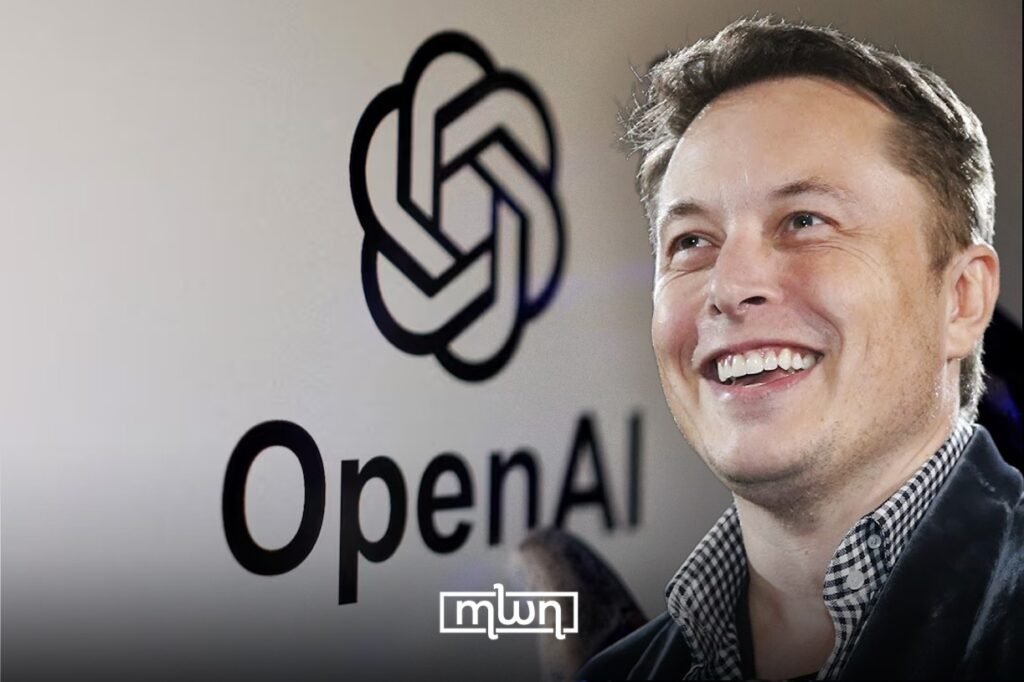
Fez– The first week of the high-profile legal battle between Elon Musk and Sam Altman has set a tense, consequential tone, with implications that could reshape the governance of artificial intelligence.
Testifying before a federal court in Oakland, California, according to Al Arabiya, Musk delivered a clear and repeated message to the jury: a charitable organization cannot be turned into a profit-driven enterprise.
“You can’t simply steal a nonprofit,” he said, describing the core of his argument against the company he helped create.
The lawsuit, filed two years ago, accuses OpenAI and its leadership, including Altman and Greg Brockman, of abandoning the organization’s founding mission as a nonprofit dedicated to the safe development of AI.
Musk, who co-founded OpenAI in 2015, claims that his early contributions, estimated at around $38 million, were diverted toward commercial purposes without proper authorization.
OpenAI has firmly rejected these allegations, describing them as baseless.
The company, now valued by private investors at more than $850 billion, argues that its evolution toward a hybrid model was necessary to sustain innovation and compete in a rapidly advancing field.
Musk’s testimony, which spanned three days, dominated the opening phase of the trial.
He acknowledged that he does not oppose the existence of a for-profit arm within OpenAI.
However, he argued that the balance has shifted, with commercial interests now controlling the organization.
“You cannot benefit from two conflicting systems at the same time,” he told the court.
The case also revisits OpenAI’s origins.
Musk said the initiative was designed as a counterweight to Google, which he believed was not paying sufficient attention to AI safety.
He emphasized his central role in the organization’s early days, stating that he proposed the idea, recruited key talent, and provided the initial funding.
Tensions escalated during cross-examination, as Musk clashed with OpenAI’s legal team.
Questions focused on his involvement in the company’s transition to a for-profit structure and his current role as founder of xAI, a direct competitor.
Musk acknowledged that xAI has used techniques involving OpenAI systems to validate its own models, describing such practices as common in the industry.
The broader context of the dispute reflects the explosive growth of OpenAI following the launch of ChatGPT in late 2022 and its subsequent multibillion-dollar partnership with Microsoft.
These developments accelerated the company’s shift toward commercialization, raising questions about how to balance innovation, funding, and public interest.
Musk’s legal team is seeking damages of up to $134 billion and is calling for significant structural changes.
These include returning what they describe as “unlawful gains” to the nonprofit entity and removing Altman and Brockman from their leadership roles.
The trial, overseen by Judge Yvonne Gonzalez Rogers, has been divided into two phases: one to determine liability and another to assess damages.
The first phase is expected to conclude by May 21.
While the jury will play an advisory role, the final decision will rest with the judge.
As proceedings continue, the case is being closely watched across the technology sector.
At stake is not only the future of OpenAI, but also a broader question: can organizations founded on public-interest missions maintain their principles in a market driven by competition and capital?