


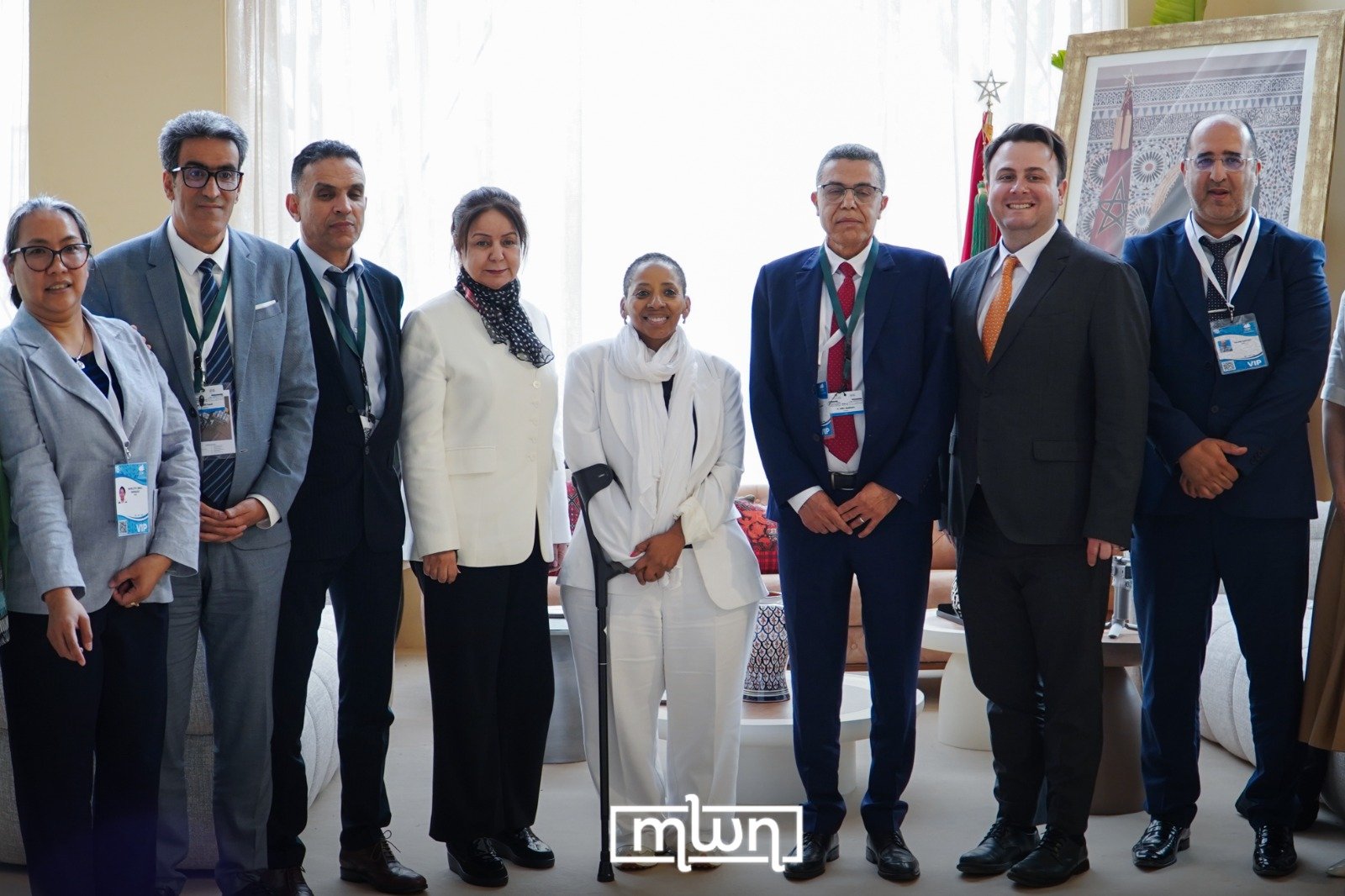
Fez — The Green Climate Fund (GCF) used on Tuesday its visit to the 18th International Agriculture Exhibition in Morocco (SIAM) to spotlight Morocco’s climate-linked agricultural transition and its growing portfolio of resilience projects.
The mission brought together the Agricultural Development Agency (ADA), the National Agency for the Development of Oasis and Argan Zones (ANDZOA), and senior GCF officials at the fairgrounds in Meknes.
ADA is listed by the GCF as an accredited entity, while the fund has separately highlighted Morocco’s arganiculture project as part of its support for climate adaptation and rural livelihoods.
The meeting included Catherine Koffman, Regional Director for Africa at the GCF, and ANDZOA Director General Latifa Yaakoubi, alongside other members of the fund’s delegation.

Gabriel Boc, the GCF’s regional manager for North and Central Africa, told Morocco World News (MWN) that the timing of the mission gave the delegation a direct look at the fair’s agricultural dimension. “We are here as part of a Green Climate Fund mission to Morocco and we are happy that this is overlapping with the International Affair for Agriculture here in Meknes, which we had the opportunity to visit today for a brief moment,” he said.

Boc added that the fund is “a proud partner of Morocco,” and said its work in the country includes support for projects tied to resilience and local value chains. The GCF has identified Morocco’s arganiculture program as a flagship effort to help preserve the argan ecosystem while strengthening rural communities facing climate stress.
Argan cooperatives and SIAM showcase broader resilience effort
The talks fit into the GCF’s broader Morocco mission for accredited entities, with ADA’s project portfolio and potential support pathways reportedly forming part of the discussion. ANDZOA, for its part, has positioned arganiculture as an agroforestry response to climate vulnerability in Morocco’s argan biosphere.
Boc repeatedly linked that policy discussion back to what was visible at SIAM itself. “It was impressive to see the range of agricultural products that Morocco produces here at the fair,” he told MWN.

He said he had bought “some locally produced oregano and some of the delicious dates that Morocco is producing,” before returning to tour the exhibition. Boc also pointed to the practical side of GCF-backed argan work, telling MWN that women’s cooperatives tied to new plantations would soon be able to market argan-based products “in places like this agricultural fair and in other shops in Morocco and abroad.”

The visit gave SIAM a broader significance than trade promotion alone. It showed how the fair is increasingly serving as a meeting point between agricultural production, climate finance, and rural development, especially as Morocco tries to turn resilience projects into visible economic opportunities for farmers and cooperatives.
