


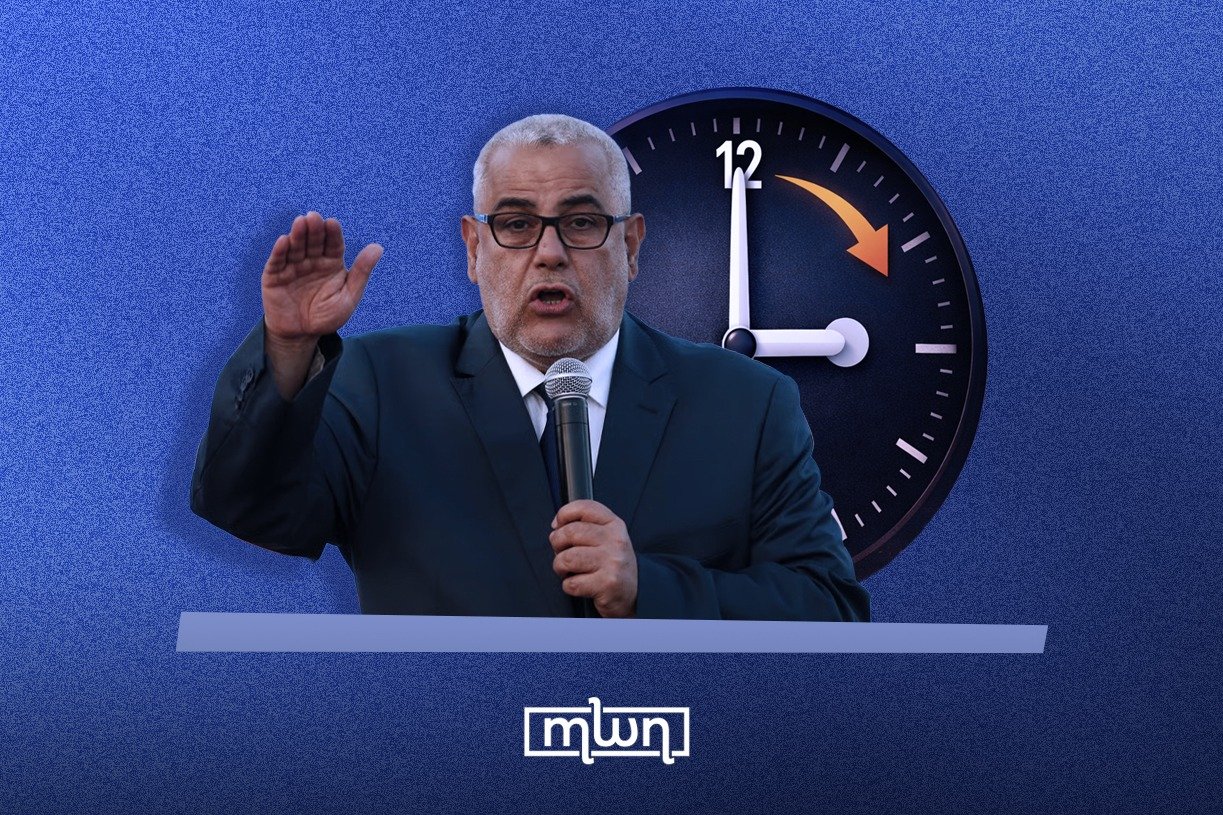
Rabat – The Justice and Development Party (PJD) is preparing its pledges to return to government in 2026, with vows suggesting it would abolish the controversial GMT+1 if it wins the 2026 elections.
Abdelilah Benkirane, Secretary General of PJD, made his party’s pledges public last week, suggesting the party would abolish daylight saving time and remove the 30-year age limit for applicants to public-sector teacher positions.
Benkirane is ambitious that the PJD could secure a “respectable” position in the upcoming elections.
PJD’s leader pledges to scrap daylight saving time amid a revived debate, as tens of thousands of Moroccans sign different petitions urging the government to abolish the GMT+1.
As of now, one of the viral petitions has collected more than 343,620 signatures, emphasizing the toll daylight saving time has taken on people’s mental and physical health.
“Adopting daylight saving time in Morocco poses a daily challenge for citizens and affects their quality of life,” the petition read.
Benkirane said his commitment to win this position is not “driven by a desire for seats, but by a sense of duty,” recalling what he deems as a “proud history” the party enjoys.
The politician, who served as the head of government from 2011 to 2017, also appealed to emotion, citing the continued involvement of elderly party members as a testament to the party’s integrity, seriousness, and principles.
“This makes them feel that remaining in the party until they meet God is worthwhile,” he said.
Benkirane is regarded as a traditional government critic since he left his head of government post in November 2017.
Benkirane, a veteran member and proclaimed “spiritual guide” of PJD, left the government in 2017. King Mohammed VI named his fellow Saad Eddine El Othmani from PJD in an effort to end a five-month post-election deadlock.
El Othmani was then succeeded by Aziz Akhanouch following the defeat of PJD in the September 2021 general elections.
PJD has been vocal in criticizing the turnout of recent elections, arguing that the party’s long political history and governance record make it capable of winning another electoral round.
Whether this is actually true or not, the case cannot be determined until the upcoming elections in September this year.
A survey conducted last year by the Moroccan Center for Citizenship found that 91.5% of respondents rated the performance of political parties in Morocco as weak. Only 7.6% considered their performance average, while a mere 0.9% gave positive ratings.
