


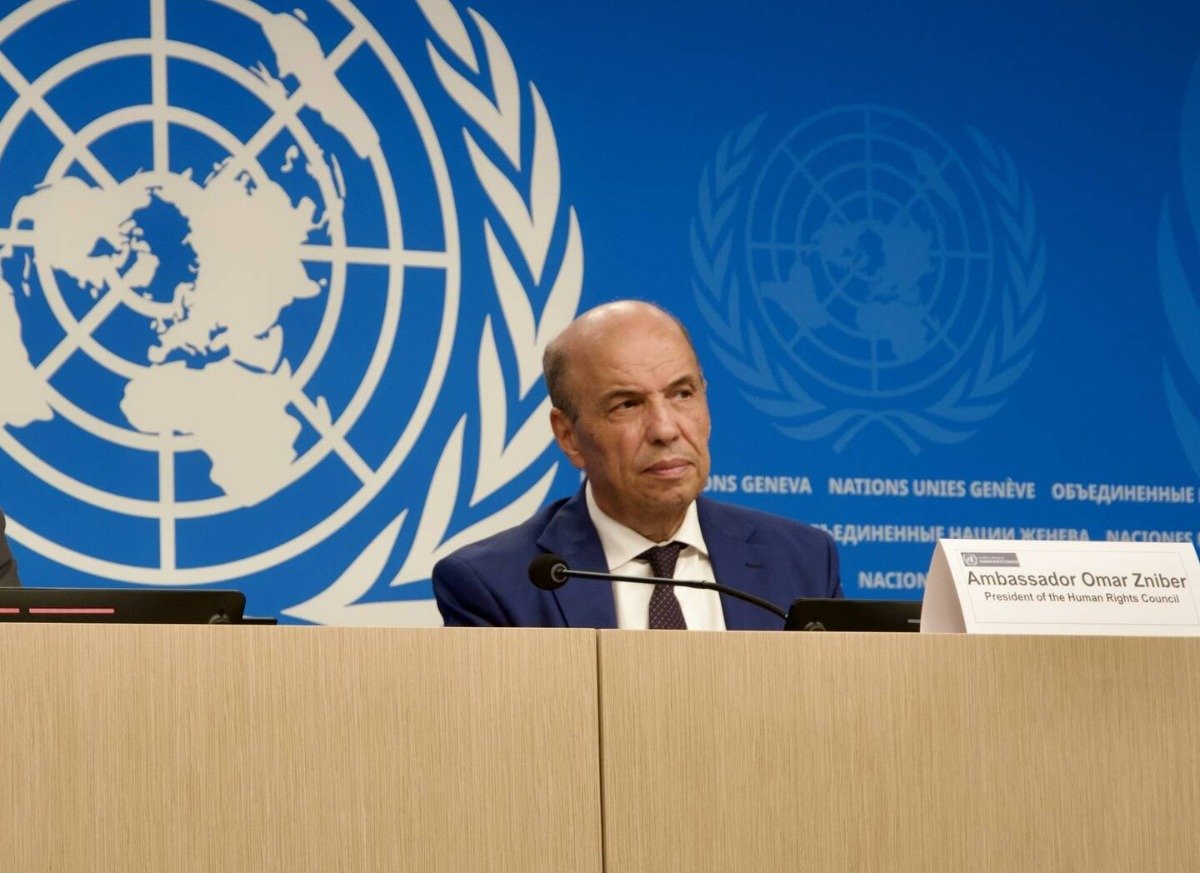
Rabat – Morocco on Wednesday strongly condemned what it described as “heinous attacks” by Iran against several Arab countries, including Bahrain, Kuwait, Oman, Qatar, Saudi Arabia, the United Arab Emirates, and Jordan.
Speaking on behalf of Morocco during the 61st session of the United Nations Human Rights Council in Geneva, Ambassador Omar Zniber said the attacks represent a “clear violation” of the sovereignty of these countries and an unacceptable threat to regional peace and stability.
He recalled that King Mohammed VI had already expressed Morocco’s full solidarity with the affected nations, stressing that such actions undermine ongoing efforts by Gulf countries to maintain dialogue and stability in the region.
Zniber also said the attacks are part of what he called a “pattern of hostile activities” aimed at destabilizing the region. He pointed to Iran’s alleged support for extremist and separatist groups, as well as threats to the territorial integrity of Arab states.
Morocco further condemned the targeting of civilian areas and critical infrastructure through missile and drone strikes. It also denounced attacks on commercial shipping in the Strait of Hormuz, warning of their impact on global trade and security.
The ambassador welcomed the adoption of United Nations Security Council Resolution 2817 and expressed Morocco’s full support for a draft resolution presented at the council. The resolution, co-sponsored by Morocco, strongly condemns what it describes as “unjustified” Iranian attacks.
It also raises serious concerns about strikes on civilians and vital infrastructure, including energy, transportation, water, and food systems. The text highlights the impact of these attacks on human rights, especially for vulnerable populations.
In addition, the resolution warns about the broader regional and global consequences of the escalation, particularly disruptions to maritime trade in the Strait of Hormuz, which could affect supply chains and food security worldwide.
Rabat notably reaffirms support for the sovereignty of the targeted countries and recognizes their right to self-defense, while also condemning any threats to maritime navigation and energy infrastructure.
The ongoing war began on February 28 when the United States and Israel launched coordinated, massive surprise airstrikes against Iran, targeting nuclear facilities, military infrastructure, and senior leadership, including the killing of Supreme Leader Ayatollah Ali Khamenei. The strikes came amid ongoing diplomatic attempts to manage Iran’s nuclear program and a belief that an Iranian nuclear weapon was imminent.
In response, Iran carried out missile and drone attacks, first targeting Israel and later extending strikes toward several Gulf countries, specifically targeting US bases.
Tehran said these attacks aim to pressure Gulf nations into ceasing support for the US and to strike back at allies hosting US military bases used against Iran.
