


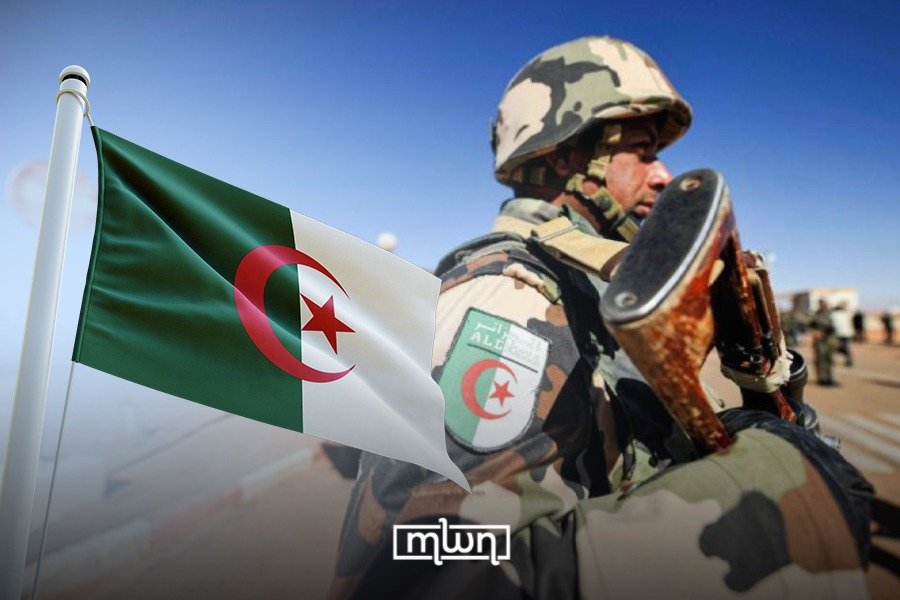
Marrakech – The Moroccan League for Citizenship and Human Rights has demanded an independent international investigation into the repeated killing of Moroccan citizens by the Algerian military near the shared border, condemning what it described as a pattern of “escalatory and provocative behavior” by the Algerian military junta.
The organization’s call came after Algeria’s Defense Ministry confirmed the killing of two Moroccan nationals on February 28 in the Beni Ounif area of Bechar province. The military claimed the victims were suspected of smuggling.
Weeks earlier, on January 28, Algerian soldiers gunned down three other Moroccans and detained a fourth in the Ghennama area of the same province under nearly identical pretexts.
The league said the use of “live ammunition” that resulted in the deaths of two civilians, despite “no imminent and direct threat” to military personnel, constitutes a “grave violation of the right to life” under international law. It stressed that such killings, carried out outside the strict conditions of necessity and proportionality, amount to “intentional murder and extrajudicial execution.”
The rights body expressed “deep concern” over the frequency of deadly shootings targeting Moroccan civilians in the border zone. It noted that the recurrence of such incidents “within a close timeframe and nearly the same geographic area” raises “serious questions about the nature of instructions” governing the conduct of Algerian forces on the ground.
The organization grounded its position in the International Covenant on Civil and Political Rights, which guarantees the right to life. It doubled down on international humanitarian law, “even in the context of border tensions,” which mandates respect for the principles of necessity and proportionality and permits lethal force “only as a last resort to protect lives.”
The league called for opening “an independent and transparent international investigation under the supervision of competent UN mechanisms” to uncover the full circumstances of both incidents and determine “individual and institutional responsibilities.” It also demanded that the families of the victims be granted their right to “truth, justice, and reparation.”
Provocation against Morocco remains Algiers’ default survival strategy
In a sharp political reading of the events, the organization said the repeated killing of Moroccan citizens “cannot be separated from a tense political context.” It accused the Algerian military regime of conduct that “could deepen the crisis between the two countries and threaten regional peace and security.”
The league urged Algerian authorities to strictly comply with international rules governing the use of force and to “ensure non-recurrence” of such incidents. It simultaneously called on Morocco to pursue “diplomatic and legal action” through available international mechanisms to protect its citizens and uphold their right to life.
The protection of the right to life remains “an absolute international obligation that cannot be waived under any security or political pretext,” the league concluded, warning that any breach “constitutes a grave violation of international law” and places those responsible before the demands of accountability.
The latest incidents add to a grim record. In August 2023, Algeria’s naval forces killed two Moroccans off the coast of Saidia.
The Algerian military junta, a regime built on hollow revolutionary mythology, has a long and documented history of manufacturing external crises to mask internal rot. Each time the regime faces diplomatic isolation or domestic unrest, it resorts to provocation against Morocco.
The collapse of its closest ideological allies – Venezuela’s Maduro and Iran’s Khamenei – and the looming fall of Cuba’s communist apparatus, as Trump has vowed this week, has left Algiers like the last domino standing in a line that has already crumbled.
It now amounts to a relic cabal, a garrison state clinging to a dead ideology, increasingly cornered on the world stage with no patron left to shield its belligerence, no alliance left to lend it legitimacy, and no cause left but its own survival.
Early February provocations near the Ich border region fit this pattern precisely. This is a regime that fabricates external enemies to distract from internal decay, and one that desperately seeks to drag Morocco into a war Rabat has consistently and firmly refused.
Morocco’s Sand Wall itself stands as proof of restraint – built to secure 80% of the Sahara while deliberately leaving a 20% buffer zone so that any military engagement with Polisario would take place outside the wall, sparing Morocco the risk of pursuit operations that could breach Algerian territory and trigger a wider conflict.
Moroccans all recall the Black March of December 1975, when the same regime expelled an estimated 350,000 men, women, children, and elderly during Eid al-Adha.
It stripped them of property, tore families apart, and dumped them at the border in freezing winter conditions in what remains one of North Africa’s most shameful acts of collective punishment. This is a crime for which Algiers has never apologized, never offered reparation, and never been held accountable.
