


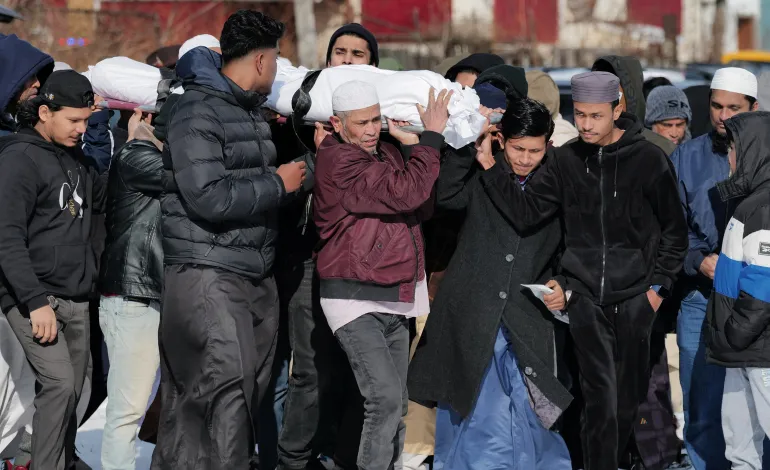
Rabat – A near-blind Rohingya refugee died days after U.S. immigration agents released him far from his home in upstate New York, prompting calls for an investigation and renewed scrutiny of how authorities handle vulnerable migrants.
The Rohingya refugee from Myanmar with severe visual impairment was found dead in Buffalo days after the United States Border Patrol released him in an unfamiliar area miles from his residence, authorities said.
Human rights advocates and local officials said federal authorities failed to account for the man’s disability and basic safety needs.
The body of Nurul Amin Shah Alam, 56, was discovered by police officers on Tuesday evening, according to a spokesperson for the Buffalo Police Department.
Shah Alam had been missing since February 19, when Border Patrol agents dropped him off at a coffee shop following his release from a county jail.
Buffalo Mayor Sean Ryan said in a statement on Wednesday that Shah Alam’s death was preventable and stemmed from “inhumane” decision-making by federal immigration authorities.
“A vulnerable man—nearly blind and unable to speak English—was left alone on a cold winter night with no known attempt to leave him in a safe, secure location,” Ryan said.
He described the decision by U.S. Customs and Border Protection as unprofessional and inhumane.
Several U.S. lawmakers also called for an investigation, including Representative Grace Meng, a Democrat from New York, who described the incident as a “shocking breach of responsibility and basic humanity by federal enforcement.”
Shah Alam’s son, Mohamad Faisal, said neither the family nor their lawyer were informed where his father had been left after his release, according to the Reuters news agency.
Faisal said the family are Rohingya refugees from Myanmar’s Rakhine State and that his father could not read, write, speak English, or use electronic devices.
Read also: Trump Orders Mass Deportation Targeting Democratic Strongholds
He said his father’s arrest about a year ago stemmed from a misunderstanding after police were called when Shah Alam wandered onto private property carrying a curtain rod he had purchased to use as a walking stick due to his impaired vision.
When officers instructed him in English to drop the rod, Shah Alam did not understand and was arrested, Faisal said.
He remained in jail for nearly a year before being released following a misdemeanor plea deal. “He only wanted to eat home-cooked food and be reunited with the rest of his family,” Faisal said.
In a statement to Investigate Post, a Buffalo-based news outlet, a spokesperson for U.S. Customs and Border Protection said agents dropped Shah Alam off at a coffee shop after determining he had entered the country as a refugee and could not be deported.
“Border Patrol agents offered him a courtesy ride, which he chose to accept, to a coffee shop determined to be a warm, safe location near his last known address,” the agency said.
The spokesperson added that Shah Alam showed “no signs of distress, mobility issues, or disabilities requiring special assistance.”
Temperatures in Buffalo were below freezing that weekend.
Shah Alam’s death is being investigated by homicide detectives, police said.
The case comes as immigration enforcement under President Donald Trump faces increased scrutiny.
At least six immigrants have died in Immigration and Customs Enforcement (ICE) custody since the beginning of the year, according to advocacy groups.
