


If you have ever walked through the buzzing streets of Casablanca, you have probably heard the name Derb Omar. It is the largest commercial quarter in Morocco — a maze of narrow lanes packed with shops selling everything from kitchen supplies to bolts of fabric. Thousands of traders work there every single day.
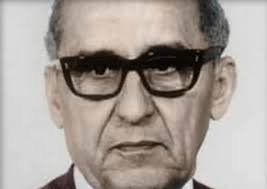
But here is something most visitors never learn. That famous name comes from a real person: Haj Omar Tissir. And his story is one of the most inspiring rags-to-riches journeys Morocco has ever produced. A kid from the mountains who sold eggs on the side of the road grew up to build motorways, reshape cities, and leave his mark on an entire nation.
Let me walk you through his life. Trust me — you will look at Casablanca a little differently after this.
A Boy from Haha: Where Haj Omar Tissir Began
Haj Omar Tissir was born in a small village in the Haha region, a mountainous stretch of land between Essaouira and Agadir in western Morocco. Life there was tough. The terrain was rugged, resources were limited, and many young Amazigh men left home early to find work in the big cities.
Omar did not wait around. By the age of twelve, he was already travelling between weekly markets — the famous souks — carrying baskets of eggs to sell one by one. It was modest work, but it taught him something that would stay with him for life: how to negotiate, how to read people, and how to spot an opportunity.
This is also where he earned his legendary nickname: “Nouss Blassa” — meaning “half a seat” in Moroccan Darija. The boy was so small that he would talk bus drivers into letting him ride for half price. The nickname stuck for the rest of his life.
If you know anything about the people of Haha, this will not surprise you. The region has a long tradition of sharp traders and natural businesspeople. Omar was carrying that DNA from the start.
How Haj Omar Tissir Went from Eggs to Empire
Over time, Omar moved beyond the egg business. He started working as a labourer — a tâcheron — on construction sites. But he was never just hauling bricks. He watched. He learned how projects were managed, how money flowed, how contracts were won. And he never lost sight of something bigger.
The turning point came in 1960, when a devastating earthquake nearly levelled the city of Agadir. Thousands of people lost their lives and homes. It was a national tragedy — but also a moment that demanded builders, vision, and courage. Haj Omar Tissir stepped up.
He pivoted from small-time labourer to construction contractor, throwing himself into the effort to rebuild Agadir. That decision changed everything. From Agadir, he moved into larger and larger projects across the country. Within a few years, the former egg seller was one of the most important figures in Moroccan construction.
Breaking the Foreign Monopoly: Haj Omar Tissir and Moroccan Pride
Here is what makes his story even bigger than personal success. In the 1960s and 70s, almost all major construction projects in Morocco — dams, highways, bridges — were controlled by foreign companies, mostly French. These firms were paid in foreign currency, which put enormous pressure on the Moroccan economy.
Haj Omar Tissir changed that. Through Morocco’s “Marocanisation” policy, which required foreign firms to partner with local businesspeople, he acquired a fifty-percent stake in Chaufour Dumez, the Moroccan subsidiary of a major French construction company. Suddenly, a kid from the mountains was co-running one of the country’s most powerful building firms.
He oversaw massive national projects. He helped build the first motorway between Casablanca and Rabat. He worked on the road connecting Marrakech and Agadir — almost as if his roots in the south were pulling him to link the two halves of Morocco together. He also partnered with major state institutions like OCP, ONCF, and ONE on projects that shaped modern Moroccan infrastructure.
He was even appointed to the board of the BNDE — the National Bank for Economic Development — which cemented his place as a true leader in the Moroccan business world.
Derb Omar and the Tissir Neighbourhood: A Legacy in Stone
With his growing fortune and influence, Haj Omar Tissir left a physical mark on Casablanca that survives to this day. The Tissir neighbourhood, which he founded, provided housing for many families and embodied the communal spirit of his Amazigh roots — a kind of urban village where people looked out for one another.
And then there is Derb Omar itself. The quarter that bears his name has grown into a commercial powerhouse — a city within a city. More than 2,300 shops and galleries crowd its streets. Since the 1920s it has been the beating heart of distribution in Morocco. Traders from Fez, the Souss, and even China jostle for space there. Fabrics, clothing, kitchenware, electronics — nearly everything passes through Derb Omar before reaching stores and grocers across the country.
Walk through it on any weekday morning and you will see handcarts weaving between delivery trucks, shopkeepers shouting prices, and buyers haggling over bulk deals. It is loud, chaotic, and completely alive. And every corner of it carries the memory of the man who gave it his name.
After Haj Omar Tissir: What Happened to the Empire
Haj Omar Tissir passed away in 1979. After his death, things got complicated. Internal family disputes, outstanding bank debts, and management problems weakened the business empire he had built. His sons diversified into areas like metal packaging and sanitation, but the original fortune shrank significantly.
Still, the name endures. In Casablanca, in the Haha region, and across Morocco, people talk about “Nouss Blassa” with a mix of admiration and nostalgia. His journey — from a barefoot boy selling eggs to a man who built highways — is proof that ambition, grit, and a sharp mind can take you anywhere.
Visiting Derb Omar: Practical Tips for Travellers
If you are heading to Casablanca, a visit to Derb Omar is an experience you should not skip. Here are a few tips to make the most of it:
Getting there: Derb Omar is centrally located in Casablanca. A petit taxi from the city centre or Casa Voyageurs train station will get you there in minutes.
Best time to go: Weekday mornings are the busiest — and the most exciting. If you prefer a calmer pace, try late afternoon.
What to buy: Fabrics, traditional tea sets, spices, kitchenware, and bulk goods are the specialities. Prices are negotiable, so do not be shy about bargaining.
What to expect: Narrow lanes, heavy foot traffic, handcarts everywhere. Keep your belongings close and wear comfortable shoes. This is not a polished mall — it is the real, working heart of Moroccan trade.
Cultural tip: A friendly “Salam” goes a long way. Most traders are happy to chat if you show genuine interest. Ask about the history of the quarter — some of the older shopkeepers have stories going back decades.
Why This Story Matters
As someone who has spent time exploring every corner of this country, the story of Haj Omar Tissir hits differently when you are standing in the middle of Derb Omar. The noise, the energy, the sheer volume of commerce happening around you — and then you think about a twelve-year-old kid balancing a basket of eggs on a bumpy mountain road.
Morocco is full of stories like this. People who started with nothing and built something extraordinary through hard work and a refusal to give up. Haj Omar Tissir just happened to build an entire quarter.
So next time you are in Casablanca, go get lost in Derb Omar. Pick up a tea set, haggle over the price of a rug, and take a moment to think about the man behind the name. That is the kind of Morocco that keeps me bewildered — in the best possible way.
