


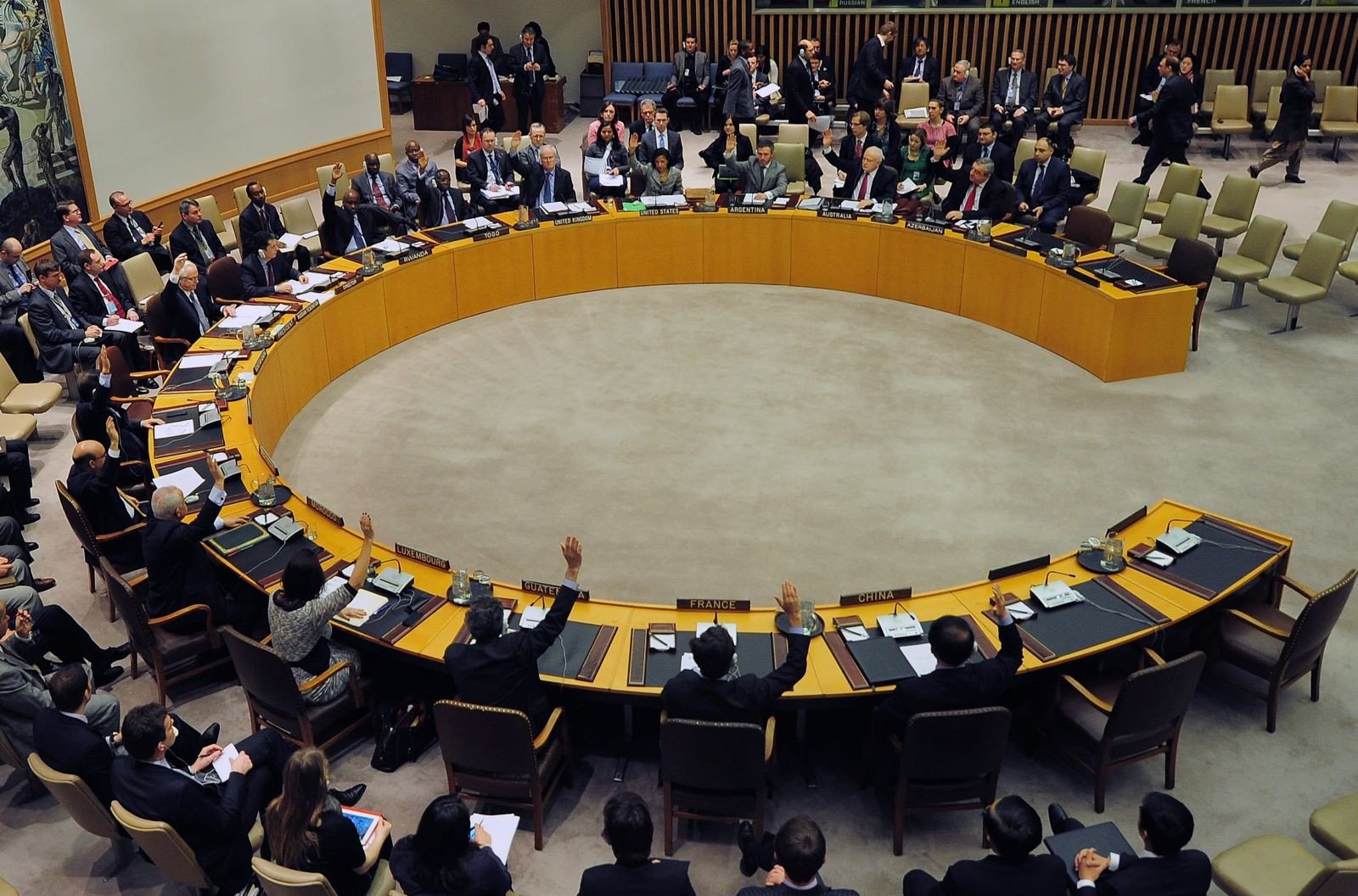
Rabat – The UN Secretary-General António Guterres remarked at the African Summit on Saturday that the absence of permanent African seats on the Security Council is “indefensible; this is 2026 – not 1946.” This declaration came as a broader call for action in regards to institutional reforms.
“Whenever decisions about Africa and the world are on the table, Africa must be at the table,” he added.
The annual summit, which took place this year, February 14-15 in Addis Ababa, Ethiopia, gathers heads of state from the 55 member states of the African Union (AU) over two days. Morocco won a seat on the union’s Peace and Security Council leading up to the summit, reflecting a level of trust from other member states. This marked the third time that Morocco has won the seat since its return to the AU in 2017.
Ethiopian Prime Minister Abiy Ahmed highlighted this year’s theme, water and sanitation, stating: “Water is more than just a resource. It is a foundation of development, innovation, and stability.”
When conversations broached the climate crisis, Guterres highlighted geographic climate injustice. He asserted that while “Africa did not cause the climate crisis,” it faces faster-than-average warming, droughts, floods, and deadly heats.
He referenced the scientific predictions that the planet will surpass the 1.5°C threshold, outlined in the Paris Agreement, a cap considered critical for preventing irreversible climate consequences. Citing these predictions, he urged countries with advanced economies to triple adaptation finance, garner $1.3 trillion annually for developing countries by 2035, and increase the Loss and Damage Fund.
The gathering also focused on regional and global wars with the chairman of the African Union Commission, Mahmoud Ali Youssouf statin,g “In the Middle East, Palestine and the suffering of its people also challenge our consciences. The extermination of this people must stop.”
Guterres called for an immediate end of violence in Sudan, respecting the Democratic Republic of Congo’s territorial integrity, and largely for African-led solutions with international support across Sahel, Libya, and the Horn of Africa.
Youssouf echoed these sentiments, calling for the “silencing of the guns” across Africa, stating that “from Sudan to the Sahel, to eastern Democratic Republic of Congo (DRC), in Somalia and elsewhere, our people continue to pay the heavy price of instability.”
Guterres affirmed that the UN-AU relationship is built on “respect, constant dialogue, and unwavering solidarity,” while applauding Africa’s global leadership, particularly in “the struggle for justice and equality.”
He said it is “simply unconscionable” that Africa is forced to contend with “an economic and financial system that remains totally unjust.”
Guterres also emphasized that African countries must benefit “first and fully from their critical minerals through fair, sustainable value chains and manufacturing,” in line with UN recommendations.
“No more exploitation. No more plundering. The people of Africa must benefit from the resources of Africa.”
Dire consequences from Trump’s unprecedented foreign aid cuts
Unanswered questions from last year’s summit, especially regarding cuts in global aid, also come to the forefront.
US President Donald Trump dismantled the US Agency for International Development (USAID) in 2025, ultimately cancelling billions of dollars in aid programs. These cuts have already caused serious consequences. The agency’s previous direct foreign investment in Africa was an estimated $47.47 billion.
The Center for Global Development assesses that the cuts could contribute to 500,000-100,000,00 deaths annually. The report said Trump’s cuts could already be seen through increased malnutrition mortality in Nigeria and Somalia, food insecurity in northeast Kenya, and malaria deaths in Cameroon.
The president’s absence was felt at the meeting, as Africa continues to struggle to navigate their relationship with the US and its current administration. Trump’s unprecedented cuts to foreign aid, aggressive trade policy, and anti-immigration measures all impact Africa and lead some countries to shift their alliances, many to China.
Read also: Morocco Among 75 Countries Hit by Trump’s US Immigrant Visa Freeze
