


Rabat – In a country where weather conditions vary sharply from one region to another, ranging from extreme heat in desert areas to cold winters in the Atlas Mountains, buildings are increasingly under pressure to adapt.
Climate change is making these challenges even more visible, with more frequent heatwaves, colder extremes, and unpredictable seasons. For rural schools in Morocco, these conditions are not just uncomfortable, but they directly affect students’ health, attendance, and ability to learn.
Many rural schools operate with very limited infrastructure, and heating, cooling, or air-conditioning systems are often absent. Yet students spend long hours inside classrooms that are poorly adapted to their surrounding environment. This reality is what motivated Niima Es-Sakali, a researcher in Energy Efficiency, Optimization, & AI Applications in Buildings at Green Energy Park (UM6P & IRESEN), to focus her work on how school buildings themselves can become part of the solution.
“Rural schools in Morocco face double challenges,” Es-Sakali said in a conversation with Morocco World News. “They are often located in harsh climatic conditions, and they usually operate with very limited energy infrastructure and budget.”
Her most recent research paper explores how passive design strategies, which are low-cost architectural solutions that work with the climate rather than against it, can significantly improve comfort in rural schools while reducing energy consumption.
What is passive design, and why does it matter?
Unlike conventional approaches that rely on mechanical systems like air conditioning or heating, passive design focuses on how a building is shaped, oriented, and constructed. The idea revolves around the concept that if a building is designed well from the start, it can stay cooler in summer and warmer in winter naturally.
“Passive design strategies refer to architectural strategies that use the building’s form, orientation, and materials to maintain comfortable indoor conditions naturally,” Es-Sakali explains.
This approach is particularly important for schools, since classrooms are occupied for long hours every day, often during the hottest or coldest periods of the year. Students struggle to concentrate when buildings are not designed for their climate, and learning outcomes suffer.
Research from around the world shows that poor indoor thermal comfort can reduce students’ cognitive performance and increase absenteeism. A study in South Africa found that differences in classroom temperatures were related to changes in learners’ attendance, and suggested that uncomfortable thermal conditions in schools can affect whether students show up and stay engaged in class.
“Thermal comfort should be considered in the design of school buildings for optimal attendance and performance among learners,” the study said. This shows that improving school design, especially in regions facing climate stress, is both an environmental issue and an educational one.
Studying Morocco’s six climate zones
One of the strengths of Es-Sakali’s research is that it does not treat Morocco as a single climate. It instead follows the country’s official Moroccan Thermal Regulation for Construction (RTCM), which divides Morocco into six climate zones, including Atlantic, Mediterranean, continental, cold, semi-arid, and desert regions.
Using a typical rural primary school model, her study tested how different design strategies perform in cities such as Agadir, Tangier, Marrakech, Fez, Ifrane, and Errachidia, each representing a distinct climate.
“We evaluated six climate types in Morocco because each region has different needs. You cannot use the same strategy everywhere,” she explained. The research ran advanced energy simulations and compared traditional school construction with optimized designs adapted to each climate zone.
It compared traditional school construction commonly used in rural areas with optimized designs adapted to each climate zone, and examined differences in energy consumption, indoor temperatures, and thermal comfort throughout the year.
Low-cost solutions with high impact
One of the key findings of the study isthat small design changes can lead to major improvements in school buildings, especially when local and climate-appropriate materials are used. Among the most effective strategies identified were high-performance insulation using bio-based materials, such as earth-based materials, hemp, including waste from cannabis plants, sheep wool, and recycled textiles.
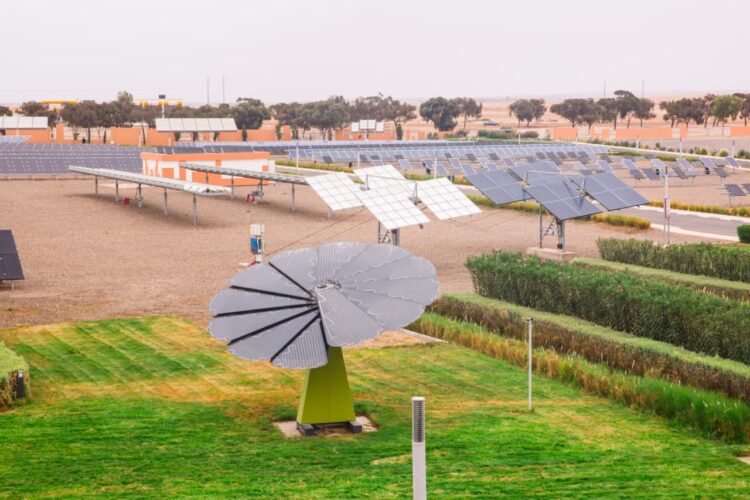
These materials help regulate indoor temperatures naturally by reducing the need for heating and cooling systems. Solar shading structures, particularly for facades exposed to strong sunlight, were also found to be highly effective, as limiting direct solar radiation helps these structures to keep classrooms cooler during hot periods. Another strategy the study spotlighted is roof vegetation, where plants are added to unused school rooftops to reduce heat buildup and improve air quality.
“These bio-source materials are not expensive and are often locally available,” Es-Sakali says, adding that “using them reduces costs and improves indoor comfort for children and students.”
This approach is consistent with similar initiatives in other parts of the world, where schools in low-income or rural areas rely on local materials and passive design strategies to reduce energy consumption while also supporting local economies and building resilience to climate change.
For example, the METI Handmade School in Bangladesh was built using primarily locally sourced mud and bamboo, chosen both for sustainability and climate adaptability. Its earth and bamboo construction provides natural insulation and ventilation suited to the local environment, and the project involved local craftsmen in the building process.
Can rural schools become net zero energy?
The research also explored whether rural schools could become net zero energy buildings, meaning they produce as much energy as they consume, mainly through renewable sources like solar panels. “A building is net zero energy when the energy it consumes is equal to the energy it produces,” Es-Sakali explains.
Her findings show that achieving net zero energy is technically possible in several Moroccan regions, especially when passive design strategies are combined and energy demand is reduced first.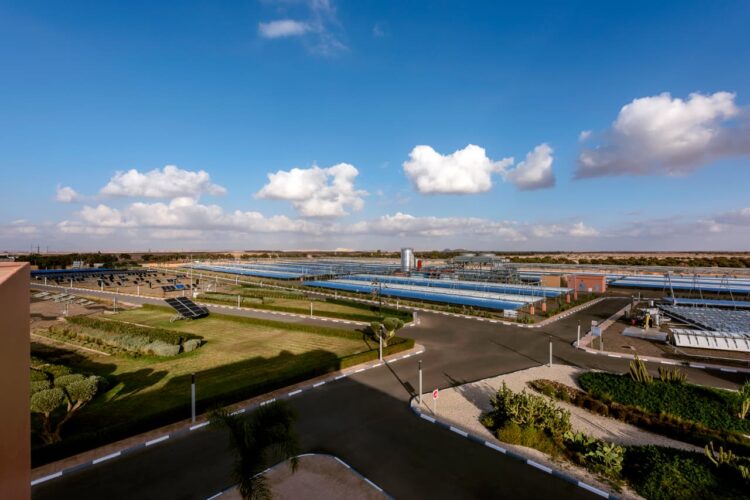
“Reducing the energy demand of the building is the first step … Once the demand is minimized, integrating renewable energy systems like rooftop photovoltaics becomes much more realistic,” the researcher said.
In some cities, such as Agadir, Tangier, and Errachidia, schools were able to reach or come very close to net zero energy status using optimized designs. In colder or more extreme climates, energy demand remained higher, but efficiency still improved significantly.
Morocco already has national regulations aimed at reducing energy consumption in buildings. However, Es-Sakali believes there is still a gap between regulations and real conditions on the ground, especially in rural areas. “The regulations exist, but when it comes to practice, that’s where the challenge is,” she notes.
Her research provides quantified evidence that passive design can lead to long-term energy savings, lower operating costs, and better learning environments. This makes it a valuable tool for policymakers, architects, and planners.
“If I had to choose one recommendation,” Es-Sakali says, “it would be to prioritize climate-adapted passive design from the very beginning of the project.”
For the research team, the work does not stop here. Future research is set to explore new building types, including container-based school structures, which could offer better resistance to earthquakes, an important concern after the recent seismic events in Morocco, particularly the 2023 earthquake in Al Haouz. Other studies will focus on smart energy systems that respond to how buildings are used.
“We are also looking at how occupant behavior affects energy consumption,” Es-Sakali explains. “For example, when students are not in the building, systems can be adjusted to save energy.”
At its core, this research challenges how rural schools are imagined and built. Rather than seeing them as low-priority infrastructure, it presents them as spaces where smart, climate-responsive design can make a real difference.
“Children’s indoor comfort has a direct impact on their health and learning performance,” Es-Sakali reiterates. For her, this makes the integration of passive and climate-adapted design strategies a necessity rather than a luxury, particularly in rural schools.
