


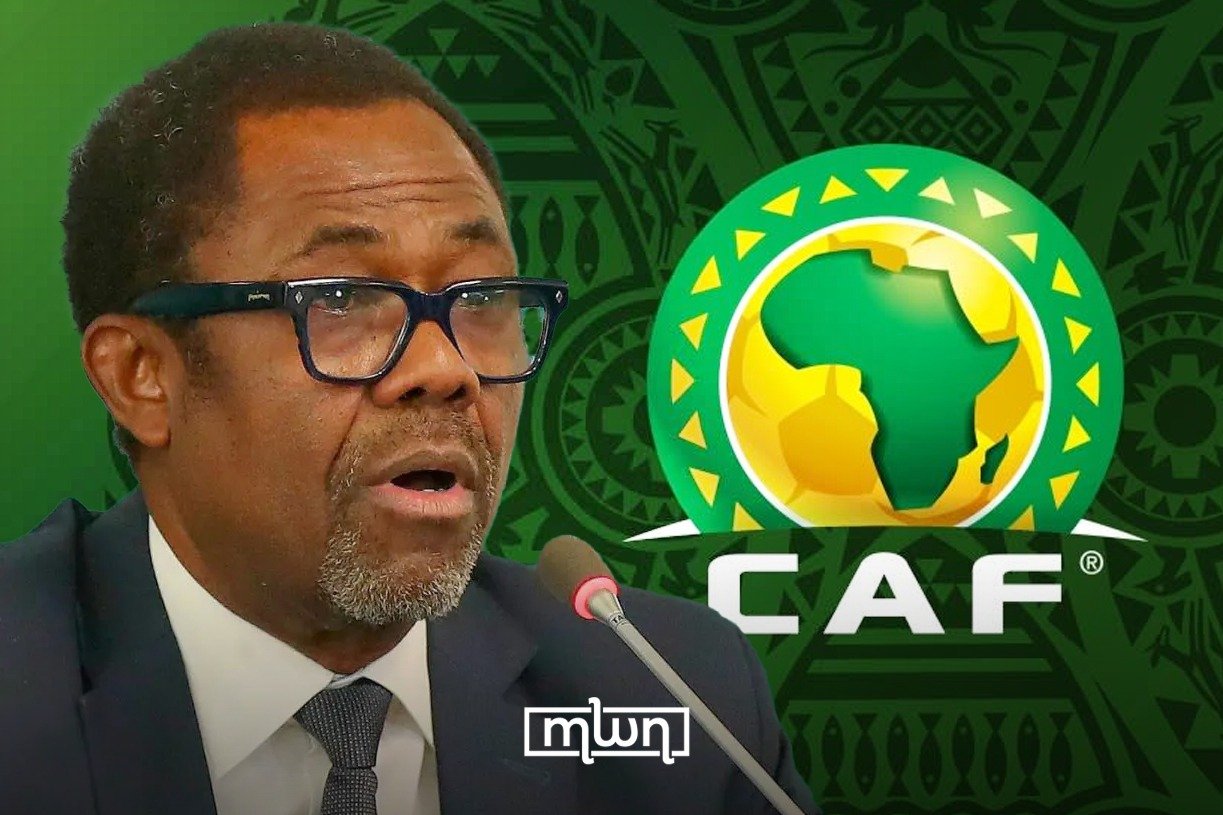
Rabat – Veron Mosengo-Omba, the Secretary General of the Confederation of African Football (CAF), has become one of the most controversial figures in African sport.
The top CAF broker stands accused of creating a climate of fear, silencing whistleblowers, breaking CAF’s own rules, and mishandling finances.
Yet he remains in charge despite these serious claims, wielding strong control over CAF’s daily operations. Many critics wonder how he still holds power even after reaching retirement age, facing repeated calls to step down, and now navigating claims of wild power abuse.
A 2024 internal CAF Governance, Risk, and Compliance (GRC) report sharply criticized his leadership. It said Mosengo-Omba blocked oversight, violated internal regulations, and even suggested suspending him.
CAF leaders ignored the CRC’s advice to suspend him. Instead of losing influence, he tightened his grip. Since then, accusations of harassment, rule-breaking, and financial misconduct have only grown, raising tough questions about CAF’s governance and the willingness of its leadership to act.
Allegations of harassment, intimidation, and misconduct
Several current and former CAF staff describe Veron Mosengo-Omba’s leadership style as authoritarian and abusive. According to a Guardian investigation, he runs CAF like his own “proprietorship,” creating a culture of fear where staff are dismissed for speaking out.
One senior employee, speaking to The Guardian on the condition of anonymity, explained: “Anyone who dares to speak up – anyone who is part of the report – is terminated, without cause, without any due process.”
Officials who challenged him or tried to enforce governance standards were removed or forced out. Hannan Nur (head of compliance and risk), who wrote a critical report on Mosengo-Omba; Abiola Ijasanmi (Chief Operating Officer); Noumandiez Doue (Head of Refereeing); and Raul Chipenda (Development Director) have all been on the receiving end of Mosengo-Omba’s ruthless abuse of his influence within CAF’s corrupt power architecture. All lost their positions after raising concerns or being linked to whistleblowing.
Mosengo-Omba is also accused of weakening internal oversight. Staff say audit, compliance, and governance committees have been stripped of independence.
A former senior official said: “The independent committees are not independent… Veron always tries to manipulate the decision, and he’s always influencing them.”
Instead of tackling problems, his circle allegedly hunts “moles” and controls information to block leaks. This has left CAF’s checks and balances hollow, with employees saying they have nowhere to turn.
Favoritism and nepotism allegations
Mosengo-Omba faces repeated claims of favoritism and nepotism. Several CAF insiders say he has filled senior posts with close associates and compatriots from the Democratic Republic of Congo, often without proper qualifications.
“He abuses his office to have people from his home country and people he knows in positions that they’re not qualified for,” one source explained.
Examples include the appointment of his friend Sarah Mukuna as Director of Member Associations in her early 30s, despite limited experience at FIFA. Reem Adel, head of HR, was promoted from manager to director at 34 under his backing, raising questions about her credentials.
These promotions have angered colleagues, especially as some of Mosengo-Omba’s allies hold unusual authority across departments, disrupting normal reporting lines.
In one striking case, Mosengo-Omba installed Cedrick Aghey – described as a personal confidant – as Acting Legal Affairs Director while also serving as his chief of staff.
This dual role effectively means “advising oneself” on legal matters, a clear conflict of interest. Critics say such practices reflect an “unethical and unprofessional environment” fostered by the Secretary General.
Retirement age violations and defiance of CAF Rules
Perhaps the most astonishing aspect of Mosengo-Omba’s continued reign is that he should no longer legally be in office at all. CAF’s own employment regulations set a mandatory retirement age of 63 for its staff, with the possibility of a one-time extension of up to three years at the president’s discretion.
Mosengo-Omba, born in October 1959, hit this age limit in 2022. CAF President Patrice Motsepe exercised his prerogative to extend the Secretary General’s tenure by a maximum of three years.
But that extension expired in mid-October 2025, when Mosengo-Omba turned 66. According to CAF rules, no further extensions or exceptions are permitted beyond that point.
In other words, by October 2025, Mosengo-Omba had reached the absolute statutory retirement age and is no longer legally allowed to be in office. This means remaining in his post is a violation of both his employment contract and CAF’s internal regulations.
Yet Mosengo-Omba has unsurprisingly refused to step down. Ahead of the just-concluded AFCON, he made clear he would ignore the retirement rule and continued working, even moving operations to Morocco during the tournament.
One CAF official said in October 2025: “He should not continue beyond the 15th of October.’ A commentator asked: “On what legal basis does he continue to exercise his authority?’’ And yet, Mosengo-Omba has kept signing contracts, approving appointments, and acting as if nothing changed.
This breach is more than a technicality. It shows a collapse of governance at CAF. When the top executive ignores the rules, the legality of CAF’s decisions is at risk. And critics have warned that contracts signed without a valid mandate could be challenged and voided, exposing CAF to serious legal and commercial problems while damaging its credibility. Indeed, allowing Mosengo-Omba to stay in office sends a clear message that rules are optional and accountability does not exist.
The fact that CAF’s Executive Committee, Audit and Compliance, and Governance Committees have done nothing to enforce the retirement rules show how power has been concentrated around Mosengo-Omba.
Observers call this silence extremely concerning. CAF is now openly breaking its own framework by keeping him in place, raising fears of a full governance crisis.
FIFA’s involvement and silence
Over the years, many CAF insiders and seasoned observers of the organization have attributed Mosengo-Omba’s apparent untouchability within the CAF hierarchy to his close ties with FIFA President Gianni Infantino.
The two are longtime friends and studied law together at the University of Fribourg in Switzerland.
That bond has carried into football politics. In 2021, just after Patrice Motsepe was elected CAF President unopposed in a deal backed by FIFA, Mosengo-Omba was brought in as General Secretary.
He had been FIFA’s Chief Member Associations officer, and many saw the move as Infantino placing a trusted ally to oversee African football. Observers call him “one of Infantino’s closest allies” – essentially FIFA’s point man in Africa. Insiders believe FIFA knows exactly what happens inside CAF and that Mosengo-Omba’s arrival in Cairo was encouraged by Infantino, giving him a strong shield against internal opposition.
Despite mounting allegations facing Mosengo-Omba, FIFA has stayed silent. It has not criticized Mosengo-Omba or pushed for reforms. He instead appears to enjoy full backing from Infantino and Motsepe, with the latter having even declared “total confidence” in him.
This silence raises charges of double standards. FIFA often promotes ethics and good governance, yet in CAF’s case it looks the other way.
Infantino has not spoken publicly about the turmoil or the reports of mismanagement. To critics, that silence is tacit approval. It shows that political alliances are being valued over accountability.
In the long run, this stance risks cementing a culture of impunity at CAF – where rules can be ignored and power abused, as long as support from Zurich remains.
Cover-up of sexual abuse allegations
One of the most troubling episodes of Mosengo-Omba’s tenure is his reported protection of Pierre-Alain Mounguengui, president of the Gabonese Football Federation, despite his ties to a sexual abuse scandal.
The Guardian reported Mounguengui was arrested in 2022 after accusations that he had helped cover up years of abuse against young players in Gabon. He spent six months in pre-trial detention; the case is still open. He denies wrongdoing, but the scandal remains unresolved.
Instead of distancing CAF from the scandal, Mosengo-Omba allegedly pushed to promote Mounguengui. During the 2023 Executive Committee elections, CAF’s Governance Committee recommended the disqualification of Mounguengui.
Mosengo-Omba reportedly overruled them, blocked an independent review, and insisted on using Mounguengui’s personal lawyer, a move insiders called a clear conflict of interest. One official told the guardian the Governance Committee chair was “shouting” in protest. “It was a mess,” a source recalled.
Mounguengui won a seat on the Executive Committee and was later named CAF Vice-President in 2025, while still under legal scrutiny.
Sources say Mosengo-Omba saw him as a political ally in Central Africa at a time when his own support was weakening.
The decision has drawn heavy criticism. It undermines CAF’s stance on safeguarding and clashes with FIFA’s own ethics investigations into the unresolved investigation of the Gabon scandal.
For many, this episode further shows that Mosengo-Omba values loyalty over ethics. By shielding a friend linked to abuse allegations, he has damaged CAF’s credibility and reinforced fears that the institution protects power, not people.
Collapse of CAF’s internal functioning
Mosengo-Omba’s leadership has deeply damaged CAF’s internal operations, with reports from the inside indicating that Staff morale is at its lowest as fear and favoritism dominate the workplace. Skilled officials have been pushed out, while loyalty to Mosengo-Omba counts more than competence.
Daily work has stalled under conflict and distrust. So deep is the division that even the CAF President’s office and the Secretary General’s office barely communicate, one insider explained. “They’re not allowed to speak to each other, to say hello, to ask for anything,” the insider said. Departments are locked in turf battles, and normal information sharing has broken down.
Oversight systems have also been dismantled. Employees say audit, compliance, and governance committees no longer act independently as Mosengo-Omba’s office routinely overrules them.
When the Audit and Compliance Committee tried to investigate the internal GRC report, he allegedly stepped in to “whitewash” the findings. A former senior staffer explained: “The independent committees are not independent… committees do not function.”
The Executive Committee, meant to be CAF’s top decision-making body, has been sidelined too.
Members privately complain they are excluded from key matters, with Mosengo-Omba and a small group of allies making decisions alone. In one case, he appointed Cedrick Aghey as Director of Legal Affairs without open recruitment or ExCo approval, entirely bypassing the normal procedure.
Leadership vacuum and decline of CAF’s mission
The absence of CAF President Patrice Motsepe has allowed Mosengo-Omba to dominate. Motsepe, a billionaire businessman, treats the presidency as mostly ceremonial and spends little time at CAF’s Cairo headquarters.
Insiders say that in four years he has visited the offices only twice and met the staff once. “Motsepe is never here… He doesn’t have a clue what’s going on inside his own confederation,” lamented one senior employee.
Mosengo-Omba has taken advantage of this vacuum to act as the de facto head of CAF, controlling daily affairs. “Nature abhors a vacuum,” one federation president said, noting how Mosengo-Omba has filled Motsepe’s chronic absence from the CAF headquarters.
Key decisions on sponsorships, staffing, and competitions are now made by the General Secretary’s office, often without consultation. This centralization has fueled resentment, with many believing CAF now serves a narrow agenda instead of African football’s collective interest.
The impact on CAF’s mission has been severe. Long-serving staff say the organization has drifted from its core purpose of developing football on the continent.
“CAF is no longer pursuing a policy of development, but rather serving individual interests,” explained one frustrated employee. Projects that could help member associations or grassroots football are sidelined if they don’t fit leadership priorities, the employee added.
The result has been the creation of a paranoia-suffused atmosphere, wherestaff fear speaking openly or even sending sensitive emails. “We have clear instructions to control information and prevent certain things from leaking out,” a communications officer admitted.“When [internal] reports started to leak, they hunted down the mole – rather than sorting out the issues.” This culture has led to poor decisions, stagnation, and a damaged reputation.
Naturally, CAF’s image has suffered. Mosengo-Omba’s era has brought internal chaos and external embarrassment, weakening CAF at a time when African football is trying to grow globally. Reports suggest sponsors and partners now hesitate to engage with an organization tied to governance scandals.
Financial misconduct allegations
There have meanwhile been serious questions about Mosengo-Omba’s handling of money at CAF. In early 2024, Swiss prosecutors opened a criminal case over suspicious payments linked to his accounts in Switzerland, suggesting possible fraud and forgery.
Court records said he “repeatedly obtained bonuses” up to five times higher than allowed in his contract, routing the excess through Swiss banks.
Investigators flagged large cash withdrawals that blocked “any possibility of tracing the use of said funds.” Evidence pointed to “acts of disloyal management to the benefit of Mosengo-Omba,” suggesting he may have enriched himself while African football struggled for resources.
Mosengo-Omba denied wrongdoing, insisting all payments were legitimate bonuses approved transparently. He offered to cooperate with Swiss authorities.
Prosecutors in Fribourg dropped the case in January 2025, citing lack of evidence. He presented this as vindication, but doubts remain. CAF’s own audit and compliance committee had already raised concerns about irregularities and urged his suspension.
Later in 2024, CAF hired an international firm to investigate “violations of internal audit and governance regulations.” The results have not been published, fueling suspicion it may be more about damage control than accountability.
A major worry is Mosengo-Omba’s handling of FIFA Forward funds, development money meant for African football projects.
Staff say Mosengo-Omba took “sole control” of these funds, bypassing oversight. This has led to opaque spending and little auditing. Millions meant for grassroots football may have been diverted.
Given his past role at FIFA managing member finances, insiders fear he used that knowledge to monopolize decisions, rewarding allies or misusing funds. With whistleblowers removed and oversight weakened, CAF lacks safeguards to ensure the money reaches its intended targets.
Still, CAF leadership has tried to show stability. It announced a $9.48 million surplus at the 2025 General Assembly, crediting new sponsors and tighter controls.
But insiders dispute this, saying finances are fragile and the surplus may be the result of one-off deals or accounting tricks. They warn that mismanagement of Forward funds and inflated bonuses reflect weak accountability, which is an even bigger problem. Without proper oversight, financial misreporting can spread unchecked.
If revenues fall or FIFA demands answers, CAF could face a financial crisis. As one insider put it, every misused dollar is “a dollar not spent on training pitches, youth academies, or professionalizing domestic leagues.”
A pattern of impunity
This culture of impunity and unaccountability explains CAF’s weak response to Senegal walking off during the 2025 AFCON final. This lack of punitive leadership is more than a scandal; it shows a broken and unreliable institution.
A team abandoned the pitch in Africa’s biggest match, yet CAF imposed only light sanctions. Morocco’s protest, backed by AFCON rules under Articles 82 and 84, was dismissed without explanation
The same happened in the Wydad vs Maniema match, where a goalkeeper escaped a red card after a clear second yellow. Yet CAF stayed silent. No investigation, no correction. A blatant breach of the Laws of the Game was treated as nothing.
When Secretary General Veron Mosengo-Omba can ignore retirement rules, interfere in investigations, and shield allies without consequence, why should referees or disciplinary bodies feel pressure to enforce standards?
Corruption and favoritism don’t just hurt reputation, they change results. If teams believe walking off or fan violence won’t bring serious consequences, chaos becomes a legitimate tactic to win matches. CAF is no longer deterring misconduct; it is rewarding it with fines instead of forfeits.
This pattern of unaddressed scandals, unsettled questions, and unpunished violations of rules is how integrity dies in African football. Because why trust the system’s fairness and why play respect and play by the rules when the system protects the powerful and punishes the principled?.
CAF is thus failing by design. And as long as Mosengo-Omba remains untouchable, African football will keep suffering, on and off the pitch.
A crisis of governance and credibility
His survival despite repeated scandals is a damning sign of CAF’s leadership failure. It suggests loyalty and politics have outweighed ethics and accountability.
Both CAF President Patrice Motsepe and FIFA President Gianni Infantino, through silence or support, have shielded him. Motsepe’s hands-off style and Infantino’s backing have created a situation where CAF’s top executive answers to no one – not even the rules meant to govern his job.
As a result, CAF’s credibility is suffering with fans, sponsors, and international observers. How can the continental body demand integrity from clubs and national teams when its own leadership is in disarray? Inside CAF, honest professionals are demoralized.
Some have risked their careers to speak up, only to be silenced or dismissed. Their fate sends a clear warning: reform is unwelcome. Over time, this drives talent away and weakens CAF’s ability to run competitions or development programs.
Internationally, the saga reinforces the view that African football governance is plagued by patronage and outside influence. CAF was rocked by corruption scandals under Ahmad Ahmad, which led FIFA to step in.
Many hoped reforms would follow. Instead, critics say one form of malpractice was replaced by another, with FIFA’s “foot soldier” now entrenched in Cairo.
The promised inquiry into Mosengo-Omba’s conduct will be decisive. If it ends in a whitewash, it will confirm fears that leaders are unwilling to clean up CAF. If it leads to his removal or real reforms, it could mark a turning point toward restoring integrity.
