


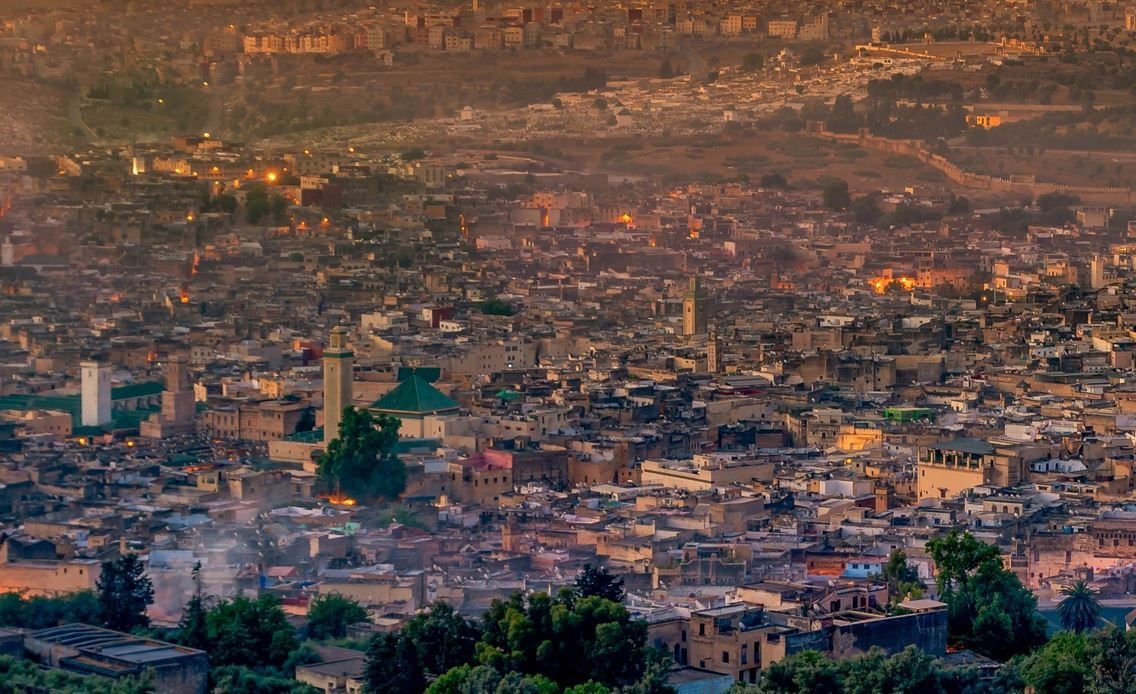
Discovering Fes and Meknes is one of those experiences that stays with you long after you return home. These two imperial cities sit in the heart of Morocco, each telling its own story through ancient walls, winding alleys, and traditions that have survived for centuries. Walking through their medinas feels like stepping back in time, where every corner reveals something unexpected and beautiful.
Fes was founded in the late 8th century, making it one of the oldest cities in the Islamic world. For hundreds of years, it served as the beating heart of science and spirituality in Morocco. Scholars, artisans, and craftsmen traveled from distant lands to learn and create within its walls.
What strikes you immediately upon arriving is how the city breathes history. This is not a place frozen in time for tourists. Fes is alive. The medina has been functioning continuously for over 1,000 years, with families passing down their crafts through countless generations.
The famous Bab Boujloud gate marks the entrance to the old city. When you see this magnificent blue-tiled archway for the first time, you understand why people travel across the world to visit. Beyond this gate lies a maze of narrow streets that will test your sense of direction in the best possible way.
There’s a saying here that captures the spirit perfectly: to truly discover Fes, you need to get lost in it a little. Only then will you find yourself.
The Art of Zellige: Where Craft Becomes Poetry
One experience you absolutely cannot miss is visiting a traditional zellige workshop. Zellige is the intricate tilework that decorates mosques, palaces, and homes throughout Morocco. In Fes, craftsmen have been perfecting this art for generations.
At Seffarine Square, artisans create these tiles entirely by hand. Each piece is shaped according to the eye and skill of the artist. The craft comes from the heart before it comes from the hands, as one local master explained. Watching someone carve a simple piece of clay into something extraordinary teaches you patience and appreciation for things made without shortcuts.
If you have the chance to try carving your own piece, take it. Even a simple heart shape becomes surprisingly challenging when you realize how much skill goes into every tile adorning the buildings around you.
Discovering Fes and Meknes: Traditional Hospitality
The warmth of the people in Fes deserves its own mention. Merchants in the medina carry on a beautiful tradition of welcoming visitors with small gestures. When you pass by certain shops, you might receive a spritz of orange blossom water or be offered sweet pastries without any expectation of purchase.
This hospitality extends everywhere. Ask for directions, and locals will often walk with you to make sure you reach your destination. Children wave and smile. Shopkeepers invite you in for mint tea. This genuine friendliness transforms a visit into something much more meaningful than typical tourism.
The Tanneries: Tradition Meets Reality
No visit to Fes is complete without seeing Dar Dbagh, the leather tanneries. Here, leather has been dyed using traditional methods for centuries. The smell can be strong, so locals often offer you mint leaves to hold near your nose.
The sight is unforgettable. Stone vats filled with different colored dyes create a patchwork landscape where workers move between them, treating leather exactly as their ancestors did. Some things change with time, but this is not one of them. The process remains authentic, and the products created here carry that history with them.
Meknes: The City of the Sultan
After Fes, many travelers head to nearby Meknes. Though smaller and calmer, this city carries tremendous historical weight. During the reign of Sultan Moulay Ismail, Meknes served as Morocco’s capital. The massive walls surrounding the city speak of that era’s power and ambition.
When you enter through Bab Mansour, one of the largest gates in the entire Islamic world, you understand immediately why this city commanded such respect. The craftsmanship on this gate alone could occupy your attention for hours. Geometric patterns, ceramic tiles, and Arabic calligraphy combine into something truly magnificent.
Meknes offers a different energy than Fes. The medina here feels more relaxed. There are fewer crowds, less hustle, more opportunity to simply observe daily life unfolding naturally.
Camel Kefta: A Culinary Adventure
Food lovers will find a special treat waiting in Meknes. The city is famous for camel kefta, traditional meatballs made from camel meat, served with eggs and local butter in a sizzling tagine. This dish appears in the medina primarily on Tuesdays, Thursdays, and Saturdays.
Finding a small restaurant near the entrance of the old city and ordering this specialty provides a genuine taste of local cuisine. The meat comes out tender, the eggs perfectly cooked. It’s the kind of meal that makes you understand why certain dishes become regional treasures.
The mrouzia, another traditional dish, also deserves attention. Sweet and savory flavors blend together in a way that might surprise you but will certainly satisfy you.
The Underground Prison: Habs Qara
For something completely different, visit Habs Qara, the underground prison of Meknes. This vast network of chambers and tunnels once held thousands of prisoners. Walking through the dark corridors, you can barely imagine what life was like for those confined here.
Local guides tell stories of tunnels extending all the way to Fes. One tale mentions a French tourist who entered years ago and became lost. Whether completely true or not, these stories add to the mysterious atmosphere.
Today, the prison operates as a tourist attraction with a puzzle element. You solve clues to find your way through, making it an interactive way to engage with this dark chapter of history.
Practical Tips for Your Visit
Getting between Fes and Meknes is straightforward. Shared taxis and buses run regularly, with the journey taking roughly an hour. Book your transportation in advance through apps like Marko Bouima to save time and hassle.
Both cities reward those who walk. Comfortable shoes matter more than you might expect on the uneven cobblestones of the medinas.
If you want to experience traditional crafts in Fes, look for workshops near Seffarine Square for metalwork and zellige, or head to the leather district for bags and jackets made on site.
In Meknes, spend time at the main square near Bab Mansour. The view of Mount Moulay Idriss in the distance adds a beautiful backdrop to your afternoon.
Why These Cities Matter
Traveling across Morocco reveals many beautiful places, but Fes and Meknes hold something special. The monuments are impressive, certainly. The food satisfies deeply. Yet what makes these cities truly unforgettable is how tradition continues to live within them.
Greatness comes from patience and effort, as one local mentioned while discussing the history of Meknes. That philosophy shows in every tile laid by hand, every piece of leather dyed in stone vats, every meal prepared according to recipes passed through generations.
What was your favorite part of visiting Fes or Meknes? Have you tried camel kefta or gotten wonderfully lost in the medina? Share your experiences in the comments below!
