


Marrakech – Under CAF’s own disciplinary framework, leaving the field without authorization, refusing to play, or exerting pressure that disrupts the normal course of a match constitutes a serious infraction. These provisions are not decorative.
They exist to prevent football from descending into negotiated chaos, where teams test the elasticity of the rules to gain leverage. The regulations are clear that such acts trigger disciplinary responsibility regardless of duration, intent, or eventual return to play. The law does not reward tactical disorder.
This is the legal terrain on which the Royal Moroccan Football Federation (FRMF) has acted – by challenging the facts, the process, and the consequences. The FRMF filed complaints with both CAF and FIFA regarding Senegal’s withdrawal from the pitch during Sunday’s final at Prince Moulay Abdellah Stadium in Rabat.
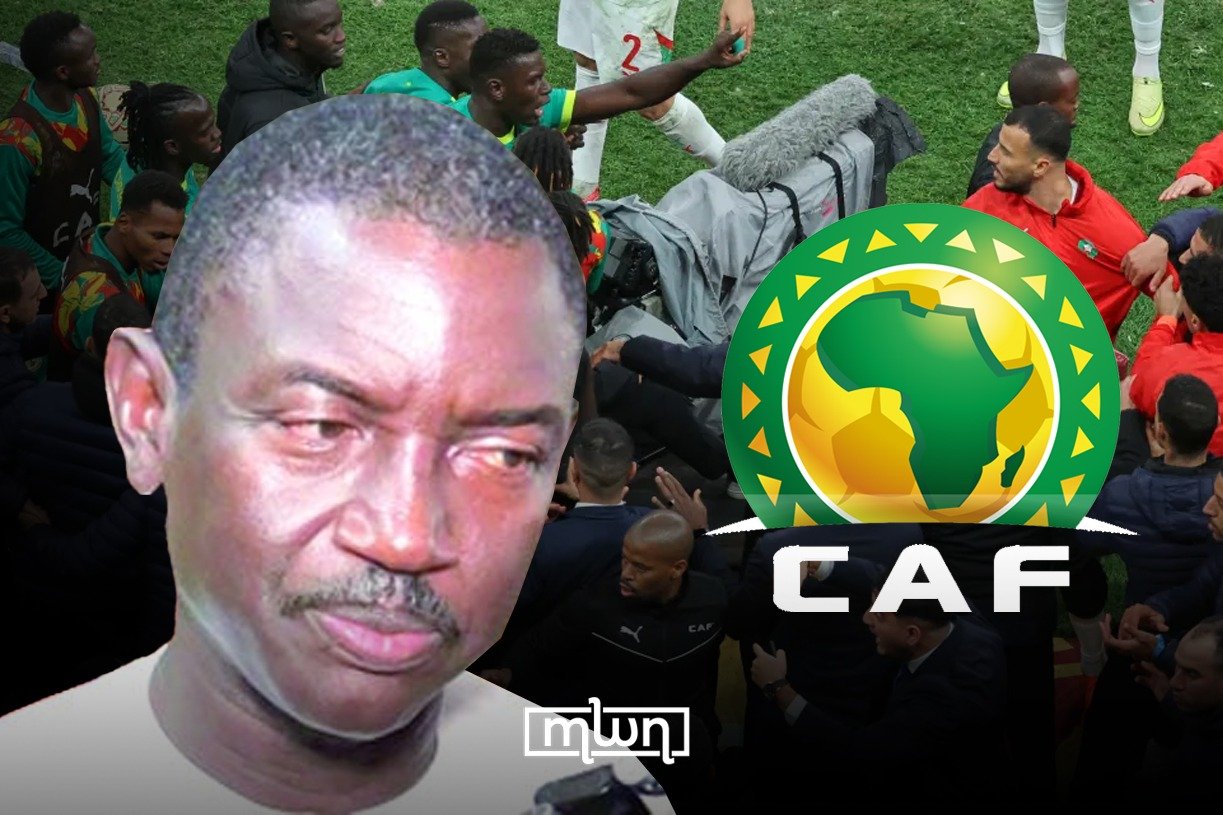
But a more delicate issue has now emerged, one that strikes at the heart of CAF’s credibility. Moroccans are urging the confederation to ensure that Ousmane Kane, a Senegalese national and President of CAF’s Disciplinary Committee, takes no part whatsoever in deliberations or rulings related to this case. This is not an accusation of misconduct. It is a question of institutional hygiene.
In governance, perception matters as much as procedure. A disciplinary process cannot command confidence if it allows a scenario that resembles acting as both judge and party to the dispute.
Rooted in Roman law and later popularized by Edward Coke in the 17th century, the Latin legal expression “nemo judex in causa sua,” meaning “no one should be a judge in their own case,” is ancient, universal, and foundational: no one should adjudicate a matter in which their national federation has a direct stake. Even the appearance of such overlap corrodes trust.
It is a cornerstone of natural justice that prevents anyone from deciding a matter where they have a personal interest or bias, ensuring impartiality, fairness, and the appearance of justice, often requiring judges or officials with conflicts to recuse themselves. It also upholds the idea that “justice must not only be done, but must also be seen to be done,” as famously stated by Lord Hewart.
Ironically, this is the very kind of “backstaging” Morocco has long been accused of – except this time, it is not whispered, imagined, or inferred. It is structural, visible, and correctable.
Critics often portray Morocco’s football success through the lens of institutional favoritism, resembling accusations faced by high-achieving students who are presumed to have seen exam questions in advance or received extra help from teachers.
The situation resembles a familiar social metaphor: the student who consistently excels, only to be told that success must be due to leaked exams, favoritism, or manipulation. But here, the roles are reversed. Morocco is not asking for special treatment or altered outcomes. It is asking for the referee of justice to step aside so the rules can speak without accent or allegiance.
If CAF allows a ruling of this magnitude to be shaped under even a shadow of an untenable conflict of interest, the damage will not be limited to Morocco or Senegal. It will confirm the darkest suspicions about African football governance – that rules are flexible, authority is negotiable, and accountability is selective.
The final moment that changed it all
Many suggested Morocco had backstage influence within CAF to alter outcomes and make itself the winner until the “righteous” Senegal team arrived to restore justice, yet Sunday’s finale presented a different scenario entirely where the tables turned dramatically.
Senegal coach Pape Thiaw ordered his players to leave the field after referee Jean-Jacques Ndala Ngambo awarded Morocco a correct penalty following VAR review, triggering a 16-minute interruption that violated fundamental competition principles regardless of any perceived grievances with officiating decisions.
Video evidence submitted by Morocco’s federation documents the systematic withdrawal of Senegalese players without referee authorization, while Thiaw’s public instruction for his team to abandon the pitch contradicted every principle of sporting conduct and competitive integrity.
Senegalese supporters stormed the pitch during the stoppage, assaulting security personnel and ransacking stadium infrastructure in scenes of outright lawlessness that left multiple officers injured and caused serious damage to Morocco’s flagship football venue. What should have remained a disciplinary matter metastasized into mob violence.
Worse still, the fallout spilled beyond the stadium walls: members of Morocco’s diaspora in Senegal reportedly became targets of retaliatory attacks, turning a football breakdown into a cross-border social and diplomatic rupture – and underscoring just how grave the stakes of this disciplinary case truly are.
Returning to play does not erase guilt
The CAF Disciplinary Code provides a clear legal framework for situations involving withdrawal or refusal to play. Article 82 deems any team that refuses to continue a match or leaves the field without the referee’s authorization forfeit, while Article 84 reinforces this sanction with an automatic 3-0 defeat and the possibility of further disciplinary measures. Article 148 treats refusal to play as a major infraction, triggering financial penalties and opening the door to heavier sanctions.
Beyond abandonment itself, Article 87 sanctions conduct contrary to fair play and sporting ethics, while Articles 82 and 83 extend responsibility to coaches and officials who incite or organize collective dissent. Finally, Article 95 allows for personal sanctions – suspensions and fines — against those whose actions undermine the integrity of the competition.
Legal expert analysis argues that Senegal’s infractions were complete the moment players left the pitch, as the subsequent return to the field cannot remedy the initial violation of competition rules regardless of the interruption’s duration or the number of players involved.
The case mirrors the 2019 CAF Champions League finale between Wydad Casablanca and Esperance Tunis, where the Court of Arbitration for Sport (CAS) established that teams cannot unilaterally interrupt matches to contest referee decisions or technical malfunctions, setting a precedent that Senegal’s behavior directly violated.
Morocco’s legal submission explicitly invokes the established jurisprudence stemming from Chile’s 1989 World Cup qualifier against Brazil – widely known as the “Rojas doctrine.” That case led to severe sanctions, including Chile’s exclusion from subsequent international competitions, and it firmly established a precedent that serious infractions undermining match integrity warrant major, exemplary disciplinary measures, not symbolic penalties.
Sanctions may include fines, suspensions, or exclusions
FIFA President Gianni Infantino condemned the incidents as “unacceptable,” specifically denouncing behaviors targeting match officials and organizers, while the world governing body called for appropriate disciplinary measures from CAF’s competent authorities without specifying the nature of those sanctions.
Morocco, for its part, submitted its formal complaint within CAF’s mandatory 48-hour deadline, accompanied by required procedural fees and comprehensive video evidence detailing the chronology of infractions and their impact on the match’s normal progression.
CAF’s disciplinary jury will examine material evidence before rendering initial decisions, with appeal mechanisms through CAF’s appellate body and ultimately the CAS providing additional review opportunities for all parties involved.
The confederation announced it would examine all available footage and submit findings to appropriate disciplinary bodies, while potential sanctions range from financial penalties and suspensions to exclusion from future competitions depending on the severity of violations found.
Coach Thiaw faces individual sanctions of two to six matches plus fines between $10,000 and $20,000 for inciting the boycott, while players identified as leading the protest could receive multi-match suspensions affecting World Cup 2026 qualifying campaigns and potentially excluding key personnel from crucial international fixtures.
Unverified rumors ranged from claims that CAF would impose multi-million-dollar fines on Senegal, to assertions of lifetime bans for the Senegalese coach, proposals to replay the final in Qatar behind closed doors, or even suggestions that the trophy would be stripped from Senegal and the 2025 title left vacant.
Ultimately, Kane’s dual position – as President of CAF’s Disciplinary Committee and as a Senegalese national directly linked to one of the parties concerned – embodies the very kind of backstage interference long and lazily imputed to Morocco.
What was once alleged without evidence now risks becoming structurally real: not imagined influence whispered in frustration, but an institutional conflict of interest capable of contaminating the process from within and hollowing out the credibility of African football governance itself.
The real backstaging may indeed lie in allowing officials to adjudicate cases involving their own federations, creating a system where justice becomes a judge in his own cause and competitive fairness falls victim to institutional bias that no amount of emotional appeal or conspiracy theories can justify.
This case is no longer about a final, a penalty, or a trophy. It is about whether African football chooses law over emotion, structure over improvisation, and credibility over convenience. In moments like this, institutions are judged not by who they punish, but by how cleanly they judge.
Read also: Should Moroccans Stop Fixating On AFCON?
