


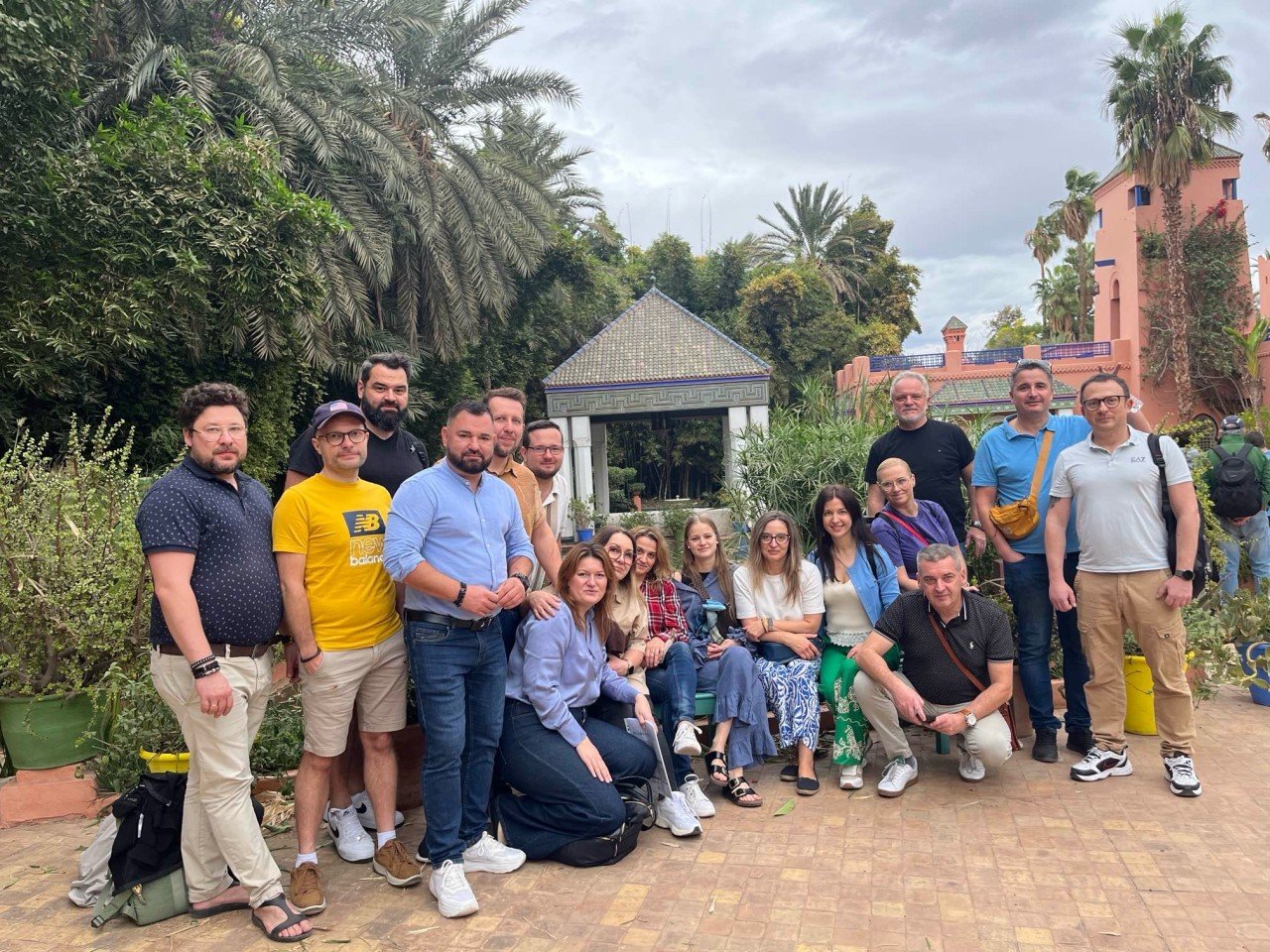
Marrakech – A group of MBA Diplomacy students completed their program’s inaugural study visit to Morocco, representing a significant advance in parallel diplomacy, people-to-people connections, and Polish-Moroccan academic cooperation.
The three-semester MBA in Diplomacy program, delivered jointly by Poland’s Akademia Marynarki Wojennej w Gdyni (Naval Academy in Gdynia) and the Studium Obywatelskie im. Pawła Adamowicza (Paweł Adamowicz Civic Studies Center), includes a strong practical component designed to expose students to real diplomatic environments.
Although this particular visit to Morocco was organized independently and undertaken at the invitation of the ambassador – not as a program-funded trip – the experience has generated strong interest in making such study visits a permanent feature of the curriculum, which would greatly enhance its educational and practical value.
The program targets professionals working in international environments, including public administration, business, and non-governmental organizations.
“This visit to Morocco was the first official study visit within our MBA Diplomacy program, which made it especially meaningful for all of us,” Tomasz Orłowski, Poland’s Ambassador to Morocco and Director of the MBA Diplomacy program, told Morocco World News (MWN).
“For many participants, it may well be the beginning of their future careers in diplomacy, international cooperation, or public service,” added Małgorzata Pacer, an MBA Diplomacy student, academic lecturer, and officer of the Polish Armed Forces, who shared her journey with MWN.
Pacer, who is passionate about Arab culture with a particular interest in Morocco and Egypt, has extensive experience in teaching leadership and intercultural communication at military and civilian institutions.
Blending culture, diplomacy, and academic discovery
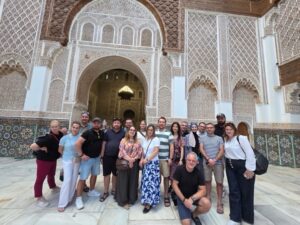
The students visited three Moroccan cities during their stay. In Marrakech, they explored the medinas, souks, and historic gardens while attending an author meeting with Katarzyna Lawrynowicz, a Polish writer living with a Moroccan family. The group visited Casablanca’s Hassan II Mosque, one of the world’s largest mosques, before concluding their tour in Rabat.
“In Casablanca, we visited the monumental Hassan II Mosque – one of the largest and most impressive mosques in the world, symbolizing modern Moroccan architecture and religious heritage,” Pacer told MWN. “Exploring this remarkable structure allowed us to better understand the importance of Islam in the country’s social life.”
Ambassador Orłowski conducted a dedicated session focusing on Polish-Moroccan relations and diplomatic work realities. The program director shared insights from his extensive experience serving in France and Italy.
“During our stay, Ambassador Tomasz Orłowski conducted a dedicated session for our group, focusing on the nature of diplomatic work, the specifics of Polish-Moroccan relations, and the broader context of cooperation between our countries,” Pacer explained to MWN. “His insights – based on years of professional experience – gave us a rare opportunity to understand diplomacy not only as a concept but as a living, practical discipline.”
The visit carried considerable academic and professional importance, Ambassador Orłowski told MWN. “This distinguished initiative carries considerable academic and professional importance, enhancing not only the participants’ understanding of international affairs but also the cooperation between leading educational institutions and the Embassy of Poland in Rabat,” he elaborated.
The ambassador detailed how students learned about the Polish diplomatic mission’s structure and bilateral cooperation areas. “Providing an overview of the foundations of Polish-Moroccan relations and presenting the practical realities of diplomatic work offered a valuable opportunity to support the development of future professionals in the field of international relations,” Orłowski told MWN.
Students gained practical insights into Poland’s foreign policy priorities in North Africa and diplomatic mission challenges. The curriculum includes paradiplomacy, international cooperation, diplomatic protocol, negotiations, and strategic management across approximately 400 hours of hybrid classes.
“The highlight of the entire program was the meeting with the ambassador, which allowed us to view diplomacy from a practical perspective,” Pacer said. “Our discussions focused on Polish-Moroccan relations, the challenges of contemporary foreign policy and the everyday realities of diplomatic work.”
Distinguished diplomats and scholars enriched the program’s vision
The teaching staff includes respected diplomats and academics, including Professor Paweł Kowal, an Eastern policy expert, and Professor Marek Grela, former Polish Ambassador to the European Union.
The concept for the program was originally developed by Paweł Kowal, creator of the Studium Obywatelskie im. Pawła Adamowicza and today the Chair of the Foreign Affairs Committee of the Polish Parliament.
His idea was to provide practical training for experts in international affairs, including experts from outside Warsaw who would operate at local and regional levels, as well as specialists working in corporations. The goal combines three key elements: professionalism, experience, and a values-based approach.
Students particularly appreciated Morocco’s cultural diversity and hospitality. “For most participants, this was their first visit to Morocco, which added a special depth to the entire experience,” Pacer told MWN. “They were particularly captivated by the country’s remarkable diversity – a harmonious blend of tradition and modernity visible at every turn.”
Ambassador Orłowski expressed confidence in continued cooperation. “I am firmly convinced that this will not be the last time that a cohort of this prestigious MBA Diplomacy program visits Morocco,” he told MWN. “It is my hope that similar study visits will become a permanent and integral component of the curriculum, further strengthening academic collaboration and deepening mutual understanding between Poland and the Kingdom of Morocco.”
The three-semester program concludes with a diploma project, and graduates receive postgraduate diplomas from both institutions. Students praised Morocco’s integration of historical identity with contemporary international cooperation demands.
“This first encounter with Morocco broadened the participants’ perspectives, strengthened their intercultural competencies, and provided a valuable context for reflecting on diplomacy in a globalised and culturally diverse world,” Pacer concluded.
