


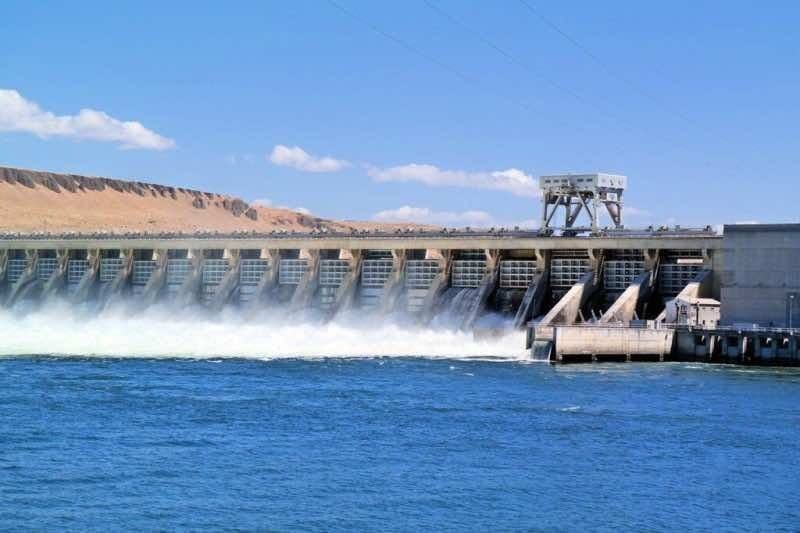
Rabat – Morocco enters 2026 with a far more hydrated water picture. Dam reserves stand at 8.64 billion cubic meters, a national filling rate of 51.5% that signals a decisive change after years of strain.
Compared to the same period last year, stored volumes rose by nearly 3.9 billion cubic meters, an increase of 84.5%, driven by widespread rainfall and the recovery of several major reservoirs.
Across the country, dams now hold almost twice the volume recorded a year ago. This turnaround reflects the tangible effect of recent precipitation, while also revealing clear contrasts between regions, with northern basins far ahead of others.
The Sebou basin continues to anchor national water reserves. It alone stores more than 3.4 billion cubic meters, with a filling rate above 61%.
Several structures reach full capacity, while Al Wahda dam exceeds 2.35 billion cubic meters, confirming its central role in national water security.
The Loukkos basin reports one of the most comfortable situations nationwide. With reserves close to 1.3 billion cubic meters and a filling rate of 67.3%, multiple dams operate at full capacity, including Oued El Makhazine, Charif El Idrissi, Ibn Battouta, Chefchaouen, and Nakhla. The figures point to a season of sustained inflows in the region.
The Bouregreg basin posts one of the highest filling rates in the country at 96.7%, with over one billion cubic meters stored.
Sidi Mohamed Ben Abdellah dam remains almost full, strengthening supply conditions for Rabat, Casablanca, and surrounding urban areas.
In the Tensift basin, reserves reach 178 million cubic meters, corresponding to a filling rate of 78.3%. Moulay Abdellah dam reaches full capacity, while Abou Al Abbas Essabti and Yaacoub El Mansour also report strong levels.
Oum Er-Rbia holds close to 1.38 billion cubic meters, yet its overall filling rate remains below 30%. Several secondary dams reach saturation, although the largest strategic structures still record moderate levels, which tempers the overall balance.
The Moulouya basin stores 294 million cubic meters, or 41% of capacity. The situation varies from one dam to another, with Oued Za fully filled, while others show slower recovery.
Souss-Massa now stores 388 million cubic meters, with a filling rate slightly above 53%.
Aoulouz and Moulay Abdellah dams reach full capacity, which improves conditions for irrigation and drinking water supply in a region often exposed to prolonged dryness.
Guir-Ziz-Rheris records more than 309 million cubic meters, or 57.6% of capacity. Hassan Addakhil dam, which exceeds 70%, plays a decisive role in this improvement.
The Draa-Oued Noun basin reports 323 million cubic meters, with a filling rate of 30.8%. Levels remain lower than those in the north, yet the year-on-year rise remains clear.
Crossing the 8.6 billion cubic meter threshold sends a strong message for water management in Morocco.
The figures confirm a genuine recovery, while regional gaps underline the need for sustained rainfall and careful stewardship of the resource, as climate uncertainty continues to shape the country’s water future.