



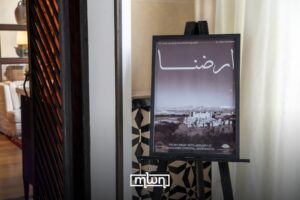
Marrakech – British photographer Alan Keohane unveiled his latest exhibition, “Our Land – Ardna,” at Mandarin Oriental Marrakech on Friday, showcasing three decades of documentary work capturing Morocco’s rural and urban landscapes through an outsider’s perspective.
The exhibition features 22 photographs spanning from the 1980s to recent years, divided between rural Morocco and the medinas of Marrakech and Fez. Keohane, who has lived in Morocco since 1993, describes the two themes as interconnected elements of Moroccan society.
“Urban Morocco, the medinas of Morocco could not have existed or been created without rural Morocco,” Keohane told Morocco World News (MWN). “The rural population of Morocco could have survived their lifestyles, their traditions, without the markets and the production, the artisans of the medinas.”
View this post on Instagram
The photographer’s journey began in 1986, leading British tourists on High Atlas trekking expeditions before spending four years documenting Bedouin nomads across the Middle East. His early Morocco work focused on rural communities, particularly in southern Morocco, culminating in his 1991 publication “Berbers of Morocco.”
After becoming a resident in 1994 with his wife, Joanna, in the Marrakech countryside, Keohane expanded his documentation to include urban environments. His methodology emphasizes long-term relationships with subjects rather than quick captures.
“I don’t work quickly. I prefer to revisit the same places, the same families multiple times, building a relationship and documenting the same people, over many years,” he explained.
The photographer positions himself as an outsider documenting Moroccan culture without imposing his perspective. “As a British person living here in Morocco, I’m not Moroccan. This is not my country. I’m a guest here,” he said.
The photographer positions himself as a documenter rather than an imposer of vision. “I try to be a mirror. I don’t want to go in and impose and stamp my personality on what I’m photographing,” he said. His aim centers on allowing subjects authentic representation.
“My aim is to let people speak for themselves. Even when there are no people in the frame – such as in my photographs of Moroccan architecture or madrasas – the work remains about Moroccan culture and about the people who created and sustained these traditions,” Keohane explained.
This outsider status, according to Keohane, provides unique advantages. “I believe as an outsider looking in, it gives me a certain perspective, a certain distance, and it allows me to document the world and the people I meet around me in a certain way.”
His practice blends documentary photography with carefully staged compositions, allowing him to capture the intangible layers of Moroccan identity that resist straightforward representation. This approach follows a lineage established by 19th-century pioneers such as the Beato brothers and later echoed in Irving Penn’s influential Morocco series of the 1970s.
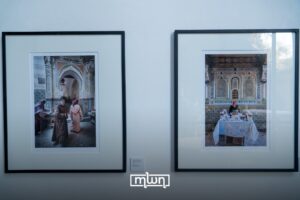
Keohane deliberately weaves fact and fiction, constructing visual narratives that documentary photography alone cannot fully articulate. His images move fluidly between memory, imagination, and lived experience, exploring how belonging and cultural identity are shaped alongside the textures of everyday life.
The exhibition examines the relationship between people and land in Morocco, privileging lived cultural identity over illustrative or folkloric representation. Through scenes of daily life, traditions, and quiet intimacy, the work reflects on the deep connection between individuals and their environment.
Keohane taught film photography at the French Institute in Marrakech during the 1990s, a period when both Moroccan and foreign photographic practices in the country remained limited. He currently teaches occasionally at ESAV and has worked alongside leading Moroccan photographers, including Daoud Aoulad-Syad, Abderrazzak Benchaâbane, and Karim Ramzi.
Looking ahead, the photographer intends to scale back his commercial work to focus on personal projects, including potential book publications with a Casablanca-based publisher – his first personal releases in several years.
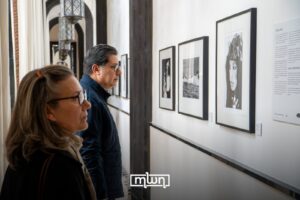
The exhibition is presented in the lobby corridors of Mandarin Oriental Marrakech, with limited-edition prints available through the resort’s boutique. Visitors may also contact Keohane directly for further information about the exhibition and his broader body of work documenting Morocco’s evolving cultural landscape.
