


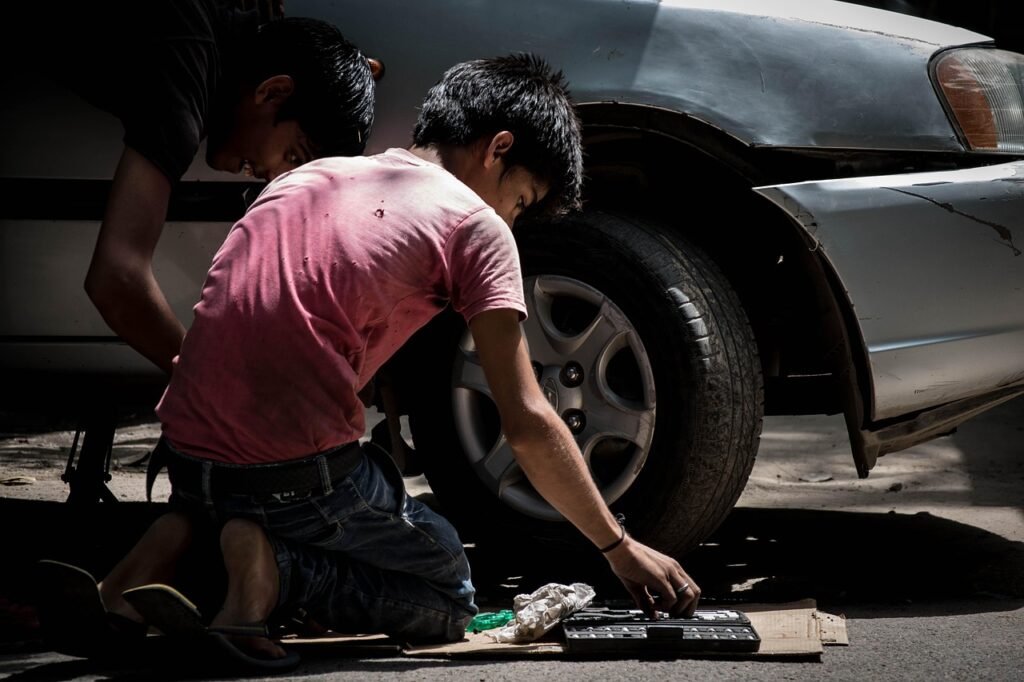
Agadir – The ongoing 6th Global Conference on the Elimination of Child Labor in Marrakech has brought together governments, international organizations, social partners, and civil society actors to strengthen global efforts against child labor.
Running from February 11 to 13 under the auspices of King Mohammed VI, the conference serves as a major platform to assess global progress since the previous edition in Durban in 2022.
It also aims to reinforce cooperation, policy coordination, and knowledge sharing at the national, regional, and international levels.
During a panel dedicated to emerging challenges and opportunities, participants stressed the urgent need for coordinated international action to tackle the causes of child labor, which remain linked to economic instability.
At the global level, the International Labor Organization estimates that around 138 million children are still engaged in child labor worldwide.
Younes Sekkouri, Minister of Economic Inclusion, Small Business, Employment and Skills, pointed out that child labor is closely tied to poverty, education gaps, and fragile social protection systems.
School dropout remains a key driver pushing minors into the workforce, while household instability and lack of decent employment opportunities for parents increase children’s vulnerability to exploitation, he explained.
The expansion of informal economic activities also creates environments where regulation is weaker and risks are higher.
The minister also highlighted the role of businesses in promoting child labor, explaining that not following regulatory frameworks create an environment of exploitation.
Sekkouri noted that engaging with corporate social responsibility requirements and ethical standards, while technological tools such as digital tracking and data systems can help improve transparency and accountability in labor practices.
Morocco’s efforts to combat child labor
During the conference, Younes Sekkouri presented the national strategy results against child labor, highlighting legal protection, enforcement, and social support measures.
According to official data presented during the conference, the proportion of children in work situations in Morocco has declined significantly, falling by around 60% between 2017 and 2024, and by about 30% between 2021 and 2024, reaching less than 1.3% of children today.
Morocco has also aligned its legislation with international standards by adopting major measures, including the minimum age for employment and the elimination of some forms of child labor.
National measures include banning employment for children under 15, strengthening monitoring for those aged 15 to 18, prohibiting high-risk and unsafe work for minors, and reinforcing laws protecting domestic workers and combating human trafficking.
Officials stressed that future progress will depend on expanding access to education, strengthening social protection systems, supporting vulnerable families, and reinforcing inspection mechanisms.